THE CLASSIC COLLECTION✦The dark year of DundeeCLASSIC FREE BOOKS
The dark year of Dundee
Deborah Alcock
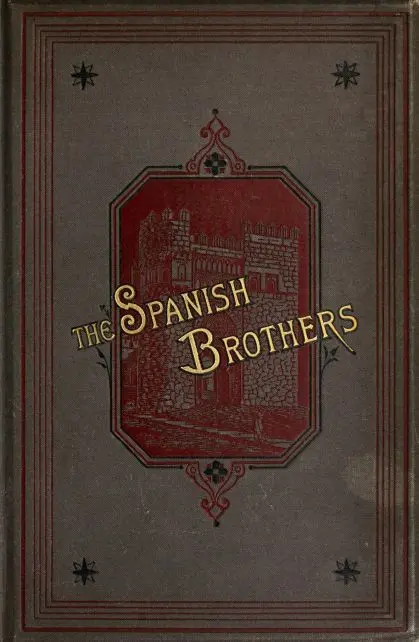
THE CLASSIC COLLECTION · 1888
"The Spanish Brothers: A Tale of the Sixteenth Century" by Deborah Alcock is a historical novel written in the late 19th century. The story opens with two brothers, Juan and Carlos, living in a dilapidated castle in Spain during the mid-1500s. The novel explores themes of nobility, familial bonds, and the struggles of youth, with the brothers navigating their desires for adventure and honor while under the shadow of their family's mysterious past. At the start of the narrative, the brothers are introduced on a gloomy autumn day, engaging in typical childhood play yet with an underlying tension stemming from their respective personalities. The elder, Juan, is proud and assertive, while the younger, Carlos, is more sensitive and introspective. Their relationship is characterized by both camaraderie and competition, reflecting the complexities of brotherhood. As the story unfolds, hints of their father's legacy and their hopes for the future emerge, setting the stage for their individual journeys that will intertwine with the historical backdrop of the Spanish empire's expansion and the quest for identity amidst familial expectations.
Introduction adapted from the source catalogue; source summaries may be automatically generated.
Free to read · English · 122,202 words · No account needed
MAKE TIME FOR A GOOD BOOK
On by default. Untick to stop anonymous reading totals. Each page counts after 10 seconds in view. How this works.
Anonymous counting is on unless you have switched it off.
Carlos acquiesced readily, though apparently without pleasure. In all outward things, such as the choice of pursuits and games, Juan was the unquestioned leader, Carlos never dreamed of disputing his fiat. Yet in other, and really more important matters, it was Carlos who, quite unconsciously to himself, performed the part of guide to his stronger-willed but less thoughtful brother.
Juan now fetched the carefully guarded foils with which the boys were accustomed to practise fencing; either, as now, simply for their own amusement, or under the instructions of the gray-haired Diego, who had served with their father in the Emperor's wars, and was now mayor-domo, butler, and seneschal, all in one. He it was, moreover, from whom Carlos had learned his store of proverbs.
"Now stand up. Oh, you are too low; wait a moment." Juan left the hall again, but quickly returned with a large heavy volume, which he threw on the floor, directing his brother to take his stand upon it.
Carlos hesitated. "But what if the Fray should catch us using our great Horace after such a fashion!"
"I just wish he might," answered Juan, with a mischievous sparkle in his
black eyes.
The matter of height being thus satisfactorily adjusted, the game began, and for some time went merrily forward. To do the elder brother justice, he gave every advantage to his less active and less skilful companion; often shouting (with very unnecessary exertion of his lungs) words of direction or warning about fore-thrust, side-thrust, back-hand strokes, hitting, and parrying. At last, however, in an unlucky moment, Carlos, through some awkward movement of his own in violation of the rules of the game, received a blow on the cheek from his brother's foil, severe enough to make the blood flow. Juan instantly sprang forward, full of vexation, with an "Ay de mi!" on his lips. But Carlos turned away from him, covering his face with both hands; and Juan, much to his disgust, soon heard the sound of a heavy sob.
"You little coward!" he exclaimed, "to weep for a blow. Shame--shame
upon you."
"Coward yourself, to call me ill names when I cannot fight you," retorted Carlos, as soon as he could speak for weeping.
"That is ever your way, little tearful. You to talk of going to find our father! A brave man you would make to sail to the Indies and fight the savages. Better sit at home and spin, with Mother Dolores."
Far too deeply stung to find a proverb suited to the occasion, or indeed to make any answer whatever, Carlos, still in tears, left the hall with hasty footsteps, and took refuge in a smaller apartment that opened into it.
Your reading position is saved on this browser. Take it to another device with a library code. Reading pages adapt to text, rather than matching a printed edition.
Deborah Alcock
Deborah Alcock
Deborah Alcock
Deborah Alcock
BEHIND THE BOOK
This eBook is for the use of anyone anywhere in the United States and most other parts of the world at no cost and with almost no restrictions whatsoever. You may copy it, give it away or re-use it under the terms of the Project Gutenberg License included with this eBook or online at www.gutenberg.org. If you are not located in the United States, you will have to check the laws of the country where you are located before using this eBook. Read the source licence.
The original source file, including credits and licence, is retained by this library. Request an original-format copy at no charge. Please include the book title and Project Gutenberg identifier #40346.
KEEP YOUR CURIOSITY GOING
Cécile Tormay

Moritz Busch
Coulson Kernahan
John L. Ransom

Maurice Baring
Frances Wright