THE CLASSIC COLLECTION✦An outlaw’s diary: the CommuneCLASSIC FREE BOOKS
An outlaw’s diary: the Commune
Cécile Tormay
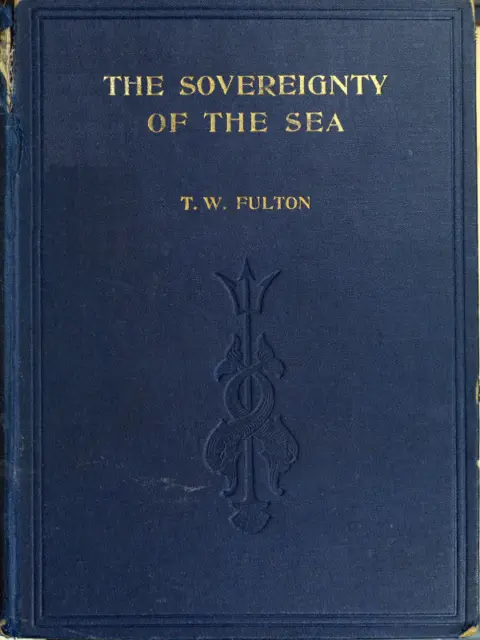
THE CLASSIC COLLECTION · 1911
"The Sovereignty of the Sea" by Thomas Wemyss Fulton is a historical account written in the early 20th century. The text delves into England's claims of dominion over the British Seas, tracing the evolution of territorial waters with a focus on fishing rights and naval interactions. The work examines how maritime sovereignty has been contested and defined throughout English history, particularly against nations like the Dutch. The opening portion introduces the book by outlining the author's intention to consolidate existing information regarding English claims to sea sovereignty. Fulton discusses the historical context, particularly emphasizing the relevance of fishing rights and navigation freedom as they relate to national interests. He sets the stage for a comprehensive exploration of the historical claims, the evolution of maritime laws, and the ongoing debates surrounding territorial waters and fishing rights that have persisted into contemporary international relations. The preface emphasizes the interconnectedness of commerce, legality, and geopolitical maneuvering at sea, suggesting an intricate narrative woven through England's history and its maritime policies.
Introduction adapted from the source catalogue; source summaries may be automatically generated.
Free to read · English · 325,995 words · No account needed
MAKE TIME FOR A GOOD BOOK
On by default. Untick to stop anonymous reading totals. Each page counts after 10 seconds in view. How this works.
Anonymous counting is on unless you have switched it off.
[1250] Le Droit International, i. 349; Dict. de Droit International, 501. Bluntschli endeavours to place the doctrine on a philosophical but absurd basis, by stating that the sovereignty over the sea extended originally only to a stone’s-throw from the coast, later to an arrow-shot, and then according to the range of firearms.
[1251] Das Moderne Völkerrecht, s. 307-9.
[1252] Commentaries upon International Law, I. viii. cxcviii.
[1253] International Law, 135.
[1254] Commentaries on Criminal Law, iv. c. 5, s. 74.
[1255] Introduction to the Study of International Law, s. 56.
[1256] Wheaton’s International Law, 8th ed., p. 359.
[1257] The Law of Nations in Time of Peace, s. 172.
[1258] Trattato di Diritto Internazionale Pubblico, ii. c. 3, pp.
65-67.
[1259] In Fiore, Nouveau Droit International Public, note, p. 372.
[1260] Das Internationale Öffentliche Seerecht der Gegenwart, p. 21
et seq.
[1261] International Law, 399.
[1262] Droit Commercial Maritime, 10.
[1263] La Mer Territoriale, 36.
[1264] Neutralitetens Lagar, i. s. 160; Annuaire de l’Institut de Droit International, xii. 140.
[1265] Norges Offentlige Ret, 79-81; Annuaire, xi. 141.
[1266] Revue générale de Droit International Public, No. 1.
[1267] A Treatise on International Law, 4th edition, 1895, p. 160.
[1268] International Law, i. 242 (1905).
[1269] The Committee of the Association was composed of ten members--viz., Sir Travers Twiss, President; Sir George Baden-Powell; Hon. D. Dudley Field, New York; Dr F. Sieveking, President of the Hanseatic High Court of Appeal, Hamburg; Mr E. H. Schweigaard, Christiania; Rear-Admiral P. H. Colomb; E. Edouard Clunet, Paris; Dr E. N. Rahusen, Amsterdam; Mr T. H. Haynes; and Mr (now Sir) Thomas Barclay, Paris, who was Secretary. The Committee of the Institut comprised twenty-four members, including Sir Travers Twiss; Professor Westlake; Professor Lorimer; M. Desjardins, Advocate-General of the Court of Cassation; Feraud-Giraud, Judge of the French Court of Cassation; Harburger, Judge of the Court of First Instance at Munich; Hartmann, Privy Councillor, Hanover; Perels, Director of the German Admiralty; Marquis d’Olivart, Ex-Professor of International Law, Madrid; Edouard Rolin, Editor of the Revue de Droit International; &c. M. Renault, the Paris Professor of International Law, was appointed “reporter” to the Committee, but this position was soon occupied by Sir Thomas Barclay.
[1270] Most of the English members who expressed their opinion, as Sir Travers Twiss, Professor Holland, and Mr Moore, preferred to retain the limit at three miles; Professor Westlake favoured five miles.
[1271] Report from the Select Committee on Sea Fisheries, 1893; Seventeenth Rep., International Law Assoc., p. 103, 1896; Annuaire de l’Institut de Droit International, xiii.
[1272] “Il en est ainsi pour les firths écossais.... Toutes ces baies sont considérées comme étant sous la domination exclusive de l’État riverain.” Annuaire, 23.
[1273] Annuaire de l’Institut de Droit International, x., xi., xii., xiii. Reports, International Law Association, xv., xvi., xvii.
[1274] 49 Vict., c. 95.
[1275] 38 Vict., c. 18; Order in Council, 28th November 1876.
Your reading position is saved on this browser. Take it to another device with a library code. Reading pages adapt to text, rather than matching a printed edition.
BEHIND THE BOOK
This eBook is for the use of anyone anywhere in the United States and most other parts of the world at no cost and with almost no restrictions whatsoever. You may copy it, give it away or re-use it under the terms of the Project Gutenberg License included with this eBook or online at www.gutenberg.org. If you are not located in the United States, you will have to check the laws of the country where you are located before using this eBook. Read the source licence.
The original source file, including credits and licence, is retained by this library. Request an original-format copy at no charge. Please include the book title and Project Gutenberg identifier #54977.
KEEP YOUR CURIOSITY GOING
Cécile Tormay

Moritz Busch
John L. Ransom
Frances Wright
Cécile Tormay

Mabel Potter Daggett