THE CLASSIC COLLECTION✦An outlaw’s diary: the CommuneCLASSIC FREE BOOKS
An outlaw’s diary: the Commune
Cécile Tormay
THE CLASSIC COLLECTION · 1911
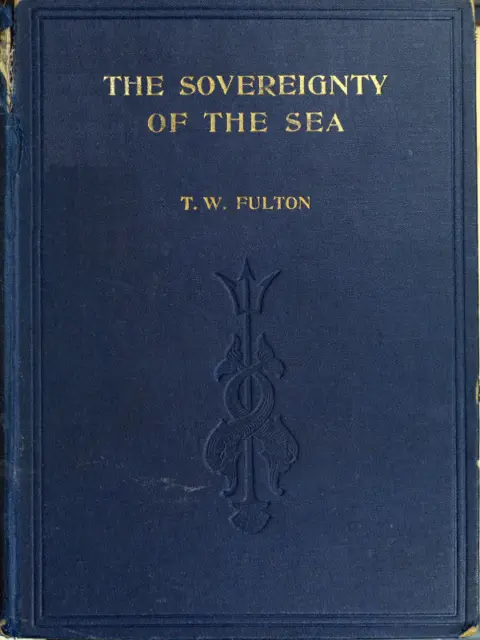
"The Sovereignty of the Sea" by Thomas Wemyss Fulton is a historical account written in the early 20th century. The text delves into England's claims of dominion over the British Seas, tracing the evolution of territorial waters with a focus on fishing rights and naval interactions. The work examines how maritime sovereignty has been contested and defined throughout English history, particularly against nations like the Dutch. The opening portion introduces the book by outlining the author's intention to consolidate existing information regarding English claims to sea sovereignty. Fulton discusses the historical context, particularly emphasizing the relevance of fishing rights and navigation freedom as they relate to national interests. He sets the stage for a comprehensive exploration of the historical claims, the evolution of maritime laws, and the ongoing debates surrounding territorial waters and fishing rights that have persisted into contemporary international relations. The preface emphasizes the interconnectedness of commerce, legality, and geopolitical maneuvering at sea, suggesting an intricate narrative woven through England's history and its maritime policies.
Introduction adapted from the source catalogue; source summaries may be automatically generated.
Free to read · English · 325,995 words · No account needed
MAKE TIME FOR A GOOD BOOK
On by default. Untick to stop anonymous reading totals. Each page counts after 10 seconds in view. How this works.
Anonymous counting is on unless you have switched it off.
But what was to be done with the fleet? That was a question put by Windebank in the autumn of the previous year. The king had remitted to the Foreign Committee two inquiries: what answer he should make to the French ambassador concerning “a nearer conjunction” with France; and whether he should declare his neutrality. Windebank argued against either a French alliance or a declaration of neutrality. Against the former proposition he urged four reasons, one being that the French “had challenged a joint sovereignty on the sea with his Majesty”; and against the latter that the French and Hollanders would besiege Dunkirk or some part of Flanders, and the king would have to sit still and suffer it to be lost, or break his neutrality. “Besides,” said Windebank, clinching his arguments, “what was to be done with the fleet next year if his Majesty declared his neutrality? it must lie still and do nothing.”[525] Apparently the problem of what was to be done with the fleet was not quite solved until the February following, though there had been several tolerably clear indications that one part of its duty at least would be the suppression of unlicensed fishing on the British coasts. Selden’s Mare Clausum was issued from the press in December 1635, and it was with great satisfaction that Charles welcomed it (see p. 368). The idea of playing the more distinguished rôle of Lord of the Sea was not therefore likely to be abandoned because Lindsey’s fleet had been able to do nothing.
At the same time Charles thought he might get some money as well as honour by means of his fleet, and he submitted two propositions to the Lords of the Admiralty for their consideration in employing the fleet “for his honour and profit”: first, in “wafting and securing” foreign merchant vessels passing through his seas; second, in protecting all such fishermen as should fish under his license upon his seas and coasts. With reference to the latter suggestion, Sir Henry Marten delivered an elaborate opinion to the Admiralty. He recited how King James, after long and mature deliberation, had satisfied himself and resolved that the fishing “in his seas and upon the coasts of his dominions, did justly appertain unto him as a right incident to his crowns,” and had issued a proclamation declaring his title and forbidding unlicensed fishing by foreigners. He also explained that the United Provinces had then sent over commissioners who alleged continued custom and present possession of the fishings, “mentioning withall some treaties that had been heretofore between the Kings of England and the Dukes of Burgundy” in favour of their liberty of fishing. After hearing Sir Henry, the Admiralty expressed a unanimous opinion that “the right and royalty of that fishing upon your Majesty’s coasts doth undoubtedly belong unto your Majesty by inheritance, so as you may justly prohibit or license all strangers at your royal will and pleasure.” They further declared that by reason of his strength at sea, the time was then most fitting to put his claim into execution; and they recommended that the States’ ambassador should be informed that the king had not relinquished his right to the “royal fishing,” but was “resolved to defend it as the hereditary right and possession of any other of his dominions.” This intimation was to be wrapped up in sophistries, lest the Dutch should think the king challenged it at a time when they had most need of his favour and grace. James had offered them a bare license for liberty to fish; Charles was to offer them safety and security as well, and the depredations which the Dunkirk privateers had committed on the herring-busses were to be used as an impressive argument to convince them of the benefits they would receive from his protection. The privateers had driven them from the fishing, even in sight of English harbours, by which the king was prejudiced both in honour and interest; but if they accepted his licenses he might feel justified in drawing his sword in their defence, in spite of any league or treaty. If, however, the Hollanders should be so wanting in discretion as to refuse the royal licenses, the Lords of the Admiralty were “all clear of opinion that his Majesty should renew and publish the like proclamation to that of the King his father, and prosecute the settling of that his right as a thing so highly concerning him in honour, dominion and profit.”
Your reading position is saved on this browser. Take it to another device with a library code. Reading pages adapt to text, rather than matching a printed edition.
BEHIND THE BOOK
This eBook is for the use of anyone anywhere in the United States and most other parts of the world at no cost and with almost no restrictions whatsoever. You may copy it, give it away or re-use it under the terms of the Project Gutenberg License included with this eBook or online at www.gutenberg.org. If you are not located in the United States, you will have to check the laws of the country where you are located before using this eBook. Read the source licence.
The original source file, including credits and licence, is retained by this library. Request an original-format copy at no charge. Please include the book title and Project Gutenberg identifier #54977.
KEEP YOUR CURIOSITY GOING
Cécile Tormay

Moritz Busch
John L. Ransom
Frances Wright
Cécile Tormay

Mabel Potter Daggett