THE CLASSIC COLLECTION✦An outlaw’s diary: the CommuneCLASSIC FREE BOOKS
An outlaw’s diary: the Commune
Cécile Tormay
THE CLASSIC COLLECTION · 1911
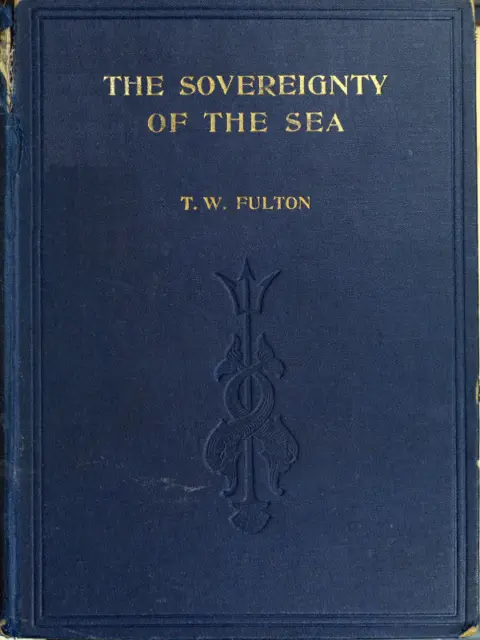
"The Sovereignty of the Sea" by Thomas Wemyss Fulton is a historical account written in the early 20th century. The text delves into England's claims of dominion over the British Seas, tracing the evolution of territorial waters with a focus on fishing rights and naval interactions. The work examines how maritime sovereignty has been contested and defined throughout English history, particularly against nations like the Dutch. The opening portion introduces the book by outlining the author's intention to consolidate existing information regarding English claims to sea sovereignty. Fulton discusses the historical context, particularly emphasizing the relevance of fishing rights and navigation freedom as they relate to national interests. He sets the stage for a comprehensive exploration of the historical claims, the evolution of maritime laws, and the ongoing debates surrounding territorial waters and fishing rights that have persisted into contemporary international relations. The preface emphasizes the interconnectedness of commerce, legality, and geopolitical maneuvering at sea, suggesting an intricate narrative woven through England's history and its maritime policies.
Introduction adapted from the source catalogue; source summaries may be automatically generated.
Free to read · English · 325,995 words · No account needed
MAKE TIME FOR A GOOD BOOK
On by default. Untick to stop anonymous reading totals. Each page counts after 10 seconds in view. How this works.
Anonymous counting is on unless you have switched it off.
By this time the question of the striking of the flag had been forced into great prominence: even the “footpads” of the Channel, the humble picaroons and shallops, hailed the English ketches which they pillaged with the cry of “Strike, you English dogs!” It has been shown in a previous chapter that though the ceremony was enforced in the narrow seas in the reign of James, it did not then become a burning political question, and the same is true of the early part of the reign of Charles. The English commanders were then satisfied with a moderate acknowledgment of the “honour,” and the Dutch at least rarely ever contested it. That it was enforced in 1627 appears from the narrative of the Earl of Warwick’s voyage in that year, when a French man-of-war was compelled off Falmouth “to come up by the lee,” though nothing is said about the flag itself.[502] But when France openly aspired to become a great naval Power, England began to force the salute with a high hand. It is from the year 1631 that we may date the marked development of this symbol, as it was claimed to be, of the sovereignty of the sea. We have already seen Pennington’s instructions in that year, which, however, only mention the striking of the top-sail; and although the omission of the flag may have been only verbal, there are reasons for thinking that the custom and etiquette of the ceremony were not well understood at the Admiralty. Thus on Pennington reporting that French men-of-war were trying to force English merchant vessels to strike to the French flag,[503] he was ordered by the Admiralty “to see that no one presumes to carry the flag in the Narrow Seas”; all the more since “some” pretended to have an interest in the sovereignty of these seas.[504] When Pennington pointed out that this “was more than ever was done, for our own merchants’ ships and all other nations ever have and do wear their flags, till they come within shot of the king’s ships: if they take them in and keep them in till they are out of shot again, it is as much as has ever been expected,”--when he told the Admiralty this, he was informed that the “Lords would not expect impossibilities”--the main business he was to take care of was to see that no foreigner carried the flag where his Majesty’s ships were present in the Narrow Seas.[505] Then Captain Plumleigh in the Antelope reported that on meeting two States’ men-of-war guarding the herring-fishers off Orfordness, the Admiral had “stood” with the Antelope with his flag aloft, and did not take it in till several shots had been fired at him; and when requested to come on board and explain his conduct, he refused. How, asked Plumleigh, was he to comport himself in such cases? The matter was brought before the Admiralty, but no answer appears to have been then given.[506] Two or three years later Pennington put the same and other queries to the king. He had been appointed in April 1633 Admiral of the Narrow Seas, with general instructions already quoted (see p. 262), to preserve the king’s honour, coasts, and jurisdiction, and to compel homage to the flag. Pennington asked whether, when a stranger refused to take in his flag till forced, he should not be “brought in as a delinquent”; whether, if he met a foreign fleet of far greater strength than his own, and they refused to take in their flags, he should fight with them about it “upon so great disadvantage,” or make “a fair retreat”; whether on going into Calais, Dunkirk, or the Briel--that is to say, ports in France, Flanders, and Holland--and finding strangers riding there with their flags aloft, he should force them to take them in?[507] He also wrote to the Admiralty in 1634 substantially repeating these inquiries, and asking for a positive or negative expression in regard to them in his instructions. The Admiralty remitted Pennington’s letter to Nicholas and Sir Henry Marten to frame answers. The final opinion on the first point was that by the law of the Admiralty both in England and France, the ships were forfeited--that is to say, the same penalty applied as was prescribed in King John’s ordinance. It was, however, rarely, if ever, carried into effect. The instructions on this matter usually ran that punishment was to be inflicted at the place, or the commander brought in to answer his contempt. When the Earl of Northumberland asked a similar question in 1636, he was told the offender should be “punished on the place.”[508] In Nicholas’ opinion much more than the forfeiture of the ship was required; the offender, he thought, should be brought in as a delinquent, and if he resisted he should be tried as a pirate; but this absurd interpretation was overruled.
Your reading position is saved on this browser. Take it to another device with a library code. Reading pages adapt to text, rather than matching a printed edition.
BEHIND THE BOOK
This eBook is for the use of anyone anywhere in the United States and most other parts of the world at no cost and with almost no restrictions whatsoever. You may copy it, give it away or re-use it under the terms of the Project Gutenberg License included with this eBook or online at www.gutenberg.org. If you are not located in the United States, you will have to check the laws of the country where you are located before using this eBook. Read the source licence.
The original source file, including credits and licence, is retained by this library. Request an original-format copy at no charge. Please include the book title and Project Gutenberg identifier #54977.
KEEP YOUR CURIOSITY GOING
Cécile Tormay

Moritz Busch
John L. Ransom
Frances Wright
Cécile Tormay

Mabel Potter Daggett