THE CLASSIC COLLECTION✦Industrial and commercial South AmericaCLASSIC FREE BOOKS
Industrial and commercial South America
Annie S. (Annie Smith) Peck
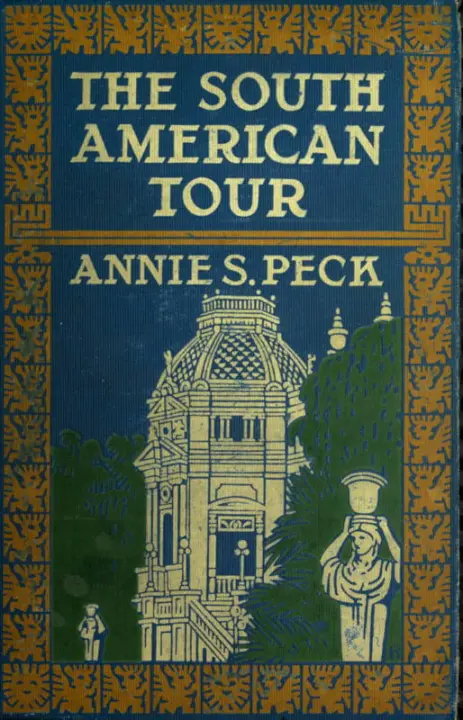
THE CLASSIC COLLECTION · 1913
"The South American Tour" by Annie S. Peck is a travelogue written in the early 20th century. The book serves as a guide for tourists interested in exploring South America, detailing itineraries, locations of interest, and various practicalities for traveling through the continent. With rich descriptions and insightful observations, it aims to both encourage travel and inform readers of the cultural and natural wonders awaiting them in Latin America. At the start of the travelogue, the author emphasizes the increasing popularity and accessibility of a South American tour. She lays out an enticing overview of the diverse attractions, from breathtaking natural landscapes to vibrant cities rich in history. Peck discusses the logistics of embarking on such a journey, providing essential information about routes, costs, and timing. She sets the stage for a comprehensive exploration of several countries, including Panama, Peru, Bolivia, and Chile, inviting readers to experience the regions' distinct characteristics and cultural treasures firsthand.
Introduction adapted from the source catalogue; source summaries may be automatically generated.
Free to read · English · 149,540 words · No account needed
MAKE TIME FOR A GOOD BOOK
On by default. Untick to stop anonymous reading totals. Each page counts after 10 seconds in view. How this works.
Anonymous counting is on unless you have switched it off.
Persons with moderate capital not interested in mining or agriculture might find it profitable to undertake manufacturing in certain lines. There are now in the country a few factories for cotton, woolen, biscuit making, chocolate, fruit preserves, cocaine, and matches; also flour mills.
There is opportunity for electrical power in many places, for installing electric lights, sewers, water pipes, etc.
Provisions are in certain sections extremely cheap, in others very dear, on account of transportation difficulties. Lima is called expensive and it would seem that eggs and chickens might be profitably raised near by, also dairy products and other supplies.
At present the chief exports from Peru in the order of their value are minerals, sugar, cotton, rubber, wool, petroleum, guano, Panama hats, hides and skins, ice, cocaine, coca, coffee. The leading imports are textiles, coal, machinery, etc. from the United States, machinery, wood, drugs, meats, bread-stuffs, shoes, coal, hardware, arms and ammunition, soap, vehicles, instruments and apparatus, general merchandise.
It should be noted in connection with Peru, that machinery and supplies for railroad construction and for mining are admitted free of duty; also as an item of great importance, that the export tax on rubber is less than one-quarter of that exacted by Brazil and a little smaller than the one fixed by Bolivia. For this reason the country is especially favorable for the extension of the rubber industry.
=Bolivia.= The products of Bolivia are like those of Peru except that its agricultural resources are as yet little developed. Hence there is more importation of food stuffs; flour is an article of export from the United States, as well as preserves and suet. Canned stuffs are useful to the mining and railroad people. Cartridges, leather goods, soap, kerosene, furniture, clothing, dynamite, firearms, copper wire, iron and steel, vinegar, Florida water, wood, agricultural tools, mining machinery, lard, cotton, cameras, sewing machines, typewriters are other imports.
Bolivia presents excellent opportunities for mining. Tin of first importance, silver, copper, and bismuth are now the chief mineral exports, although rich deposits of gold are attested.
Your reading position is saved on this browser. Take it to another device with a library code. Reading pages adapt to text, rather than matching a printed edition.
BEHIND THE BOOK
This eBook is for the use of anyone anywhere in the United States and most other parts of the world at no cost and with almost no restrictions whatsoever. You may copy it, give it away or re-use it under the terms of the Project Gutenberg License included with this eBook or online at www.gutenberg.org. If you are not located in the United States, you will have to check the laws of the country where you are located before using this eBook. Read the source licence.
The original source file, including credits and licence, is retained by this library. Request an original-format copy at no charge. Please include the book title and Project Gutenberg identifier #59715.
KEEP YOUR CURIOSITY GOING
Wilfrid Scawen Blunt
Wilfrid Scawen Blunt

E. W. (Edgar Watson) Howe
Francis Greenleaf Allinson & Anne C. E. (Anne Crosby Emery) Allinson
Cyrenus Cole

John Martineau