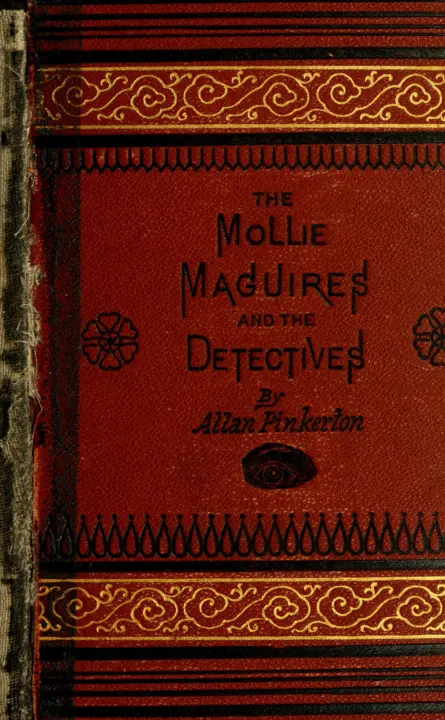
The Molly Maguires and the detectives
Allan Pinkerton
THE CLASSIC COLLECTION · 1903
"The Somnambulist and the Detective; The Murderer and the Fortune Teller" by Allan Pinkerton is a collection of detective stories written in the late 19th century. It presents a series of true crime narratives embodying the dramatic flair characteristic of the era, following the renowned detective Allan Pinkerton, who, in this case, investigates the murder of a bank teller named George Gordon, amid a backdrop of Southern societal nuances. The opening of the volume begins with an intriguing preface where Pinkerton emphasizes the veracity of the narratives that shall unfold, asserting that the incidents narrated are based on real events. As the narrative progresses, we are introduced to the details surrounding the brutal murder of young Gordon in a Mississippi bank, following his customary late-night work routine. The narrative sets the stage for Pinkerton's analysis, outlining the relationships and potential motives of several individuals linked to the victim, particularly focusing on Mr. Drysdale, who stands at the center of a web of intrigue and deception. The interplay of various characters and their potential connections to the crime promises a compelling exploration of detective work, leading the reader to ponder the intricacies of human intentions and behaviors during this tumultuous investigation.
Introduction adapted from the source catalogue; source summaries may be automatically generated.
Free to read · English · 63,066 words · No account needed
MAKE TIME FOR A GOOD BOOK
On by default. Untick to stop anonymous reading totals. Each page counts after 10 seconds in view. How this works.
Anonymous counting is on unless you have switched it off.
"You need have no fear of me," I replied, "I know nearly everything relative to your troubles, but I wish you to tell me all the facts; then I shall know precisely what to do to help you. It is possible to raise a criminal charge against you, but it is my desire to prevent that; therefore, you must tell me everything, without any reservation whatever."
"Who are you?" she asked, after a few moments of thought. "You have not told me your name, yet I know you; I have heard of you before, and I know it will be useless for me to try to hide anything from you, but I would like to know your name."
"My name is Pinkerton," I answered, "but I cannot tell you how I know you, nor why I take an interest in your affairs. I wish you to give me a full account of your relations with Pattmore ever since your first acquaintance with him."
I then gave her a glass of wine to strengthen her, and asked her to proceed. As she spoke at first in a very low voice, I professed to be hard of hearing, in order that she should speak loud enough for my stenographer to hear also.
She first referred to her early married life, when she was perfectly happy in Henry's love; then she said that he made several very long voyages, and when he came home he remained only a few days each time. During one of these voyages, she met Pattmore and his wife in Brooklyn, and they became well acquainted. Afterward Pattmore frequently came to Brooklyn alone, and he always spent much of his time in her society. She did not realize the danger of his intercourse at first; but, gradually, he began to make love to her, and, finally, he accomplished her ruin. Thenceforward she was wholly under his control, especially after Henry's desertion of her. He brought her to his own hotel on the plea that she would be company for his wife, and she lived as his mistress, in fact, though not outwardly, until her brother came to take her away. Her brother succeeded in awakening her remorse, and she determined to return to Connecticut with him. Pattmore, however, opposed this action very strongly, and offered to marry her immediately, saying that his wife was sure to die soon from quick consumption, since all her family had died of that disease at about her age. They were therefore secretly married, and she then wrote to her brother that she should not return to Connecticut. When she discovered that she was enceinte she was much alarmed, and she again decided to return to her brother after the abortion had been performed, but Pattmore had a strong control over her still. As soon as she was able to go out, after her illness, Pattmore wrote to her to get a certain prescription put up by a druggist. She did so, and then sent the powders to him. In a short time Pattmore came to Chicago and told her that he had arranged to poison his wife. She was very much shocked at first, but he told her that Mrs. Pattmore could only live about a year anyhow, and that she would suffer a great deal during her rapid decline; hence he argued that there could be no harm in hastening her death to save her from many weeks of pain. He said that he had already commenced to poison her, using small doses, so as to break down her system gradually. While he was there Captain Sumner came back from the East, and he was very angry at Mrs. Thayer for permitting Pattmore to visit her. Then Pattmore told her to poison her brother in order that she might inherit his property. This proposition perfectly horrified her, as she really loved her brother; but Pattmore said that they never could live together as long as Captain Sumner was alive, and that he was afraid the Captain would some day get into a passion and kill them both. In this way he worked on her feelings until she agreed to give her brother some of the powder which she had sent to Greenville. Accordingly she made three attempts to poison her brother, but fortunately she was not successful. Pattmore then returned to Greenville, and soon afterward his wife died. He had visited her only once since that time, but they corresponded regularly. He was very guarded in his letters as to what he said about his wife's death, but she knew that he had carried out his plan, because he had told her so distinctly when he last saw her. He said that he had given her small doses every day until she died; but the doctor believed that she had died of dysentery, so that he was all safe.
Your reading position is saved on this browser. Take it to another device with a library code. Reading pages adapt to text, rather than matching a printed edition.
Allan Pinkerton
Allan Pinkerton
Allan Pinkerton
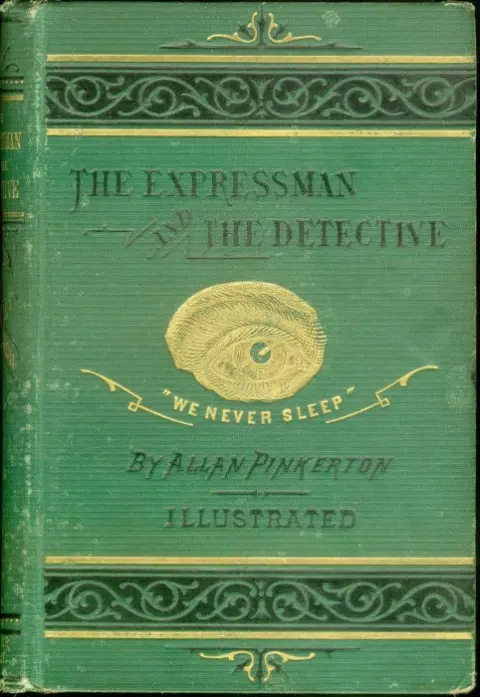
Allan Pinkerton
BEHIND THE BOOK
This eBook is for the use of anyone anywhere in the United States and most other parts of the world at no cost and with almost no restrictions whatsoever. You may copy it, give it away or re-use it under the terms of the Project Gutenberg License included with this eBook or online at www.gutenberg.org. If you are not located in the United States, you will have to check the laws of the country where you are located before using this eBook. Read the source licence.
The original source file, including credits and licence, is retained by this library. Request an original-format copy at no charge. Please include the book title and Project Gutenberg identifier #30636.
KEEP YOUR CURIOSITY GOING

Herman W. Mudgett
James Holbrook

William Le Queux

Edgar Wallace
Hilaire Belloc
Marie Belloc Lowndes