THE CLASSIC COLLECTION✦The Disappearing EyeCLASSIC FREE BOOKS
The Disappearing Eye
Fergus Hume
THE CLASSIC COLLECTION · 1909
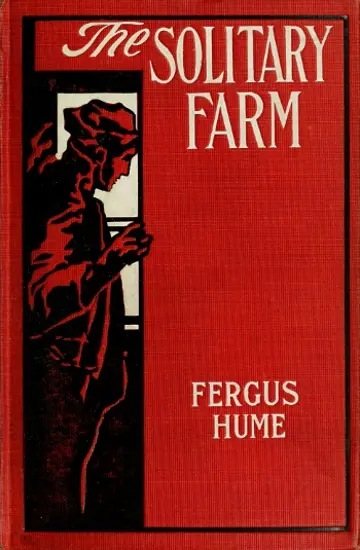
"The Solitary Farm" by Fergus Hume is a novel written in the early 20th century. The story revolves around Captain Huxham, a retired sailor turned farmer, and the complex relationships of his daughter Bella Huxham with her suitors, particularly the preacher Silas Pence and a mysterious journalist named Cyril Lister. As tensions rise, themes of love, envy, and familial conflict come into play, particularly influenced by Huxham's vehement disapproval of Bella's affections for Lister. The opening of the novel introduces a heated discussion between Captain Huxham and the ardent preacher Silas Pence regarding Bella's potential marriage. Huxham’s apparent anger towards Lister raises questions about the journalist's background and the source of the captain's disdain. Tensions boil over as Huxham offers Pence a sinister proposal regarding Lister, reflecting the captain’s volatile nature. The narrative sets up a tense atmosphere, leading to a mysterious crime—the captain's eventual murder, which adds layers of intrigue and suspense to the unfolding drama. As the plot thickens, the interplay of love, secrets, and betrayal becomes increasingly significant in the lives of the characters.
Introduction adapted from the source catalogue; source summaries may be automatically generated.
Free to read · English · 91,003 words · No account needed
MAKE TIME FOR A GOOD BOOK
On by default. Untick to stop anonymous reading totals. Each page counts after 10 seconds in view. How this works.
Anonymous counting is on unless you have switched it off.
Cyril was amazed when he called one evening, to see this same sitting-room, as he saw evidence of great luxury in the articles brought by the negro to decorate the somewhat bare apartment. The furniture of the parlour--as Mrs. Giles called it--was plain and cheap, but there were evidences that it was occupied by a wealthy guest. Indian coverlets, gorgeously embroidered, adorned the chairs; there were splendid wild-beast skins on the floor, and on the side-tables appeared several silver vases rudely but skilfully wrought. Cyril noted a bronze incense-burner in which pastilles smouldered, several small golden images of ugly tribal gods, some beautifully-made spears and war-clubs, brightly-hued feathers, curious shells, and photographs of native towns and their inhabitants. Why Durgo should travel with such a collection of rubbish was not clear; but probably he did so, that he might be surrounded by memorials of his sunny country in the land of fogs and greyness.
Durgo himself was a surprise, as he received Cyril in a well-made smoking suit, and, quite in the conventional manner, offered him cigarettes of a good brand and the orthodox whiskey and soda. "Or champagne if you prefer it," said Durgo, laying his black hand on the old-fashioned bell-rope.
"Coffee for me," said Lister, throwing himself into a comfortable arm-chair, and accepting a cigarette. "Do you know, Durgo, that you are something of a puzzle to me?"
The negro rang the bell, gave an order for coffee to Mrs. Giles, who
entered, and when she had retired turned to his guest. "How so?" he
asked.
"Your very good English, the adornments of this room, your present dress--I did not look for such things in a--a----" Cyril hesitated.
"In an African negro," finished Durgo, sitting down, with a grave smile.
"Well, yes. People of your colour," added Cyril, with the covert insolence of the white towards the black, "don't usually----"
Durgo raised one large hand. "I know: don't proceed," he said with suppressed anger; "you think we are barbarians."
"Well, you are, as a rule."
"I am the exception to this rule." Durgo paused, and his eyes wandered to some photographs over the mantel-piece. "I told you that the missionaries educated me," he continued, "but if you look at those photographs, you might learn who was my real Alma Mater."
"Alma Mater," repeated Cyril, rising to approach the mantel-piece; "why, these are University photographs."
"Oxford. I was at Oxford some years ago."
"You?" Cyril looked at the groups of boating-men, cricketers, football players, and wondered. He wondered still more at a portrait of Durgo in a Master of Arts gown. "You!" said Cyril, completely surprised.
Your reading position is saved on this browser. Take it to another device with a library code. Reading pages adapt to text, rather than matching a printed edition.
Fergus Hume

Fergus Hume

Fergus Hume
Fergus Hume
BEHIND THE BOOK
This eBook is for the use of anyone anywhere in the United States and most other parts of the world at no cost and with almost no restrictions whatsoever. You may copy it, give it away or re-use it under the terms of the Project Gutenberg License included with this eBook or online at www.gutenberg.org. If you are not located in the United States, you will have to check the laws of the country where you are located before using this eBook. Read the source licence.
The original source file, including credits and licence, is retained by this library. Request an original-format copy at no charge. Please include the book title and Project Gutenberg identifier #35146.
KEEP YOUR CURIOSITY GOING
Coulson Kernahan

Maurice Baring
Frances Wright
Cécile Tormay

Frederic Jesup Stimson

W. H. P. (William Henry Pope) Jarvis