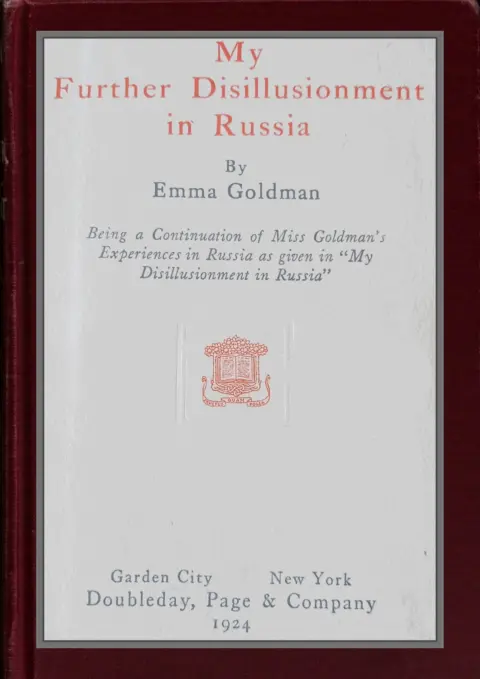
My further disillusionment in Russia
Emma Goldman
THE CLASSIC COLLECTION · 1914
"The Social Significance of the Modern Drama" by Emma Goldman is a treatise published in 1914. Drawing on her extensive work with Modernist dramatists, Goldman analyzes the political and radical implications of major playwrights from the late nineteenth and early twentieth centuries. The book examines works by Henrik Ibsen, August Strindberg, George Bernard Shaw, Anton Chekhov, and many others, revealing how modern drama could awaken radical consciousness. Goldman published this work to introduce both radicals and ordinary citizens to theater's transformative potential.
Introduction adapted from the source catalogue; source summaries may be automatically generated.
Free to read · English · 72,996 words · No account needed
MAKE TIME FOR A GOOD BOOK
On by default. Untick to stop anonymous reading totals. Each page counts after 10 seconds in view. How this works.
Anonymous counting is on unless you have switched it off.
Mrs. Warren. Liz didn't, I can tell you; she had more spirit. We both went to a Church School--that was part of the lady-like airs we gave ourselves to be superior to the children that knew nothing and went nowhere--and we stayed there until Liz went out one night and never came back. I knew the schoolmistress thought I'd soon follow her example; for the clergyman was always warning me that Lizzie 'd end by jumping off Waterloo Bridge. Poor fool: that was all that he knew about it! But I was more afraid of the whitelead factory than I was of the river; and so would you have been in my place. That clergyman got me a situation as a scullery maid in a temperance restaurant where they sent out for anything you liked. Then I was waitress; and then I went to the bar at Waterloo Station--fourteen hours a day serving drinks and washing glasses for four shillings a week and my board. That was considered a great promotion for me. Well, one cold, wretched night, when I was so tired I could hardly keep myself awake, who should come up for a half of Scotch but Lizzie, in a long fur cloak, elegant and comfortable, with a lot of sovereigns in her purse.
Vivie. My aunt Lizzie?
Mrs. Warren. Yes.... She's living down at Winchester, now, close to the cathedral, one of the most respectable ladies there--chaperones girls at the country ball, if you please. No river for Liz, thank you! You remind me of Liz a little: she was a first-rate business woman--saved money from the beginning--never let herself look too like what she was--never lost her head or threw away a chance. When she saw I'd grown up good-looking she said to me across the bar: "What are you doing there, you little fool? Wearing out your health and your appearance for other people's profit!" Liz was saving money then to take a house for herself in Brussels: and she thought we two could save faster than one. So she lent me some money and gave me a start; and I saved steadily and first paid her back, and then went into business with her as her partner. Why shouldn't I have done it? The house in Brussels was real high class--a much better place for a woman to be in than the factory where Anne Jane got poisoned. None of our girls were ever treated as I was treated in the scullery of that temperance place, or at the Waterloo bar, or at home. Would you have had me stay in them and become a worn-out old drudge before I was forty?... Yes, saving money. But where can a woman get the money to save in any other business? Could you save out of four shillings a week and keep yourself dressed as well? Not you. Of course, if you're a plain woman and can't earn anything more: or if you have a turn for music, or the stage, or newspaper writing: that's different. But neither Liz nor I had any turn for such things: all we had was our appearance and our turn for pleasing men. Do you think we were such fools as to let other people trade in our good looks by employing us as shop-girls, or barmaids, or waitresses, when we could trade in them ourselves and get all the profits instead of starvation wages? Not likely.... Everybody dislikes having to work and make money; but they have to do it all the same. I'm sure I've often pitied a poor girl, tired out and in low spirits, having to try to please some man that she doesn't care two straws for--some half-drunken fool that thinks he's making himself agreeable when he's teasing and worrying and disgusting a woman so that hardly any money could pay her for putting up with it. But she has to bear with disagreeables and take the rough with the smooth, just like a nurse in a hospital or anyone else. It's not work that any woman would do for pleasure, goodness knows; though to hear the pious people talk you would suppose it was a bed of roses. Of course it's worth while to a poor girl, if she can resist temptation and is good looking and well-conducted and sensible. It's far better than any other employment open to her. I always thought that oughtn't to be. It can't be right, Vivie, that there shouldn't be better opportunities for women. I stick to that: It's wrong. But it's so, right or wrong; and a girl must make the best of it. But, of course, it's not worth while for a lady. If you took to it you'd be a fool; but I should have been a fool if I'd taken to anything else.... Why am I independent and able to give my daughter a first-rate education, when other women that had just as good opportunities are in the gutter? Because I always knew how to respect myself and control myself. Why is Liz looked up to in a cathedral town? The same reason. Where would we be now if we'd minded the clergyman's foolishness? Scrubbing floors for one and sixpence a day and nothing to look forward to but the workhouse infirmary. Don't you be led astray by people who don't know the world, my girl. The only way for a woman to provide for herself decently is for her to be good to some man that can afford to be good to her. If she's in his own station of life, let her make him marry her; but if she's far beneath him, she can't expect it--why should she? It wouldn't be for her own happiness. Ask any lady in London society that has daughters; and she'll tell you the same, except that I tell you straight and she'll tell you crooked. That's all the difference.... It's only good manners to be ashamed of it; it's expected from a woman. Women have to pretend a great deal that they don't feel. Liz used to be angry with me for plumping out the truth about it. She used to say that when every woman would learn enough from what was going on in the world before her eyes, there was no need to talk about it to her. But then Liz was such a perfect lady! She had the true instinct of it; while I was always a bit of a vulgarian. I used to be so pleased when you sent me your photographs to see that you were growing up like Liz; you've just her lady-like determined way. But I can't stand saying one thing when everyone knows I mean another. What's the use in such hypocrisy? If people arrange the world that way for women, there's no use pretending that it's arranged the other way. I never was a bit ashamed really. I consider that I had a right to be proud that we managed everything so respectably, and never had a word against us, and that the girls were so well taken care of. Some of them did very well: one of them married an ambassador. But of course now I daren't talk about such things: whatever would they think of us.
Your reading position is saved on this browser. Take it to another device with a library code. Reading pages adapt to text, rather than matching a printed edition.
Emma Goldman
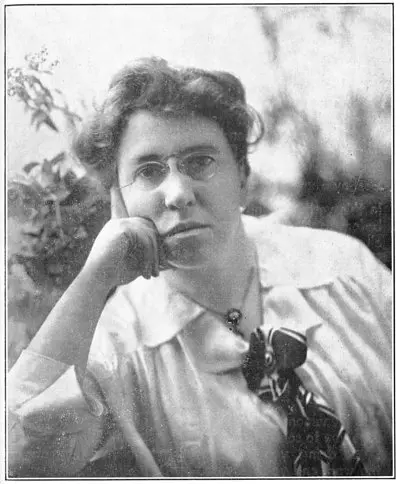
Emma Goldman
Alexander Berkman & Emma Goldman
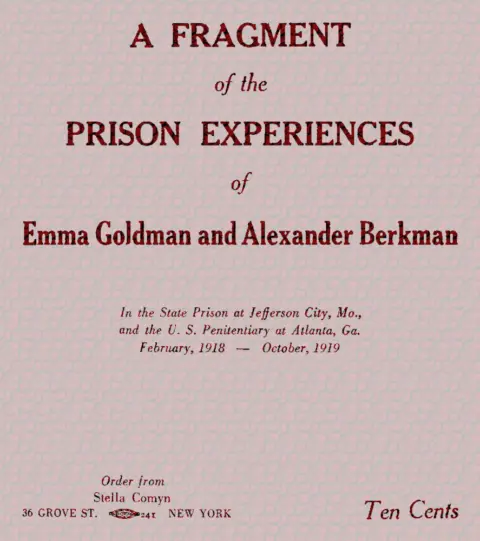
Emma Goldman & Alexander Berkman
BEHIND THE BOOK
This eBook is for the use of anyone anywhere in the United States and most other parts of the world at no cost and with almost no restrictions whatsoever. You may copy it, give it away or re-use it under the terms of the Project Gutenberg License included with this eBook or online at www.gutenberg.org. If you are not located in the United States, you will have to check the laws of the country where you are located before using this eBook. Read the source licence.
The original source file, including credits and licence, is retained by this library. Request an original-format copy at no charge. Please include the book title and Project Gutenberg identifier #43490.
KEEP YOUR CURIOSITY GOING

David Patterson (Spirit) Hatch

David Patterson (Spirit) Hatch

David Patterson (Spirit) Hatch
Cécile Tormay

Moritz Busch
John L. Ransom