THE CLASSIC COLLECTION✦My diaries, being a personal narrative of events 1888-1914, Part 2 (1900-1914)CLASSIC FREE BOOKS
My diaries, being a personal narrative of events 1888-1914, Part 2 (1900-1914)
Wilfrid Scawen Blunt
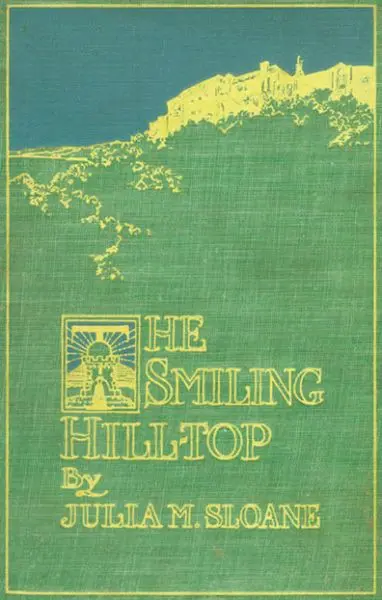
THE CLASSIC COLLECTION · 1919
"The Smiling Hill-Top and Other California Sketches" by Julia M. Sloane is a collection of informal essays written in the early 20th century. The sketches reflect the author's experiences and observations as she and her family settle into Southern California, exploring the unique climate, flora, and social aspects of their new environment. The narrative features the interactions of a light-hearted family, alongside their pets, as they navigate life on a picturesque hilltop. At the start of the book, Sloane introduces her idyllic hilltop abode, which she affectionately names "The Smiling Hill-Top." She describes the enchanting beauty of her surroundings, filled with vibrant flowers and views of the Pacific Ocean, while humorously detailing the challenges of adjusting to life in a new place, including quirky encounters with neighbors and local customs. The opening sets a light, observational tone as she recounts her family's adventures, such as managing a stubborn cow named Poppy and dealing with various gardening mishaps, conveying a sense of warmth and humor throughout her reflections.
Introduction adapted from the source catalogue; source summaries may be automatically generated.
Free to read · English · 27,066 words · No account needed
MAKE TIME FOR A GOOD BOOK
On by default. Untick to stop anonymous reading totals. Each page counts after 10 seconds in view. How this works.
Anonymous counting is on unless you have switched it off.
People who know California and love it, I hope may enjoy comparing notes with me. People who have never been here and who vaguely think of it as a happy hunting-ground for lame ducks and black sheep, I should like to tempt across the Rockies that they might see how much more it is than that. It may be a lotus land to some, to many it truly seems the promised land.
"Shall we be stepping westward?"
No one should attempt to live on top of an adobe hill one mile from a small town which has been brought up on the Declaration of Independence, without previously taking a course in plain and fancy wheedling. This is the mature judgment of a lady who has tried it. Not even in California!
When we first took possession of our hill-top early one June, nothing was farther from my thoughts. "Suma Paz," "Perfect Peace," as the place was called, came to me from a beloved aunt who had truly found it that. With it came a cow, a misunderstood motor, and a wardrobe trunk. A Finnish lady came with the cow, and my brother-in-law's chauffeur graciously consented to come with the motor. The trunk was empty. It was all so complete that the backbone of the family, suddenly summoned on business, departed for the East, feeling that he had left us comfortably established for the month of his absence. The motor purred along the nine miles to the railroad station without the least indication of the various kinds of internal complications about to develop, and he boarded the train, beautifully composed in mind, while we returned to our hill-top.
It is a most enchanting spot. A red-tiled bungalow is built about a courtyard with cloisters and a fountain, while vines and flowers fill the air with the most delicious perfume of heliotrope, mignonette, and jasmine. Beyond the big living-room extends a terrace with boxes of deep and pale pink geraniums against a blue sea, that might be the Bay of Naples, except that Vesuvius is lacking. It is so lovely that after three years it still seems like a dream. We are only one short look from the Pacific Ocean, that ocean into whose mists the sun sets in flaming purple and gold, or the more soft tones of shimmering gray and shell-pink. We sit on our terrace feeling as if we were in a proscenium box on the edge of the world, and watch the ever-varying splendor. At night there is the same sense of infinity, with the unclouded stars above, and only the twinkling lights of motors threading their way down the zigzag of the coast road as it descends the cliffs to the plain below us. These lights make up in part for the fewness of the harbor lights in the bay. The Pacific is a lonely ocean. There are so few harbors along the coast where small boats can find shelter that yachts and pleasure craft hardly exist. Occasionally we see the smoke of a steamer on its way to or from ports of Lower California, as far south as the point where the curtain drops on poor distracted Mexico, for there trade ceases and anarchy begins. There is a strip of land, not belonging to the United States, called Lower California, controlled by a handsome soldierly creature, Governor Cantu, whose personal qualities and motives seem nicely adapted to holding that much, at least, of Mexico in equilibrium. Only last summer he was the guest of our small but progressive village at a kind of love feast, where we cemented our friendship with whale steaks and ginger ale dispensed on the beach, to the accompaniment of martial music, while flags of both countries shared the breeze. Though much that is picturesque, especially in the way of food--enciladas, tamales and the like--strays across the border, bandits do not, and we enjoy a sense of security that encourages basking in the sun. Just one huge sheet of water, broken by islands, lies between us and the cherry blossoms of Japan! There is a thrill about its very emptiness, and yet since I have seen the Golden Gate I know that that thrill is nothing to the sensation of seeing a sailing ship with her canvas spread, bound for the far East. From the West to the East the spell draws. First from the East to the West; from the cold and storms of New England to our land of sun it beckons, and then unless we hold tight, the lure of the South Seas and the glamour of the Far East calls us. I know just how it would be. Perhaps my spirit craves adventuring the more for the years my body has had to spend in a chaise longue or hammock, fighting my way out of a shadow. Anyway, I have heard the call, but I have put cotton in my ears and am content that life allows me three months out of the twelve of magic and my hill-top.
Your reading position is saved on this browser. Take it to another device with a library code. Reading pages adapt to text, rather than matching a printed edition.
BEHIND THE BOOK
This eBook is for the use of anyone anywhere in the United States and most other parts of the world at no cost and with almost no restrictions whatsoever. You may copy it, give it away or re-use it under the terms of the Project Gutenberg License included with this eBook or online at www.gutenberg.org. If you are not located in the United States, you will have to check the laws of the country where you are located before using this eBook. Read the source licence.
The original source file, including credits and licence, is retained by this library. Request an original-format copy at no charge. Please include the book title and Project Gutenberg identifier #17901.
KEEP YOUR CURIOSITY GOING
Wilfrid Scawen Blunt
Wilfrid Scawen Blunt

E. W. (Edgar Watson) Howe

David Patterson (Spirit) Hatch

David Patterson (Spirit) Hatch

David Patterson (Spirit) Hatch