THE CLASSIC COLLECTION✦An outlaw’s diary: the CommuneCLASSIC FREE BOOKS
An outlaw’s diary: the Commune
Cécile Tormay
THE CLASSIC COLLECTION · 1925
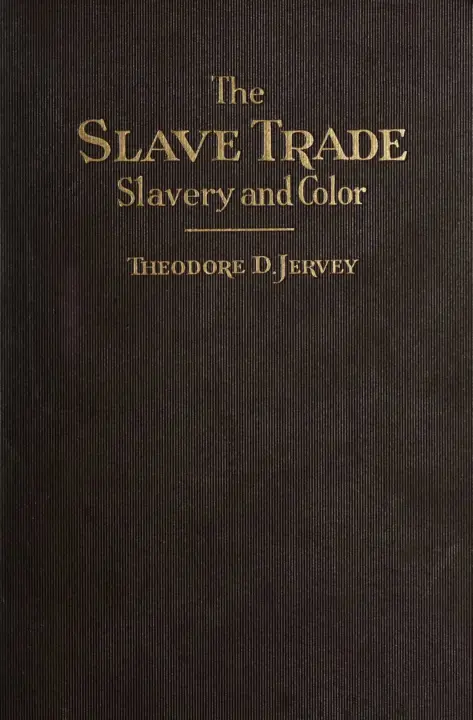
"The Slave Trade: Slavery and Color" by Theodore D. Jervey is a historical account written in the early 20th century. The work examines the complexities of slavery and race relations in the United States, particularly focusing on the evolving views of slavery and the impact of legislative decisions on the status of African Americans. It addresses the socio-political context of slavery, the implications of race, and the shifting sentiments around the 19th century in America. The opening of the book introduces the central themes by reflecting on the broader implications of the "Negro Question." It discusses the historical evolution of race relations, from colonial attitudes toward slavery to the debates during the drafting of the Constitution. Jervey highlights key figures and legislative discussions that grappled with the status of African Americans and the moral considerations surrounding slavery. By establishing these foundational elements, the author sets the stage for a deeper exploration of the socio-political ramifications resulting from these historical decisions as they relate to both white and black populations in America.
Introduction adapted from the source catalogue; source summaries may be automatically generated.
Free to read · English · 92,015 words · No account needed
MAKE TIME FOR A GOOD BOOK
On by default. Untick to stop anonymous reading totals. Each page counts after 10 seconds in view. How this works.
Anonymous counting is on unless you have switched it off.
“It is easy in Congress and from the pulpit, North and South to talk about polygamy and Brigham Young and debauchery of various kinds; but there is also one great fact that four millions of people lived in open and notorious concubinage. The time has come when you must correct this thing. You know what I say is true and you must do something to correct it by example as well as words and professions.... I trust in God the time may come when you shall be gathered together in a clime and country suited to you, should it be found that the two races cannot get along together.”[182]
It is almost idle, after the above, to state that Johnson was absolutely devoid of the kindly tact and vulgar humor, which had so endeared Lincoln, the supplest politician of his time, to the coarse mass of the electorate, as he had voiced for it, its thoughts in a tongue it could understand and appreciate.
When we reflect, that Johnson, a Southern man, the Vice President coming from the conquered South, was handed the reins at the moment when the victorious North, flushed with conquest, saw its great leader, identified with the West, hurled from his high position to bloody death, at the hands of a murderer, who proclaimed his sympathy with the vanquished South, the immensity of the difficulties about to confront him begins to appear. In addition, he, himself, before being steadied by the responsibilities of the office, had “breathed threatenings and slaughter.”
In a proclamation, claiming that Jefferson Davis and others had incited, concocted and procured the atrocious murder of President Abraham Lincoln and the attempted assassination of William H. Seward, ex-President Jefferson Davis had been held up to obloquy and, upon his capture, imprisoned and chained; but what was infinitely more horrible, Wirz, the Confederate officer in charge of Andersonville, was made a human sacrifice, under circumstances which have left an ineffaceable blot upon all in any way responsible for making him the scapegoat for the very effective military policy which refused the Confederate offer to exchange prisoners. If it took the magnanimity and fortitude of Seward to point out the method by which the Union might be saved from the fate in which the Congressional conspirators meant to involve it, for their own immediate ends, and if, in this hacked victim of the assassins, Johnson found the anchor by which he rode out the storm which burst upon him; yet it should be remembered that nothing but the sturdiest integrity and most indomitable courage could have nerved Johnson to even attempt the struggle, he fought out to the end. Conditions in the South were appalling. Bled to a whiteness, which not even France experienced in the Great War; with her labor system hopelessly disorganized by the Freedman’s Bureau; not only by its methods but by the openly announced suggestions of its head, General Howard, that the landholders should be compelled by the Federal Government to furnish their former slaves with land,[183] industry stood still. With Negro troops quartered in every direction under “the deliberate purpose to emphasize the completeness of the catastrophe which the war had brought upon the South,”[184] collisions between them and the whites were of almost daily occurrence. But these could not, in the bulk of cases, be attributed to the truculence of Southern slave holders from the fact that instances were not few, in which Northern troops, acting in the line of duty, were assailed by colored men. A Federal soldier, acting as guard and on his post at a house in Abbeville, was shot by colored soldiers,[185] incensed against the inmates. Sergeant Terry and four members of the 127th New York Volunteers, acting as a guard on the Battery at Charleston, were set upon by Negroes abetted by members of the 35th United States Colored Troops and two of the guard wounded, before the arrival of additional white troops scattered the assailants with five casualties and some arrests.[186] Later, Lieutenant A. S. Bodine, of the same regiment, for clearing a meeting of whites of uninvited Negroes, among whom appeared Negro soldiers with sidearms, was courtmartialed by order of General Hatch in command at Charleston, the court finding him guilty, on the flimsiest evidence, of “unwarrantable exercise of arbitrary power” and sentencing him to reprimand by his superior officer, which reprimand was immediately ordered to be withdrawn by the general in command of the department.[187]
Your reading position is saved on this browser. Take it to another device with a library code. Reading pages adapt to text, rather than matching a printed edition.
BEHIND THE BOOK
This eBook is for the use of anyone anywhere in the United States and most other parts of the world at no cost and with almost no restrictions whatsoever. You may copy it, give it away or re-use it under the terms of the Project Gutenberg License included with this eBook or online at www.gutenberg.org. If you are not located in the United States, you will have to check the laws of the country where you are located before using this eBook. Read the source licence.
The original source file, including credits and licence, is retained by this library. Request an original-format copy at no charge. Please include the book title and Project Gutenberg identifier #72513.
KEEP YOUR CURIOSITY GOING
Cécile Tormay

Moritz Busch
John L. Ransom
Frances Wright
Cécile Tormay

Mabel Potter Daggett