THE CLASSIC COLLECTION✦An outlaw’s diary: the CommuneCLASSIC FREE BOOKS
An outlaw’s diary: the Commune
Cécile Tormay
THE CLASSIC COLLECTION · 1925
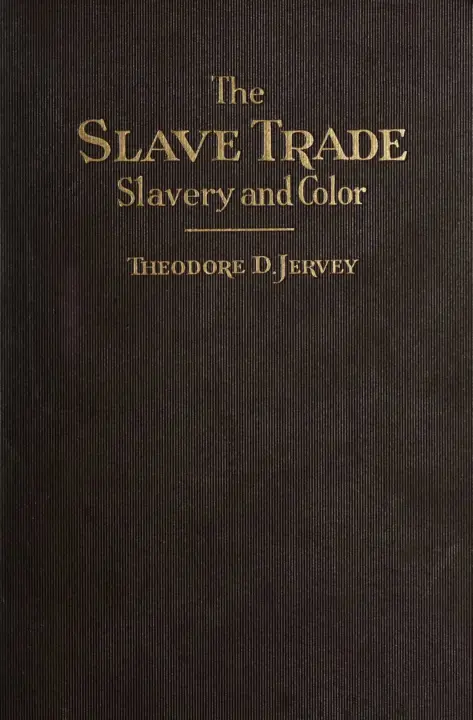
"The Slave Trade: Slavery and Color" by Theodore D. Jervey is a historical account written in the early 20th century. The work examines the complexities of slavery and race relations in the United States, particularly focusing on the evolving views of slavery and the impact of legislative decisions on the status of African Americans. It addresses the socio-political context of slavery, the implications of race, and the shifting sentiments around the 19th century in America. The opening of the book introduces the central themes by reflecting on the broader implications of the "Negro Question." It discusses the historical evolution of race relations, from colonial attitudes toward slavery to the debates during the drafting of the Constitution. Jervey highlights key figures and legislative discussions that grappled with the status of African Americans and the moral considerations surrounding slavery. By establishing these foundational elements, the author sets the stage for a deeper exploration of the socio-political ramifications resulting from these historical decisions as they relate to both white and black populations in America.
Introduction adapted from the source catalogue; source summaries may be automatically generated.
Free to read · English · 92,015 words · No account needed
MAKE TIME FOR A GOOD BOOK
On by default. Untick to stop anonymous reading totals. Each page counts after 10 seconds in view. How this works.
Anonymous counting is on unless you have switched it off.
The effort of the presidential campaign by the Democrats may have been for an election in the House in 1860, and may have been lost, as Prof. Dodd declares, “only by a narrow margin by the votes of the foreigners, whom the railroads poured in numbers into the contested region;” but that triumph at the most would have only deferred the contest for another four years, for by its special correspondent in the West, the Columbus, Georgia, Times had been informed in 1854:
“If Kansas becomes a free soil State slavery will be doomed for
Missouri.”[177]
The attempt then, inaugurated in 1840, to parallel the Northern systems, pouring population westward, was recognized as an impossible task in 1860, and with the election of Lincoln, known as the man who had declared a house divided against itself cannot stand, the South attempted to end the division by Secession.
To such a solution the more powerful North was unwilling to consent, and the war followed for the Union.
[152] Woodrow Wilson, Division and Reunion, p. 184.
[153] Ibid.
[154] Ibid. p. 185.
[155] Jefferson Davis, Rise & Fall of Confed. Gov. p. 29, Vol. I.
[156] Jervey, Hayne, p. 451.
[157] Message, President Tyler, Richardson, Vol. 4, p. 363.
[158] Jameson, Calhoun’s Correspondence, p. 665.
[159] Report Com. Religious Instruction Negroes, Jenkins, Vol. 23 pamphlets C. L. S. No. 10 p. 65.
[160] Appendix Report Special Com. House Rep. So. Ca. Walker & Evans, 1857. p. 57. Message Gov. Adams of S. C. 1856, Vol. 23.
[161] Report Special Com. Reopening Slave Trade, 1857, p. 9. Vol. 23.
[162] Hammond Speeches, p. 120.
[163] Gov. Adams of S. C. Message General Assembly 1855, Vol. 15.
[164] DuBois, Suppression Slave Trade, p. 173.
[165] Hammond Speeches, p. 335.
[166] Robert G. Harper, Argument Slave Trade, Vol. 23, pamphlet C. L. S. Hanleiter, Atlanta Ga. No. 8. p. 66.
[167] DuBois, Suppression Slave Trade, p. 113.
[168] Ibid. p. 114.
[169] Ibid. p. 124.
[170] Ibid. p. 179.
[171] Ibid.
[172] Ibid. p. 181.
[173] Jervey, Robert Y. Hayne & His Times, p. 504.
[174] Charleston Mercury, May 26, 1849.
[175] Resolutions State of Arkansas, 1855, Vol. 15, pamphlets C. L. S.
[176] Dodd, The Fight for the Northwest, 1860, Am. His. Review Vol.
XVI, p. 777.
[177] Columbus, Ga., Times, Nov. 19, 1854.
Your reading position is saved on this browser. Take it to another device with a library code. Reading pages adapt to text, rather than matching a printed edition.
BEHIND THE BOOK
This eBook is for the use of anyone anywhere in the United States and most other parts of the world at no cost and with almost no restrictions whatsoever. You may copy it, give it away or re-use it under the terms of the Project Gutenberg License included with this eBook or online at www.gutenberg.org. If you are not located in the United States, you will have to check the laws of the country where you are located before using this eBook. Read the source licence.
The original source file, including credits and licence, is retained by this library. Request an original-format copy at no charge. Please include the book title and Project Gutenberg identifier #72513.
KEEP YOUR CURIOSITY GOING
Cécile Tormay

Moritz Busch
John L. Ransom
Frances Wright
Cécile Tormay

Mabel Potter Daggett