THE CLASSIC COLLECTION✦An outlaw’s diary: the CommuneCLASSIC FREE BOOKS
An outlaw’s diary: the Commune
Cécile Tormay
THE CLASSIC COLLECTION · 1925
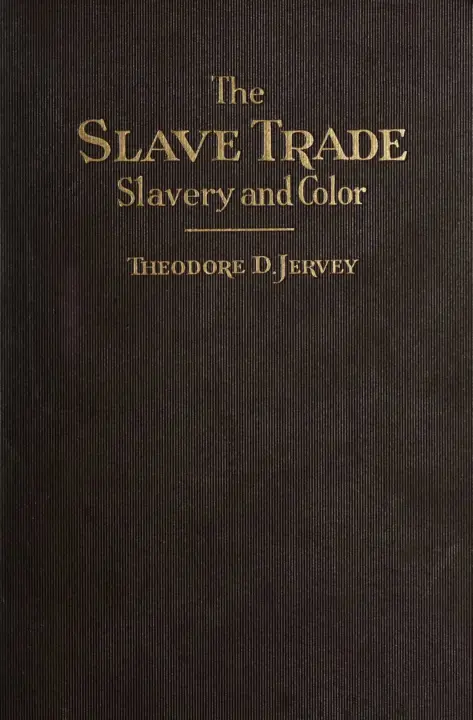
"The Slave Trade: Slavery and Color" by Theodore D. Jervey is a historical account written in the early 20th century. The work examines the complexities of slavery and race relations in the United States, particularly focusing on the evolving views of slavery and the impact of legislative decisions on the status of African Americans. It addresses the socio-political context of slavery, the implications of race, and the shifting sentiments around the 19th century in America. The opening of the book introduces the central themes by reflecting on the broader implications of the "Negro Question." It discusses the historical evolution of race relations, from colonial attitudes toward slavery to the debates during the drafting of the Constitution. Jervey highlights key figures and legislative discussions that grappled with the status of African Americans and the moral considerations surrounding slavery. By establishing these foundational elements, the author sets the stage for a deeper exploration of the socio-political ramifications resulting from these historical decisions as they relate to both white and black populations in America.
Introduction adapted from the source catalogue; source summaries may be automatically generated.
Free to read · English · 92,015 words · No account needed
MAKE TIME FOR A GOOD BOOK
On by default. Untick to stop anonymous reading totals. Each page counts after 10 seconds in view. How this works.
Anonymous counting is on unless you have switched it off.
“Although that great work was abandoned from causes beyond our control, yet it has been the mother of all our interior railroads and has not cost the State a single dollar of her money.”[140]
If there was anything which could have been said to have further accentuated the fatal folly of the abandonment of this great enterprise in favor of the attempted junction with the Georgia roads in 1840 and a route to Arkansas instead of Ohio, it was epitomized unconsciously by the same speaker, Mr. Memminger, at the same time in 1858, in the same speech, from which the above extract was taken:
“The two roads to the West, which have been assisted by Charleston are the Memphis and the Nashville Railroads.... We hoped that they would bring trade to the city, but it finds a cheaper outlet by the Mississippi river.”[141]
One word more with regard to the cost of this road, which if it had not been stopped at Columbia, might possibly have prevented the war between the States. In the three years from 1836 to 1839 the old Hamburg Railroad, run down and out of condition, had been purchased and put into such order as to raise the receipts from it fifty per cent, by 1839. Seventeen miles had been built on the fork to Columbia from Branchville, with preparations so well forward that to the $1,858,772 spent on the 153 miles, $584,304 additional, it was estimated, would enable the remaining 48 to be completed in a year to Columbia, with about $1,300,000 additional to be spent to reach the North Carolina line by 1846, when the total expenditure of the road from Charleston to Augusta and from Branchville through Columbia to the North Carolina line via Spartanburg, would have reached $3,743,076. At that point $1,102,600 pledged by North Carolina and Tennessee would have been obtained, which with the work done and prepared for was all lost by the stoppage at Columbia. Yet nine years after Hayne’s death, 1848, the report of the president of the South Carolina Railroad, James Gadsden, shows $5,546,735.48[142] spent in securing only an additional 51 miles of roadway.
[109] Trotter, Finances of the North American States p. 163.
[110] Hadley, Railroad Transportation, p. 33, et seq.
[111] Trotter, Finances North American States, p. 165.
[112] Hadley, Railroad Transportation, p. 33, et seq.
[113] Trotter, Finances North American States, p. 165.
[114] Ibid. p. 211.
[115] Ibid. p. 212.
[116] Ibid.
[117] Jervey, Robert Y. Hayne & His Times, p. 388.
[118] Ibid. p. 459.
[119] Courier, March 13th, 1838.
[120] Jervey, Robert Y. Hayne & His Times, p. 477.
[121] Jameson, Calhoun’s Correspondence, p. 464.
[122] Jervey, Robert Y. Hayne & His Times, p. 470.
[123] Phillips, Transportation in Eastern Cotton Belt, p. 316.
[124] Ibid. p. 242.
[125] Jameson, Calhoun’s Correspondence, p. 1062.
[126] Courier, Dec. 18th, 1839.
[127] Jameson, Calhoun’s Correspondence, p. 1060.
[128] Ibid. p. 1188.
[129] Ibid. p. 672.
[130] Pamphlet, C. L. S. Vol. VIII. Art. 7, p. 6.
[131] Jameson, Calhoun’s Correspondence, p. 1085.
Your reading position is saved on this browser. Take it to another device with a library code. Reading pages adapt to text, rather than matching a printed edition.
BEHIND THE BOOK
This eBook is for the use of anyone anywhere in the United States and most other parts of the world at no cost and with almost no restrictions whatsoever. You may copy it, give it away or re-use it under the terms of the Project Gutenberg License included with this eBook or online at www.gutenberg.org. If you are not located in the United States, you will have to check the laws of the country where you are located before using this eBook. Read the source licence.
The original source file, including credits and licence, is retained by this library. Request an original-format copy at no charge. Please include the book title and Project Gutenberg identifier #72513.
KEEP YOUR CURIOSITY GOING
Cécile Tormay

Moritz Busch
John L. Ransom
Frances Wright
Cécile Tormay

Mabel Potter Daggett