THE CLASSIC COLLECTION✦An outlaw’s diary: the CommuneCLASSIC FREE BOOKS
An outlaw’s diary: the Commune
Cécile Tormay
THE CLASSIC COLLECTION · 1925
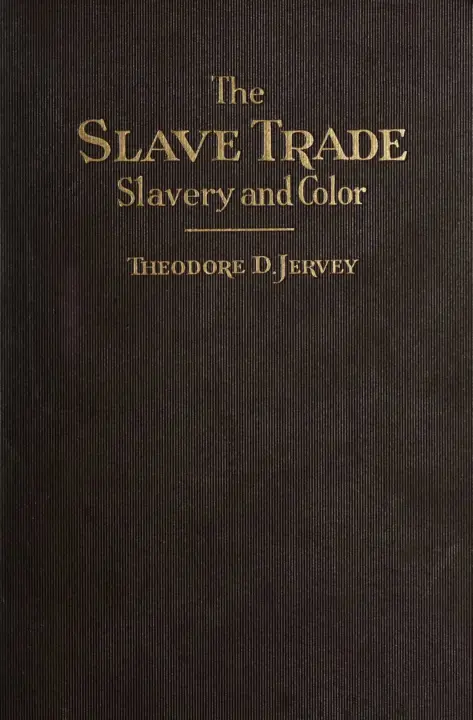
"The Slave Trade: Slavery and Color" by Theodore D. Jervey is a historical account written in the early 20th century. The work examines the complexities of slavery and race relations in the United States, particularly focusing on the evolving views of slavery and the impact of legislative decisions on the status of African Americans. It addresses the socio-political context of slavery, the implications of race, and the shifting sentiments around the 19th century in America. The opening of the book introduces the central themes by reflecting on the broader implications of the "Negro Question." It discusses the historical evolution of race relations, from colonial attitudes toward slavery to the debates during the drafting of the Constitution. Jervey highlights key figures and legislative discussions that grappled with the status of African Americans and the moral considerations surrounding slavery. By establishing these foundational elements, the author sets the stage for a deeper exploration of the socio-political ramifications resulting from these historical decisions as they relate to both white and black populations in America.
Introduction adapted from the source catalogue; source summaries may be automatically generated.
Free to read · English · 92,015 words · No account needed
MAKE TIME FOR A GOOD BOOK
On by default. Untick to stop anonymous reading totals. Each page counts after 10 seconds in view. How this works.
Anonymous counting is on unless you have switched it off.
But in 1835 Calhoun had been convinced that the movement of population and industry was towards Arkansas,[107] and that consequently “we should look much further West than Cincinnati or Lexington”.[108] This he announced in his letter to Hayne resigning from his position as one of the directors of the Louisville, Cincinnati and Charleston Railroad in 1838.
On what did he base the view? The Census figures of 1830 as compared with those of 1820 indicated that the increase of population of Indiana, Illinois, and Michigan, were all greater than the increase in Arkansas, even if the increase of Ohio’s 581,295 to 937,903 was not as great a percentage of increase as that of Arkansas from 14,314, to 33,388 in the same period. Nevertheless at the time when the road was determined to be stopped at Columbia, South Carolina, in favor of the movement to be worked out through Georgia to Arkansas, the white population of Ohio was 1,502,122, the colored 17,345. At the same date the white population of Arkansas was 77,174, the colored 20,865. If it be claimed that north of Arkansas was Missouri with a white population of 323,888 and a colored population of 61,388; yet, if we took the three States just north of Kentucky and across the Ohio River and the State of Michigan just beyond, we will know that the region which held 2,864,634 whites and 29,483 colored was abandoned to build to a region inhabited by 401,662 whites and 82,253 colored persons. Was this a reasonable commercial movement? If it was not, what was it? An attempt will be made to answer these two questions in the two following chapters, which attempt should open with some description of railroad movement in the North and West.
[82] Jervey, Robert Y. Hayne & His Times, p. 348.
[83] Ibid. p. 349.
[84] Ibid. p. 22.
[85] Ibid. p. 502.
[86] Census, U. S. 1850, p. 185.
[87] Ibid. p. 185.
[88] Jervey, Robert Y. Hayne & His Times, p. 122.
[89] Ibid. p. 208.
[90] Ibid. p. 458.
[91] Ibid. p. 401.
[92] A. E. Miller, Pub. 1833, Address by Horry p. 31.
[93] Ibid. pp. 34-35.
[94] Charleston Mercury, November 25, 1833.
[95] A. E. Miller, Pub. 1833, Address by Horry, p. 21.
[96] Charleston Courier, Oct. 8, 1835.
[97] Ibid, Dec. 18, 1839.
[98] Charleston Mercury, Aug. 16, 1839.
[99] Phillips, Transportation Eastern Cotton Belt, p. 316.
[100] W. E. Cog. Pub. Address Memminger, Vol. XXI Pam. C. L. S. p. 9.
[101] Trotter: Finances, North American States, p. 61.
[102] Ibid. p. 223.
[103] Ibid. p. 226.
[104] Jervey, Robert Y. Hayne & His Times, p. 457.
[105] Trotter: Finances, North American States, p. 277.
[106] Paxson, Early Railroads of the Old Northwest, p. 254.
[107] Charleston Courier, Nov. 9, 1835.
[108] Jameson, Calhoun’s Correspondence, pp. 411-412.
Your reading position is saved on this browser. Take it to another device with a library code. Reading pages adapt to text, rather than matching a printed edition.
BEHIND THE BOOK
This eBook is for the use of anyone anywhere in the United States and most other parts of the world at no cost and with almost no restrictions whatsoever. You may copy it, give it away or re-use it under the terms of the Project Gutenberg License included with this eBook or online at www.gutenberg.org. If you are not located in the United States, you will have to check the laws of the country where you are located before using this eBook. Read the source licence.
The original source file, including credits and licence, is retained by this library. Request an original-format copy at no charge. Please include the book title and Project Gutenberg identifier #72513.
KEEP YOUR CURIOSITY GOING
Cécile Tormay

Moritz Busch
John L. Ransom
Frances Wright
Cécile Tormay

Mabel Potter Daggett