THE CLASSIC COLLECTION✦An outlaw’s diary: the CommuneCLASSIC FREE BOOKS
An outlaw’s diary: the Commune
Cécile Tormay
THE CLASSIC COLLECTION · 1925
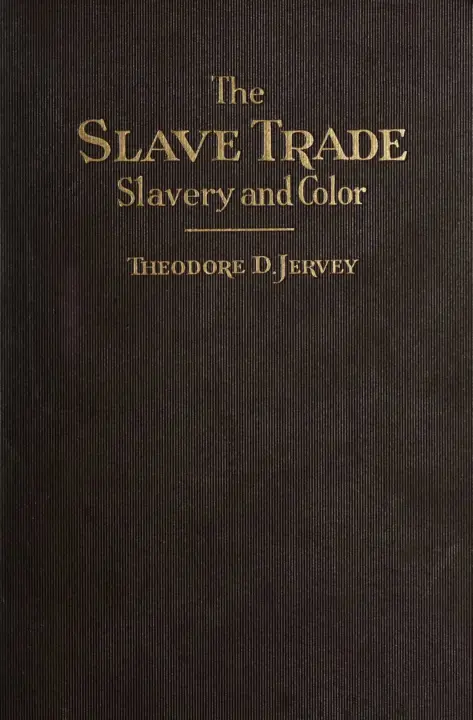
"The Slave Trade: Slavery and Color" by Theodore D. Jervey is a historical account written in the early 20th century. The work examines the complexities of slavery and race relations in the United States, particularly focusing on the evolving views of slavery and the impact of legislative decisions on the status of African Americans. It addresses the socio-political context of slavery, the implications of race, and the shifting sentiments around the 19th century in America. The opening of the book introduces the central themes by reflecting on the broader implications of the "Negro Question." It discusses the historical evolution of race relations, from colonial attitudes toward slavery to the debates during the drafting of the Constitution. Jervey highlights key figures and legislative discussions that grappled with the status of African Americans and the moral considerations surrounding slavery. By establishing these foundational elements, the author sets the stage for a deeper exploration of the socio-political ramifications resulting from these historical decisions as they relate to both white and black populations in America.
Introduction adapted from the source catalogue; source summaries may be automatically generated.
Free to read · English · 92,015 words · No account needed
MAKE TIME FOR A GOOD BOOK
On by default. Untick to stop anonymous reading totals. Each page counts after 10 seconds in view. How this works.
Anonymous counting is on unless you have switched it off.
While the urban Negro population of the Southern States appears to be increasing it is scarcely increasing at the rate at which it is increasing in the great section of the North above described and as has been shown in not a few States of the South the Negro population as a whole is decreasing slightly; while the white population is increasing actively. But the civilization of the Southern whites has been handicapped by the weight of the Negro population which it has carried for a century and more. It should not bear any more than its fair proportion of that load and in the natural movement of the Negroes from the South up to the north central portion of the Union and to some extent into Canada, by the amalgamation of Negroes and mulattoes, a brown people affected by the civilization of these sections, differing in some degrees from the darker Negroes who will more slowly develop in the Southern States, will show in their progress what the North and West can do to improve them. With ever lessening numbers in the South, they will the better respond to their environment, which will be the better for such lessening. The result will be the advance of all to a better condition and a higher plane of thought.
[401] Negro in Chicago, p. 567.
[402] Yale Lit. Magazine, p. 237.
[403] Pinckney, The Coming Crisis, p. 61.
[404] Ibid. p. 58.
[405] Evans & Cogswell; List of Taxpayers Charleston, S. C. 1860.
[406] Rene Maran, Batouala, pp. 10, 12.
[407] Ibid. pp. 22, 24.
[408] The Nation, December 17, 1924, p. 675.
[409] Ibid.
[410] Rene Maran, Batouala, p. 90.
[411] Ibid. pp. 98, 103, 105, 106, 107.
[412] Gonzales, The Black Border, pp. 212, 213, 214.
[413] Ibid. p. 215.
[414] Department of Commerce, Estimates of population, p. 138.
Transcriber’s Notes
pg 10 Changed: the assent of their constitutents to: the assent of their constituents
pg 20 Changed: accompained by an ever increasing investment to: accompanied by an ever increasing investment
pg 55 Changed: so lamentable an occurence
to: so lamentable an occurrence
pg 76 Changed: promotion of this homogeniety
to: promotion of this homogeneity
pg 110 Changed: did’nt have a leg to stand upon to: didn’t have a leg to stand upon
pg 126 Changed: they were slighly surprised
to: they were slightly surprised
pg 131 Changed: assailants with five casulties
to: assailants with five casualties
pg 133 Changed: has in its revoluntionary progress to: has in its revolutionary progress
pg 146 Changed: whatever it may me called
to: whatever it may be called
pg 150 Changed: peace between ‘the two countires to: peace between ‘the two countries
pg 152 Changed: the ruling politicial leaders
to: the ruling political leaders
pg 158 Changed: comparitively small price
to: comparatively small price
pg 160 Changed: securing wealth and properity
to: securing wealth and prosperity
Your reading position is saved on this browser. Take it to another device with a library code. Reading pages adapt to text, rather than matching a printed edition.
BEHIND THE BOOK
This eBook is for the use of anyone anywhere in the United States and most other parts of the world at no cost and with almost no restrictions whatsoever. You may copy it, give it away or re-use it under the terms of the Project Gutenberg License included with this eBook or online at www.gutenberg.org. If you are not located in the United States, you will have to check the laws of the country where you are located before using this eBook. Read the source licence.
The original source file, including credits and licence, is retained by this library. Request an original-format copy at no charge. Please include the book title and Project Gutenberg identifier #72513.
KEEP YOUR CURIOSITY GOING
Cécile Tormay

Moritz Busch
John L. Ransom
Frances Wright
Cécile Tormay

Mabel Potter Daggett