THE CLASSIC COLLECTION✦An outlaw’s diary: the CommuneCLASSIC FREE BOOKS
An outlaw’s diary: the Commune
Cécile Tormay
THE CLASSIC COLLECTION · 1925
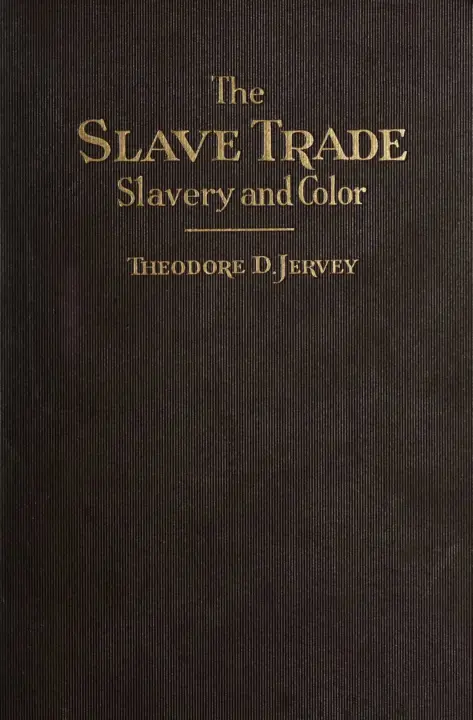
"The Slave Trade: Slavery and Color" by Theodore D. Jervey is a historical account written in the early 20th century. The work examines the complexities of slavery and race relations in the United States, particularly focusing on the evolving views of slavery and the impact of legislative decisions on the status of African Americans. It addresses the socio-political context of slavery, the implications of race, and the shifting sentiments around the 19th century in America. The opening of the book introduces the central themes by reflecting on the broader implications of the "Negro Question." It discusses the historical evolution of race relations, from colonial attitudes toward slavery to the debates during the drafting of the Constitution. Jervey highlights key figures and legislative discussions that grappled with the status of African Americans and the moral considerations surrounding slavery. By establishing these foundational elements, the author sets the stage for a deeper exploration of the socio-political ramifications resulting from these historical decisions as they relate to both white and black populations in America.
Introduction adapted from the source catalogue; source summaries may be automatically generated.
Free to read · English · 92,015 words · No account needed
MAKE TIME FOR A GOOD BOOK
On by default. Untick to stop anonymous reading totals. Each page counts after 10 seconds in view. How this works.
Anonymous counting is on unless you have switched it off.
But the report of the Chicago riot contains much more than an expression of the views of the committee as to the cause of that outburst of savagery. In its 667 pages are the views of many Negroes on the greatest variety of subjects. The first article of the belief of the members of the Negro Urban League of Chicago is—
“I realize that our soldiers have learned new habits of self-respect
and cleanliness.”[399]
That is a short sentence, but it contains much.
Here is another which indicates that the Negro will not only learn much from the Northern and Western white man; but also teach him a bit. It is not very sweetly expressed, but it is well worth pondering for all that:
“There is one trait, and I might say only one, that I take off my hat to the southern ‘Cracker’ for, and that is his respect and high regard for women. While he hasn’t much for the other fellow’s (the Negro’s) wives and daughters, yet he respects his own. We must set a good example for him and respect all women, regardless of race, color or creed. Then you will win the admiration of all civilized people. Men who do not respect and honor their women are not worthy of citizenship.”[400]
Only one trait, but what an important one!
[369] Harding’s Speech at Birmingham, News and Courier, Oct. 27, 1921.
[370] Ibid.
[371] Ibid.
[372] Ibid.
[373] News and Courier, Editorial, October 27, 1921.
[374] The New Republic, November 9, 1921.
[375] DuBois, The New Republic, December 7, 1921.
[376] Ibid.
[377] Ibid.
[378] Ibid.
[379] Ibid.
[380] The Crisis, December, 1921, p. 53.
[381] Ibid. p. 55.
[382] Ibid. p. 64.
[383] Asmis, The Living Age, February 4, 1922, p. 261.
[384] Ibid. p. 262.
[385] Ibid.
[386] Jameson, Calhoun’s Correspondence, p. 368.
[387] Stephenson, Lincoln, p. 32.
[388] Ibid. p. 35.
[389] Jervey, Robert Y. Hayne and His Times, p. 207.
[390] Bassett, Andrew Jackson, Vol. II p. 547.
[391] Dilke, Problems of Greater Britain, p. 20.
[392] Munford, Virginia’s Attitude, Slavery and Secession, p. 173.
[393] Negro in Chicago, p. 8.
[394] Ibid. p. 121.
[395] Ibid. p. 92.
[396] Ibid. p. 105.
[397] The New Republic, February 14, 1923.
[398] Negro in Chicago, p. XXIII.
[399] Ibid. p. 193.
[400] Ibid. p. 306.
Your reading position is saved on this browser. Take it to another device with a library code. Reading pages adapt to text, rather than matching a printed edition.
BEHIND THE BOOK
This eBook is for the use of anyone anywhere in the United States and most other parts of the world at no cost and with almost no restrictions whatsoever. You may copy it, give it away or re-use it under the terms of the Project Gutenberg License included with this eBook or online at www.gutenberg.org. If you are not located in the United States, you will have to check the laws of the country where you are located before using this eBook. Read the source licence.
The original source file, including credits and licence, is retained by this library. Request an original-format copy at no charge. Please include the book title and Project Gutenberg identifier #72513.
KEEP YOUR CURIOSITY GOING
Cécile Tormay

Moritz Busch
John L. Ransom
Frances Wright
Cécile Tormay

Mabel Potter Daggett