THE CLASSIC COLLECTION✦An outlaw’s diary: the CommuneCLASSIC FREE BOOKS
An outlaw’s diary: the Commune
Cécile Tormay
THE CLASSIC COLLECTION · 1925
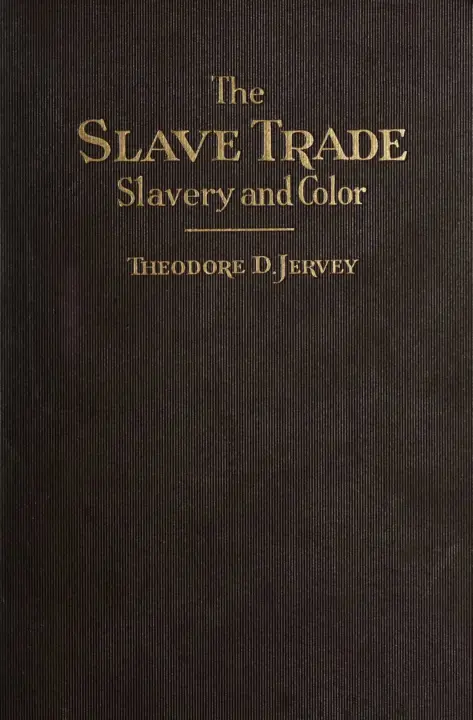
"The Slave Trade: Slavery and Color" by Theodore D. Jervey is a historical account written in the early 20th century. The work examines the complexities of slavery and race relations in the United States, particularly focusing on the evolving views of slavery and the impact of legislative decisions on the status of African Americans. It addresses the socio-political context of slavery, the implications of race, and the shifting sentiments around the 19th century in America. The opening of the book introduces the central themes by reflecting on the broader implications of the "Negro Question." It discusses the historical evolution of race relations, from colonial attitudes toward slavery to the debates during the drafting of the Constitution. Jervey highlights key figures and legislative discussions that grappled with the status of African Americans and the moral considerations surrounding slavery. By establishing these foundational elements, the author sets the stage for a deeper exploration of the socio-political ramifications resulting from these historical decisions as they relate to both white and black populations in America.
Introduction adapted from the source catalogue; source summaries may be automatically generated.
Free to read · English · 92,015 words · No account needed
MAKE TIME FOR A GOOD BOOK
On by default. Untick to stop anonymous reading totals. Each page counts after 10 seconds in view. How this works.
Anonymous counting is on unless you have switched it off.
On the other hand the State of Ohio, which had been admitted in 1800 with 45,628 whites and only 336 colored, was so disturbed by the growth of its colored population that before they reached in number two thousand, that State passed the notorious Black Laws of January 9, 1805, of which Section 4 reads as follows: “That no black or mulatto person shall hereafter be permitted to be sworn or give evidence in any Court of record or elsewhere in the State in any cause depending or matter of controversy, where either party to the same is a white person, or in any prosecution which shall be instituted in behalf of this State against any white person.”[38]
While South Carolina did not permit the full sweep of such in her Courts,[39] holding a free person of color born of a free white woman an admissible witness yet, with such legislation in Ohio, and Indiana, it is not surprising, Fiske, of New York, six years later failed to establish his contention that “color was a mere matter of accident * * * All men were born free and equal”; and that his attempt to reject the Senate amendment to the Orleans bill, i. e. the insertion of the word “white” before the words “free male inhabitants,” in defining the electorate, should have been brushed aside by Sheffey, of Virginia, with the simple declaration that “such doctrines would prostrate the civil institutions of Virginia.”[40] It was one thing to protest as Col. Mason did against the slave trade; but, with some four hundred thousand slaves, double what any other State possessed, Virginia was prepared to contend for her property rights, and the position seems to have been met with acquiescence by Congress.
[16] Stat. S. C. Vol. 7 pp. 431-448.
[17] Charleston Courier, December 5, 1803.
[18] Ibid. December 6, 1803.
[19] Ibid. December 13, 1803.
[20] S. C. Hist. & Genealog. Mag. Vol. 2, p. 72.
[21] Annual Report American Hist. Ass. 1896, Vol. 1, p. 870.
[22] Charleston Courier, December 26, 1803.
[23] Jervey, Robert Y. Hayne & His Times, p. 148.
[24] Charleston Courier, December 26, 1803.
[25] Ibid. January 2, 1804.
[26] City Gazette and Daily Advertiser, December 21, 1803.
[27] Memoirs of Aaron Burr, Vol. 2, p. 270.
[28] Charleston Courier, December 12, 1804.
[29] Ibid. December 24, 1804.
[30] Charleston Courier, December 2, 1805.
[31] Jervey, Robert Y. Hayne & His Times, p. 534.
[32] Annual Report American Hist. Assn. 1896, Vol. 1, p. 868.
[33] Charleston Courier, December 13, 1805.
[34] Annual Report American Hist. Assn. Vol. 1, p. 878, 1896.
[35] Charleston Courier, December 9, 1805.
[36] Charleston Year Book, 1880, p. 263.
[37] Thomas’s Reminiscences, Case Tiffany & Burnham, Vol. 2, p. 35.
[38] C. L. Martzolff, Ohio University, Nov. 30, 1909.
[39] S. C. Reports, Brevard, Vol. 2, p. 145. State vs. McDowell.
[40] Charleston Courier, February 27, 1811.
Your reading position is saved on this browser. Take it to another device with a library code. Reading pages adapt to text, rather than matching a printed edition.
BEHIND THE BOOK
This eBook is for the use of anyone anywhere in the United States and most other parts of the world at no cost and with almost no restrictions whatsoever. You may copy it, give it away or re-use it under the terms of the Project Gutenberg License included with this eBook or online at www.gutenberg.org. If you are not located in the United States, you will have to check the laws of the country where you are located before using this eBook. Read the source licence.
The original source file, including credits and licence, is retained by this library. Request an original-format copy at no charge. Please include the book title and Project Gutenberg identifier #72513.
KEEP YOUR CURIOSITY GOING
Cécile Tormay

Moritz Busch
John L. Ransom
Frances Wright
Cécile Tormay

Mabel Potter Daggett