THE CLASSIC COLLECTION✦An outlaw’s diary: the CommuneCLASSIC FREE BOOKS
An outlaw’s diary: the Commune
Cécile Tormay
THE CLASSIC COLLECTION · 1925
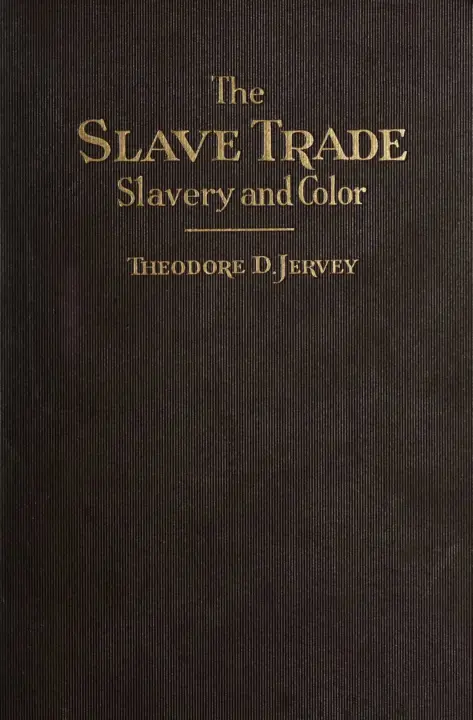
"The Slave Trade: Slavery and Color" by Theodore D. Jervey is a historical account written in the early 20th century. The work examines the complexities of slavery and race relations in the United States, particularly focusing on the evolving views of slavery and the impact of legislative decisions on the status of African Americans. It addresses the socio-political context of slavery, the implications of race, and the shifting sentiments around the 19th century in America. The opening of the book introduces the central themes by reflecting on the broader implications of the "Negro Question." It discusses the historical evolution of race relations, from colonial attitudes toward slavery to the debates during the drafting of the Constitution. Jervey highlights key figures and legislative discussions that grappled with the status of African Americans and the moral considerations surrounding slavery. By establishing these foundational elements, the author sets the stage for a deeper exploration of the socio-political ramifications resulting from these historical decisions as they relate to both white and black populations in America.
Introduction adapted from the source catalogue; source summaries may be automatically generated.
Free to read · English · 92,015 words · No account needed
MAKE TIME FOR A GOOD BOOK
On by default. Untick to stop anonymous reading totals. Each page counts after 10 seconds in view. How this works.
Anonymous counting is on unless you have switched it off.
“Till this day the Negro is seldom frank to the white man. He says what he does not mean; he means what he does not say,”—
apparently his view changed. As editor of The Crisis, Dr. DuBois upon the occasion of the Chicago riots as above noted honored every man, black or white, who, in either Houston or Chicago, gave his life for civilization and order; later he expressed the following, which is nothing more nor less than a justification of the behavior of the Negro soldiery at Houston:
“Six years ago December 11, at 7:17 in the morning, thirteen American Negro soldiers were murdered on the scaffold by the American government to satisfy the blood-lust of Texas, on account of the Houston riot.”[366]
Now, how does this exhibit this extremely gifted man, as a leader of his race? In the roar and blaze of the Chicago riot, in 1919 he was for “Honor, endless and undying Honor to every man black or white in Houston ... who gave his life for civilization and order”; but by the end of 1920, the executed Negro soldiers had become martyrs, murdered by the government.
But in justice to this most excitable man, it must be admitted that there can be found whites of cultivation and intellect just as wild. Take the case of Dr. H. J. Seligman.
With all the insufferable conceit of a certain class of white, he appropriates the work of Negroes, (easily recognized by those who have heard their most intelligent speakers), denatures it of the humor which makes its appeal and presents it to the public, as his own indictment of the South. “The Southern dogma colors the rest of the country,” he says. Yet he admits—“In so far as the South is concerned, conditions improve as the Negro moves out.” Another writer, Stephen Graham, starts his book with crediting to the Negro slaves emancipated in 1863 the “twelve millions out of a total of a hundred millions of all races blending in America.”[367] As the census postdating his book gives only 10,389,328 Negroes for 1920, and as in all reason nearly two millions of these may be argued to be the progeny of the free persons of color of 1860, the contribution to the race from the class of colored person invariably ignored by English and Northern writers must approach almost a third. But that is not sensational. So journeying through Virginia, Tennessee, Alabama, Georgia, Florida, Louisiana and Mississippi, visiting Negroes, accepting their hospitality and practicing social equality, Graham most inconsiderately denounces their smell and, because he failed to reach and establish any spiritual touch, in his attempt to address them, stupidly decides there was none to be attained. Expressing the belief that the Negroes of New York and Chicago were firmer in flesh and will than those in the South and yield more hope for the race in the light of the extra prosperity and happiness of the Northern Negroes, he nevertheless crawls back to the feet of Northern prejudice with the declaration against the migration of the Negroes from the South to the North and the consequent even distribution over the whole of the country, because it would take “hundreds of years to even them out” and “they would probably crowd more and more into the large cities and be as much involved in evil conditions, as they were in the South.” Can it be possible that there are nothing but evil conditions in the great cities of the North and West? Is it not the belief of the Northern authorities, that what the Negro needs is education? What education is equal to residence in these great pulses of our civilization? Has not Mr. Graham, himself attested “the extra prosperity and happiness of the Northern Negroes?” Why then attempt to throw doubts on the benefits to the Negro from diffusion? It might as well be faced without any more squirming. It is inevitable. By the law of compensation, that section of our great country, which for a hundred years or more has represented to the admiring world all the virtue, intelligence and civilization of the United States, especially in its treatment of the colored race will have to endeavor to live up to its reputation. The aspiring Negro is not going to be denied that contact with the most advanced civilization of this country, which those who freed him owe to him. If he crowds into the great cities, it is because there he finds its most advertised display, and so the most active and energetic push into it with some contempt for their feeble self elected leaders, who have preached against or kept quiet concerning it.
Your reading position is saved on this browser. Take it to another device with a library code. Reading pages adapt to text, rather than matching a printed edition.
BEHIND THE BOOK
This eBook is for the use of anyone anywhere in the United States and most other parts of the world at no cost and with almost no restrictions whatsoever. You may copy it, give it away or re-use it under the terms of the Project Gutenberg License included with this eBook or online at www.gutenberg.org. If you are not located in the United States, you will have to check the laws of the country where you are located before using this eBook. Read the source licence.
The original source file, including credits and licence, is retained by this library. Request an original-format copy at no charge. Please include the book title and Project Gutenberg identifier #72513.
KEEP YOUR CURIOSITY GOING
Cécile Tormay

Moritz Busch
John L. Ransom
Frances Wright
Cécile Tormay

Mabel Potter Daggett