THE CLASSIC COLLECTION✦An outlaw’s diary: the CommuneCLASSIC FREE BOOKS
An outlaw’s diary: the Commune
Cécile Tormay
THE CLASSIC COLLECTION · 1925
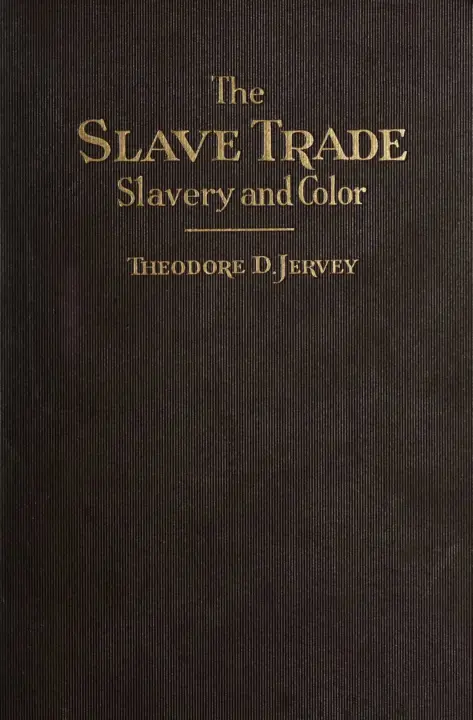
"The Slave Trade: Slavery and Color" by Theodore D. Jervey is a historical account written in the early 20th century. The work examines the complexities of slavery and race relations in the United States, particularly focusing on the evolving views of slavery and the impact of legislative decisions on the status of African Americans. It addresses the socio-political context of slavery, the implications of race, and the shifting sentiments around the 19th century in America. The opening of the book introduces the central themes by reflecting on the broader implications of the "Negro Question." It discusses the historical evolution of race relations, from colonial attitudes toward slavery to the debates during the drafting of the Constitution. Jervey highlights key figures and legislative discussions that grappled with the status of African Americans and the moral considerations surrounding slavery. By establishing these foundational elements, the author sets the stage for a deeper exploration of the socio-political ramifications resulting from these historical decisions as they relate to both white and black populations in America.
Introduction adapted from the source catalogue; source summaries may be automatically generated.
Free to read · English · 92,015 words · No account needed
MAKE TIME FOR A GOOD BOOK
On by default. Untick to stop anonymous reading totals. Each page counts after 10 seconds in view. How this works.
Anonymous counting is on unless you have switched it off.
Both conventions had to subscribe to that; but if it represented the views of Daniel H. Chamberlain, the Reformers under Thomas and others must be credited with some influence in turning him from his earlier views on railroads, when he was the legal guardian of the State.
Observe him, fresh from the East.
“Office of the Attorney General,
Columbia, S. C. January 5, 1870.
My dear Kimpton: Parker arrived last evening and spoke of the G. & C. matter, etc. I told him I had just written you fully on that matter and also about the old Bk. bills. Do you understand fully the plan of the G. & C. enterprise? It is proposed to buy $350,000 worth of the G. & C. Stock. This with $433,000 of stock held by the State, will give entire control to us. The Laurens branch will be sold in February by decree of court and will cost not more than $50,000 and probably not more than $40,000. The Spartanburg and Union can also be got without difficulty. We shall then have in G. & C. 168 miles, in Laurens, 31, and in S. & U. 70 miles—in all 269 miles—equipped and running—put a first mortgage of $20,000 a mile—sell the bonds at $85 or $90, and the balance, after paying all outlays for cost and repairs, is immense, over $2,000,000. There is a mint of money in this or I am a fool. Then we will soon compel the S. C. R. R. to fall into our hands and complete the connection to Asheville, N. C. There is an infinite verge of expansion of power before us. Write me fully and tell me every thing you want done. My last letter was very full. Harrison shall be attended to at once. I don’t think Neagle will make any trouble. Parker hates Neagle, and magnifies his intentions.
Yours truly,
D. H. Chamberlain”[351]
What a terrible indictment of the Negro intelligentsia is their utter neglect of William Hannibal Thomas, the great Negro who could think of something more than himself and his race, who wished to serve humanity at large.
[324] DuBois, Reconstruction and Its Benefits Am. Hist. Rev. Vol. IV,
p. 781.
[325] Compendium Ninth Census U. S. p. 14.
[326] DuBois, Reconstruction and Its Benefits Am. Hist. Rev. Vol. IV,
p. 784.
[327] Ibid.
[328] Ibid.
[329] Statutes S. C. Vol. XIII, p. 279.
[330] Ibid. p. 298.
[331] Ibid.
[332] Ibid.
[333] Ibid. p. 296.
[334] Ibid. p. 297.
[335] Ibid. p. 277.
[336] Ibid. p. 299.
[337] Ibid.
[338] DuBois, Reconstruction and Its Benefits Am. Hist. Rev. Vol. XIV.
p. 782.
[339] Ibid. p. 790.
[340] Ibid.
[341] Ibid.
[342] Ibid. p. 791.
[343] Ibid. p. 793.
[344] Ibid. p. 799.
[345] Thomas, The American Negro, p. 307.
[346] Dodd, Expansion and Conflict p. 328.
[347] Paper, American Hist. Asso. 1909.
[348] Thomas, Letter to author, November 20, 1909.
[349] Charleston Evening Post, April 17, 1923.
[350] News and Courier, October 5, 1874.
[351] Allen, Gov. Chamberlain’s Administration, p. 143.
Your reading position is saved on this browser. Take it to another device with a library code. Reading pages adapt to text, rather than matching a printed edition.
BEHIND THE BOOK
This eBook is for the use of anyone anywhere in the United States and most other parts of the world at no cost and with almost no restrictions whatsoever. You may copy it, give it away or re-use it under the terms of the Project Gutenberg License included with this eBook or online at www.gutenberg.org. If you are not located in the United States, you will have to check the laws of the country where you are located before using this eBook. Read the source licence.
The original source file, including credits and licence, is retained by this library. Request an original-format copy at no charge. Please include the book title and Project Gutenberg identifier #72513.
KEEP YOUR CURIOSITY GOING
Cécile Tormay

Moritz Busch
John L. Ransom
Frances Wright
Cécile Tormay

Mabel Potter Daggett