THE CLASSIC COLLECTION✦An outlaw’s diary: the CommuneCLASSIC FREE BOOKS
An outlaw’s diary: the Commune
Cécile Tormay
THE CLASSIC COLLECTION · 1925
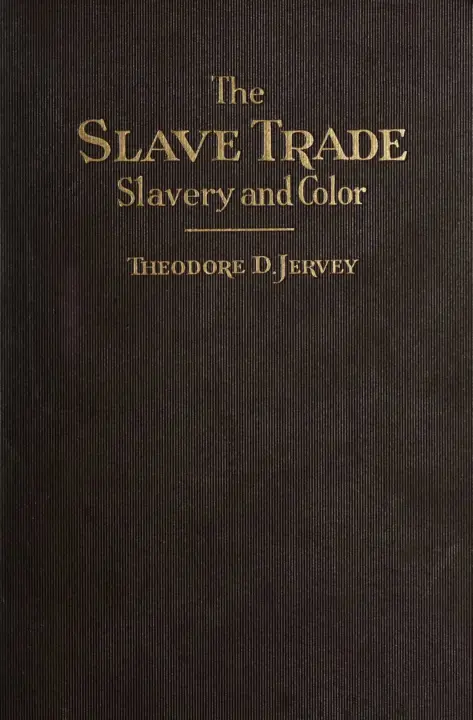
"The Slave Trade: Slavery and Color" by Theodore D. Jervey is a historical account written in the early 20th century. The work examines the complexities of slavery and race relations in the United States, particularly focusing on the evolving views of slavery and the impact of legislative decisions on the status of African Americans. It addresses the socio-political context of slavery, the implications of race, and the shifting sentiments around the 19th century in America. The opening of the book introduces the central themes by reflecting on the broader implications of the "Negro Question." It discusses the historical evolution of race relations, from colonial attitudes toward slavery to the debates during the drafting of the Constitution. Jervey highlights key figures and legislative discussions that grappled with the status of African Americans and the moral considerations surrounding slavery. By establishing these foundational elements, the author sets the stage for a deeper exploration of the socio-political ramifications resulting from these historical decisions as they relate to both white and black populations in America.
Introduction adapted from the source catalogue; source summaries may be automatically generated.
Free to read · English · 92,015 words · No account needed
MAKE TIME FOR A GOOD BOOK
On by default. Untick to stop anonymous reading totals. Each page counts after 10 seconds in view. How this works.
Anonymous counting is on unless you have switched it off.
If Sir Harry Johnston, or for the matter of that, his patron, President Roosevelt, had only been able to study that neglected and impoverished Negro seer, the only one of the teachers of his people who gave his blood for their freedom, proving his faith by his works and not by mere lip service, the repudiation of whom by the Negroes and their leaders is the severest indictment which could be drawn against the race, they might have been wiser. But from time immemorial the call to the prophet has always been: “Prophesy unto us smooth things.”—and W. Hannibal Thomas having fought in the ranks of the Union army and lived in the midst of Reconstruction, knew a little too much, despite his exaltation of the civilization of New England, and his criticism of the South’s attempt in 1865 to mould again its own, apart from slavery, to ever be accepted by those who had participated in or were responsible for Reconstruction.
[295] Stone, The American Race Problem.
[296] Stanley, In Darkest Africa, Vol. I, p. 384.
[297] Hart, The Southern South, p. 113.
[298] Bulletin XII Fifth Canadian Census, p. 12.
[299] Oliver, Immigration Facts and Figures, p. 9.
[300] London Times, April 3, 1911.
[301] Ibid.
[302] Bureau Census U. S. 1910 Bul. 129 p. 15.
[303] News and Courier, August 22, 1913.
[304] Hoffman, Race Traits and Tendencies, p. 3.
[305] Bryce, American Commonwealth Vol. II, Rev. Ed. p. 513.
[306] Bryce, American Commonwealth, Vol. II, pp. 515-537-552.
[307] Hart, Southern South, p. 113.
[308] London Times, June 27, 1913.
[309] Johnston, The Negro in the New World, p. VIII.
[310] Ibid. p. IX.
[311] Ibid. p. X.
[312] Ibid. p. 380.
[313] Ibid. p. 363.
[314] Ibid. p. 368.
[315] McCrady, S. C. Under Royal Govt. p. 185.
[316] Phillips, American Negro Slavery, p. 469.
[317] Ibid. p. 470.
[318] Johnston, The Negro in the New World, p. 413.
[319] Ibid. p. 415.
[320] Ibid. p. 413.
[321] Ibid. p. X.
[322] Ibid. p. 476.
[323] Ibid. p. 477.
Your reading position is saved on this browser. Take it to another device with a library code. Reading pages adapt to text, rather than matching a printed edition.
BEHIND THE BOOK
This eBook is for the use of anyone anywhere in the United States and most other parts of the world at no cost and with almost no restrictions whatsoever. You may copy it, give it away or re-use it under the terms of the Project Gutenberg License included with this eBook or online at www.gutenberg.org. If you are not located in the United States, you will have to check the laws of the country where you are located before using this eBook. Read the source licence.
The original source file, including credits and licence, is retained by this library. Request an original-format copy at no charge. Please include the book title and Project Gutenberg identifier #72513.
KEEP YOUR CURIOSITY GOING
Cécile Tormay

Moritz Busch
John L. Ransom
Frances Wright
Cécile Tormay

Mabel Potter Daggett