THE CLASSIC COLLECTION✦An outlaw’s diary: the CommuneCLASSIC FREE BOOKS
An outlaw’s diary: the Commune
Cécile Tormay
THE CLASSIC COLLECTION · 1925
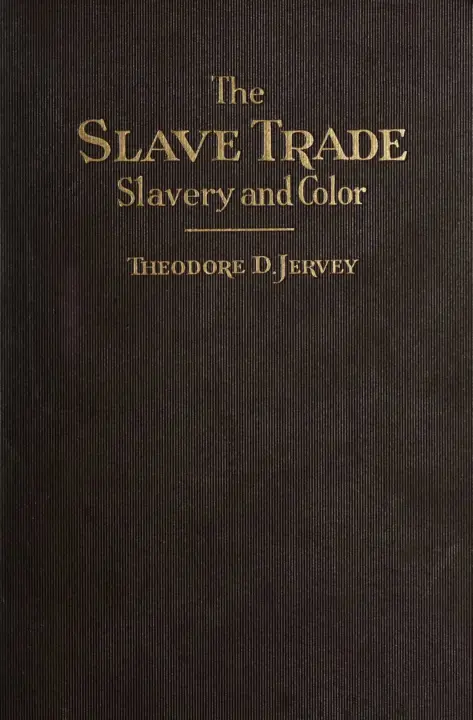
"The Slave Trade: Slavery and Color" by Theodore D. Jervey is a historical account written in the early 20th century. The work examines the complexities of slavery and race relations in the United States, particularly focusing on the evolving views of slavery and the impact of legislative decisions on the status of African Americans. It addresses the socio-political context of slavery, the implications of race, and the shifting sentiments around the 19th century in America. The opening of the book introduces the central themes by reflecting on the broader implications of the "Negro Question." It discusses the historical evolution of race relations, from colonial attitudes toward slavery to the debates during the drafting of the Constitution. Jervey highlights key figures and legislative discussions that grappled with the status of African Americans and the moral considerations surrounding slavery. By establishing these foundational elements, the author sets the stage for a deeper exploration of the socio-political ramifications resulting from these historical decisions as they relate to both white and black populations in America.
Introduction adapted from the source catalogue; source summaries may be automatically generated.
Free to read · English · 92,015 words · No account needed
MAKE TIME FOR A GOOD BOOK
On by default. Untick to stop anonymous reading totals. Each page counts after 10 seconds in view. How this works.
Anonymous counting is on unless you have switched it off.
It was not so much the amount of attention as the amazing attitude of the vast majority of Negroes capable of understanding what had occurred, which attended that attention. To the vast majority of Negroes, irrespective of rank, culture or professions of Christianity, there was something noble and manly in the behavior of “the veteran non-commissioned officers”, so absolutely repugnant to the practical politician Roosevelt, a high type of white. The inability of the succeeding occupant of the highest office in this country, genial in disposition, liberal in view; but yet unable to appreciate the flaming zeal and prompt action, with which a real leader of a free people meets such behavior in armed underlings, marks a certain weakness in that Northern white. Such weakness coupled as it was with the behavior of such public men as Senator Foraker did much to produce the deplorable incident ten years later so properly stamped with executive disapproval and inevitable punishment to the last degree.
It is quite possible and to some degree probable that weak and vicious comments on Roosevelt’s action in the Brownsville matter had something to do with the Houston riot. The comment also affected the Southern white man profoundly in his attitude to colored soldiers and policemen.
[248] Washington, Up from Slavery, p. 239.
[249] Ibid. p. 226.
[250] Ibid. p. 227.
[251] Ibid. p. 221.
[252] Ibid. p. 223.
[253] Ibid. p. 220.
[254] Ibid. p. 228.
[255] Ibid. p. 316.
[256] Albert Bushnell Hart, The Southern South, p. 16.
[257] DuBois, The Souls of Black Folk, pp. 41-58-59.
[258] Hart, The Southern South, p. 15.
[259] Ibid. p. 134.
[260] Ibid. p. 135.
[261] Wm. H. Thomas, The American Negro, p. 165.
[262] Ibid. p. XI.
[263] Ibid. p. 264.
[264] Thomas, The American Negro, p. XXII.
[265] Washington, Up from Slavery, p. 318.
[266] Ibid. p. XI.
[267] Ibid. p. XVIII.
[268] DuBois, The Souls of Black Folk, p. 58.
[269] Thomas, The American Negro, p. 268.
[270] Ibid. p. 141.
[271] Ibid. p. 75.
[272] Stone, The American Race Problem, p. 397.
[273] Ibid. p. 398.
[274] DuBois, The Philadelphia Negro, pp. 366-358-359.
[275] Thomas, The American Negro, pp. 408-410.
[276] Ibid. p. 280.
[277] Ibid. p. 281.
[278] Stone, The American Race Problem, p. 217.
[279] Ibid. p. 53.
[280] W. E. & Cog. List Tax Payers, City of Charleston 1859, pp.
392-403.
[281] Press of the Southern Reporter, p. 1.
[282] Ibid. p. 5.
[283] Ibid. p. 8.
[284] Sir H. Johnston, The Negro in the New World, p. XI.
[285] Jervey, Lecture Chicago University; The Elder Brother, p. 446.
[286] Scruggs, Colombian and Venezuelan Republics, pp. 300, 301, 324,
325.
[287] Stone, American Race Problem, pp. 243, 245.
[288] Ibid. pp. 328, 329.
[289] Ibid. pp. 314, 315.
[290] Ibid. p. 350.
[291] Ibid. p. 328.
[292] Brawley, Short History American Negro, p. 185.
[293] Bishop, Theodore Roosevelt, Vol. 2, p. 27.
[294] Ibid. p. 28.
Your reading position is saved on this browser. Take it to another device with a library code. Reading pages adapt to text, rather than matching a printed edition.
BEHIND THE BOOK
This eBook is for the use of anyone anywhere in the United States and most other parts of the world at no cost and with almost no restrictions whatsoever. You may copy it, give it away or re-use it under the terms of the Project Gutenberg License included with this eBook or online at www.gutenberg.org. If you are not located in the United States, you will have to check the laws of the country where you are located before using this eBook. Read the source licence.
The original source file, including credits and licence, is retained by this library. Request an original-format copy at no charge. Please include the book title and Project Gutenberg identifier #72513.
KEEP YOUR CURIOSITY GOING
Cécile Tormay

Moritz Busch
John L. Ransom
Frances Wright
Cécile Tormay

Mabel Potter Daggett