THE CLASSIC COLLECTION✦An outlaw’s diary: the CommuneCLASSIC FREE BOOKS
An outlaw’s diary: the Commune
Cécile Tormay
THE CLASSIC COLLECTION · 1925
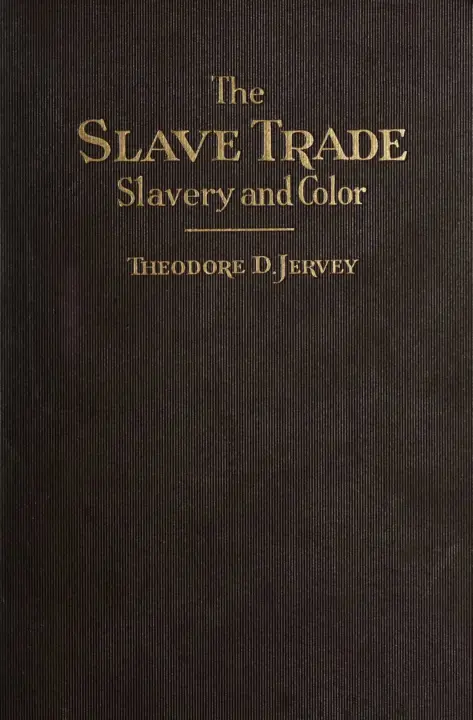
"The Slave Trade: Slavery and Color" by Theodore D. Jervey is a historical account written in the early 20th century. The work examines the complexities of slavery and race relations in the United States, particularly focusing on the evolving views of slavery and the impact of legislative decisions on the status of African Americans. It addresses the socio-political context of slavery, the implications of race, and the shifting sentiments around the 19th century in America. The opening of the book introduces the central themes by reflecting on the broader implications of the "Negro Question." It discusses the historical evolution of race relations, from colonial attitudes toward slavery to the debates during the drafting of the Constitution. Jervey highlights key figures and legislative discussions that grappled with the status of African Americans and the moral considerations surrounding slavery. By establishing these foundational elements, the author sets the stage for a deeper exploration of the socio-political ramifications resulting from these historical decisions as they relate to both white and black populations in America.
Introduction adapted from the source catalogue; source summaries may be automatically generated.
Free to read · English · 92,015 words · No account needed
MAKE TIME FOR A GOOD BOOK
On by default. Untick to stop anonymous reading totals. Each page counts after 10 seconds in view. How this works.
Anonymous counting is on unless you have switched it off.
It was England, however, that altered the designation of “The Brother in Black” to “The White Man’s Burden.”
In every way in 1890 the Negro seemed to have failed. His profligacy was exaggerated, but in his profligacy he had betrayed Judge Tourgee. A study of the Census of 1890 by the author of this work indicated that in a total population of 62,620,000 in the United States, 45,770,000 were native whites; 9,240,000 were foreign born whites; 6,339,000 were Negroes; 1,131,000 were mulattoes; 110,000 were Mongolians and 58,000 civilized Indians.
Comparing the two sections: There were a little more than twice as many native born whites in the North and West as in the South. There were about twelve times as many foreign born whites and about seven times as many civilized Indians with fifty times as many Mongolians, but there were only one-twelfth as many Negroes and one-fifth as many mulattoes.[240]
North & West South
Native Whites 31,150,000 14,620,000
Foreign Born White 8,510,000 730,000
Negroes 489,000 5,850,000
Hybrids 195,000 936,000
Chinese & Japanese 108,000 2,000
Civilized Indians 51,000 7,000
In the eight Southern States, South Carolina, Georgia, Florida, Alabama, Mississippi, Louisiana, Arkansas and Texas there were 6,162,000 whites to 4,480,000 colored persons, and in the first six named of these 3,599,000 whites to 3,492,000 colored persons. By States the comparison was as follows:
Whites Colored
South Carolina 462,000 688,000
Georgia 978,000 858,000
Florida 224,000 166,000
Alabama 833,000 678,000
Mississippi 544,000 742,000
Louisiana 558,000 559,000
In the same year in which Tillman had risen to power in South Carolina, Mississippi had disfranchised the great bulk of her Negro majority and, with his control of political affairs, Tillman set to work to accomplish the same thing in South Carolina. By 1895 he had succeeded in obtaining a constitutional convention and in that year it met.
For almost two centuries the Negroes had been trained in slavery. Then for a decade they had enjoyed what was much more akin to unbridled license than liberty. For about twenty years succeeding that they had been, by every device which could be conceived of, stripped of the exercise of the franchise and to a very great degree excluded from jury duty. The proposition was now to exclude the vast bulk of them legally from the franchise. It is interesting to consider and observe in what way they received the suggestion; for they were now absolutely without white aid, and dependent entirely upon such arguments as they themselves could advance. There was no attempt to hide the purpose. It was openly avowed that the main purpose of the constitutional convention of South Carolina for 1895 was to frame a law, by which the tremendous preponderance of the Negro electorate should be reduced to an inconsiderable minority. This had been accomplished in Mississippi, and the inconsistency of the Emigrant Tax Law, restraining in the State those whom the law makers had to protect the State from, escaped attention for the time.
Your reading position is saved on this browser. Take it to another device with a library code. Reading pages adapt to text, rather than matching a printed edition.
BEHIND THE BOOK
This eBook is for the use of anyone anywhere in the United States and most other parts of the world at no cost and with almost no restrictions whatsoever. You may copy it, give it away or re-use it under the terms of the Project Gutenberg License included with this eBook or online at www.gutenberg.org. If you are not located in the United States, you will have to check the laws of the country where you are located before using this eBook. Read the source licence.
The original source file, including credits and licence, is retained by this library. Request an original-format copy at no charge. Please include the book title and Project Gutenberg identifier #72513.
KEEP YOUR CURIOSITY GOING
Cécile Tormay

Moritz Busch
John L. Ransom
Frances Wright
Cécile Tormay

Mabel Potter Daggett