THE CLASSIC COLLECTION✦An outlaw’s diary: the CommuneCLASSIC FREE BOOKS
An outlaw’s diary: the Commune
Cécile Tormay
THE CLASSIC COLLECTION · 1925
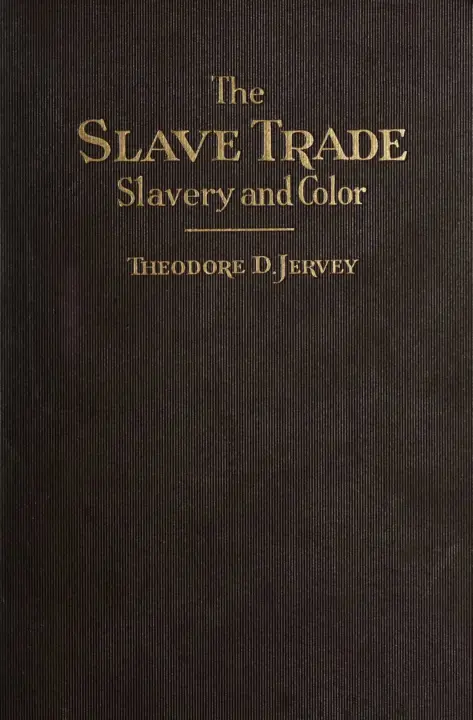
"The Slave Trade: Slavery and Color" by Theodore D. Jervey is a historical account written in the early 20th century. The work examines the complexities of slavery and race relations in the United States, particularly focusing on the evolving views of slavery and the impact of legislative decisions on the status of African Americans. It addresses the socio-political context of slavery, the implications of race, and the shifting sentiments around the 19th century in America. The opening of the book introduces the central themes by reflecting on the broader implications of the "Negro Question." It discusses the historical evolution of race relations, from colonial attitudes toward slavery to the debates during the drafting of the Constitution. Jervey highlights key figures and legislative discussions that grappled with the status of African Americans and the moral considerations surrounding slavery. By establishing these foundational elements, the author sets the stage for a deeper exploration of the socio-political ramifications resulting from these historical decisions as they relate to both white and black populations in America.
Introduction adapted from the source catalogue; source summaries may be automatically generated.
Free to read · English · 92,015 words · No account needed
MAKE TIME FOR A GOOD BOOK
On by default. Untick to stop anonymous reading totals. Each page counts after 10 seconds in view. How this works.
Anonymous counting is on unless you have switched it off.
“I shall confine myself to a dispassionate and simple statement of facts and of such reference to events, as candor and truth justify.... To my mind it is too grave a subject to be diverted by party considerations or confined within the narrow boundaries and limits of party lines. It is all pervading, momentous and important.... Whoever concludes, that the quieting of the agitation which concerns the political status of the Negro would be a settlement of the race question, discloses, how little he knows of its magnitude and comprehensiveness and how superficially he looks at it.” ...
Proceeding with his argument Butler suggested:
“The inquiry will be made why should the Negro move out of the Southern States? He will not except on his own volition. There is nothing in this bill which coerces him or compels him to move. My answer, however, is that it would be for his own good and for the good of his white neighbors also. It cannot have escaped the attention of the most casual observer that where the Negro remains in large masses and exceeds in numbers their white neighbors, they not only do not advance, but actually retrograde. It is not needful for any intelligent white man to read St. John’s dismal narrative of ‘The Black Republic of Hayti,’ or Bruce’s graphic story, ‘The plantation Negro as a Freeman,’ or Froude’s ‘Negro in the West Indies,’ to establish the truth of the proposition. On the other hand, observation and experience convince us, that in regions of the South, where the whites are largely in the majority, the Negro is better off and the white man is better off. The Negro dresses better and is more intelligent and thrifty and the white man is more prosperous and progressive.... It is conceded on all hands, that if the Negro is to attain the full stature of his manhood, if he is to become an independent self-reliant, self-respecting man, and be made fully competent to discharge all the high responsibilities and duties of life, he must finally rely upon himself, he must elevate himself in the moral social and industrial scale by his own exertions, by his own self-assertion. To do this effectually, he must have a fair chance in an open field. Can he be expected to accomplish this; can it be expected of him under the shadow and amid the scenes of dependence and inferiority which enshroud him in the surroundings of his former debased condition? Take him away from them and allow his pulse of freedom to throb unobstructed by the memories and associations of his servile bondage. I am not one of those who believe in the total, hopeless depravity of the Negro race. I believe that there are great possibilities in store for him. I do not undervalue the worth of the labor of the Negro in what was accomplished in the way of the material development of the South. All that I mean to say is but for that kind of labor, the South would have been far ahead of her present development.... Nor do I underestimate the obligations we are all under to the race for the fidelity and most praiseworthy conduct during our depleting civil strife. Whatever fate the future may have in store for him nothing can deprive the Negro of this record; nothing can destroy or obliterate the strong ties of affectionate kindness between him and his former owner.... I repeat Sir it is for his good and the good of his future generations, as well as the good of his former master and his descendants, that I would have him more generally distributed among the great mass of his white fellow citizens, from whose energy and thrift and enlightenment and progress he can gather hope and inspiring example in his struggle for an equal chance in life.... It is not an uncommon thing to hear men say—‘Let the negro alone; he makes a good peasant class; he is the best laborer we can get for the cotton fields, etc.’ Do not all such forget that there is no such thing as a peasant class under our form of government? Do they not forget that the Negro is a free American citizen, entitled by virtue of his citizenship, if on no other account, to equality before the law with the foremost citizens of the land, equality of opportunity, equality of rights.... Is it not about time, Mr. President that the thinking men of this country, men who have some concern for the future of coming generations as well as the temporary triumph of party should meet upon the common plane of the general good and dispose of this question fairly and humanely?... I should welcome such a day as a new era in our history, from which to date new hopes for the perpetuity of a constitutional republic.”[231]
Your reading position is saved on this browser. Take it to another device with a library code. Reading pages adapt to text, rather than matching a printed edition.
BEHIND THE BOOK
This eBook is for the use of anyone anywhere in the United States and most other parts of the world at no cost and with almost no restrictions whatsoever. You may copy it, give it away or re-use it under the terms of the Project Gutenberg License included with this eBook or online at www.gutenberg.org. If you are not located in the United States, you will have to check the laws of the country where you are located before using this eBook. Read the source licence.
The original source file, including credits and licence, is retained by this library. Request an original-format copy at no charge. Please include the book title and Project Gutenberg identifier #72513.
KEEP YOUR CURIOSITY GOING
Cécile Tormay

Moritz Busch
John L. Ransom
Frances Wright
Cécile Tormay

Mabel Potter Daggett