THE CLASSIC COLLECTION✦The Disappearing EyeCLASSIC FREE BOOKS
The Disappearing Eye
Fergus Hume
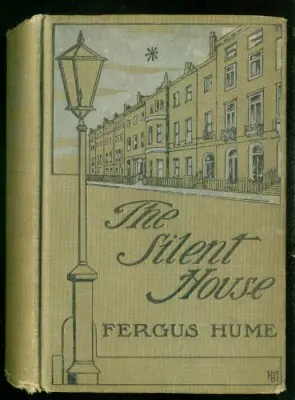
THE CLASSIC COLLECTION · 1907
"The Silent House" by Fergus Hume is a mystery novel written in the early 20th century. The narrative revolves around Lucian Denzil, a young barrister who becomes intrigued by the peculiar tenant of a seemingly haunted and abandoned house, known as No. 13, or the Silent House, following a string of mysterious events and a murder. The story combines elements of suspense and intrigue, as Denzil seeks to unravel the enigma surrounding the reclusive Mr. Berwin and the sinister happenings linked to his life. The opening of this narrative sets the stage by introducing Lucian Denzil, who leads a modest life amidst the bustling backdrop of London. On a foggy night, he has a chance encounter with Mr. Berwin, the enigmatic occupant of the Silent House, who reveals a sense of despair and pain. Denzil's curiosity piqued, he learns more about Berwin's lonely existence and the ghostly aura surrounding his abode. As gossip and speculation circulate within the neighborhood, an unsettling incident occurs when Denzil perceives shadows in Berwin's window, suggesting that more is at play than meets the eye. With a determined sense of justice and inquiry, Denzil soon finds himself embroiled in a mystery that delves deep into the darker aspects of human nature.
Introduction adapted from the source catalogue; source summaries may be automatically generated.
Free to read · English · 72,784 words · No account needed
MAKE TIME FOR A GOOD BOOK
On by default. Untick to stop anonymous reading totals. Each page counts after 10 seconds in view. How this works.
Anonymous counting is on unless you have switched it off.
The two groaned, and Miss Cecilia Pegall, who was by way of being very religious in a Low Church way, remarked that "all flesh was grass," to which observation her excellent mamma rejoined: "Very true, dear, very true." And then the trio sighed again, and shook their black heads like so many mandarins.
"I should never support my grief," continued Lydia, still tearful, "if it was not that I have at least three dear friends. Ah! I shall never forget that happy Christmas Eve!"
"Last Christmas Eve, dear Mrs. Vrain?" said Cecilia.
"When you were all so kind and good," sobbed Lydia, with a glance at Lucian, to see that he noticed the confirmation. "We played whist, didn't we?"
"Four rubbers," groaned Mrs. Pegall, "and retired to bed at ten o'clock, after prayers and a short hymn. Quite a carol that hymn was, eh, dears?"
"And your poor pa was so bad with his cough," said Beatrice, "I hope it is better. He went away before dinner, too! Do say your pa is better!"
"Yes, dear, much better," said Lydia, and considering it was four months since Christmas Eve, Lucian thought it was time Mr. Clyne recovered.
"He enjoyed his tea, though," said Cecilia. "Mr. Clyne always says there
is no tea like ours."
"And no evenings," cried Lydia, who was very glad there were not.
"Poppa and I are coming soon to have a long evening--to play whist
again."
"But, dear Mrs. Vrain, you are not going?"
"I must, dears," with a kiss all round. "I have such a lot to do, and Mr. Denzil is coming with me, as poppa wants to consult him about some law business. He's a barrister, you know."
"I hope Mr. Denzil will come and see us again," said Mrs. Pegall, shaking hands with Lucian. A fat, puffy hand she had, and damp.
"Oh, delighted! delighted!" said Denzil hurriedly.
"Cards and tea, and sensible conversation," said Beatrice seriously, "no
more."
"You forget prayers at ten, dear," rejoined Cecilia in low tones.
"We are a plain family, Mr. Denzil. You must take us as we are."
"Thank you, Mrs. Pegall, I will."
"Good-bye, dears," cried Lydia again, and with a final peck all round she skipped out and into the hansom, followed by her escort.
"Damn!" said Mrs. Vrain, when the cab drove away in the direction of Bayswater. "Oh, don't look so shocked, Mr. Denzil. I assure you I am not in the habit of swearing, but the extreme respectability of the Pegalls always makes me wish to relieve my feelings by going to the other extreme. What do you think of them?"
"They seem very good people, and genuine."
Your reading position is saved on this browser. Take it to another device with a library code. Reading pages adapt to text, rather than matching a printed edition.
Fergus Hume

Fergus Hume

Fergus Hume
Fergus Hume
BEHIND THE BOOK
This eBook is for the use of anyone anywhere in the United States and most other parts of the world at no cost and with almost no restrictions whatsoever. You may copy it, give it away or re-use it under the terms of the Project Gutenberg License included with this eBook or online at www.gutenberg.org. If you are not located in the United States, you will have to check the laws of the country where you are located before using this eBook. Read the source licence.
The original source file, including credits and licence, is retained by this library. Request an original-format copy at no charge. Please include the book title and Project Gutenberg identifier #19069.
KEEP YOUR CURIOSITY GOING
Coulson Kernahan

Maurice Baring
Frances Wright
Cécile Tormay

Frederic Jesup Stimson

W. H. P. (William Henry Pope) Jarvis