THE CLASSIC COLLECTION✦The Disappearing EyeCLASSIC FREE BOOKS
The Disappearing Eye
Fergus Hume
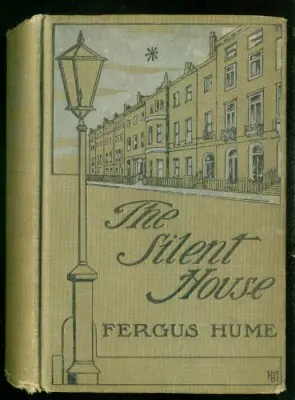
THE CLASSIC COLLECTION · 1907
"The Silent House" by Fergus Hume is a mystery novel written in the early 20th century. The narrative revolves around Lucian Denzil, a young barrister who becomes intrigued by the peculiar tenant of a seemingly haunted and abandoned house, known as No. 13, or the Silent House, following a string of mysterious events and a murder. The story combines elements of suspense and intrigue, as Denzil seeks to unravel the enigma surrounding the reclusive Mr. Berwin and the sinister happenings linked to his life. The opening of this narrative sets the stage by introducing Lucian Denzil, who leads a modest life amidst the bustling backdrop of London. On a foggy night, he has a chance encounter with Mr. Berwin, the enigmatic occupant of the Silent House, who reveals a sense of despair and pain. Denzil's curiosity piqued, he learns more about Berwin's lonely existence and the ghostly aura surrounding his abode. As gossip and speculation circulate within the neighborhood, an unsettling incident occurs when Denzil perceives shadows in Berwin's window, suggesting that more is at play than meets the eye. With a determined sense of justice and inquiry, Denzil soon finds himself embroiled in a mystery that delves deep into the darker aspects of human nature.
Introduction adapted from the source catalogue; source summaries may be automatically generated.
Free to read · English · 72,784 words · No account needed
MAKE TIME FOR A GOOD BOOK
On by default. Untick to stop anonymous reading totals. Each page counts after 10 seconds in view. How this works.
Anonymous counting is on unless you have switched it off.
"I see no reason why a quiet-living old gentleman should tell his private affairs to the whole square," remarked Lucian drily.
"Those who have nothing bad to conceal needn't be afraid of speaking out," retorted Miss Greeb tartly. "And the way in which Mr. Berwin lives is enough to make one think him a coiner, or a thief, or even a murderer--that it is!"
"But what grounds have you to believe him any one of the three?"
This question also puzzled the landlady, as she had no reasonable grounds for her wild statements. Nevertheless, she made a determined attempt to substantiate them by hearsay evidence. "Mr. Berwin," said she in significant tones, "lives all alone in that haunted house."
"Why not? Every man has the right to be a misanthrope if he chooses."
"He has no right to behave so, in a respectable square," replied Miss Greeb, shaking her head. "There's only two rooms of that large house furnished, and all the rest is given up to dust and ghosts. Mr. Berwin won't have a servant to live under his roof, and Mrs. Kebby, who does his charing, says he drinks awful. Then he has his meals sent in from the Nelson Hotel round the corner, and eats them all alone. He don't receive no letters, he don't read no newspapers, and stays in all day, only coming out at night, like an owl. If he ain't a criminal, Mr. Denzil, why does he carry on so?"
"He may dislike his fellow-men, and desire to live a secluded life."
Miss Greeb still shook her head. "He may dislike his fellow-men," she said with emphasis, "but that don't keep him from seeing them--ah! that it don't."
"Is there anything wrong in that?" said Lucian, contemptuous of these
cobweb objections.
"Perhaps not, Mr. Denzil; but where do those he sees come from?"
"How do you mean, Miss Greeb?"
"They don't go in by the front door, that's certain," continued the little woman darkly. "There's only one entrance to this square, sir, and Blinders, the policeman, is frequently on duty there. Two or three nights he's met Mr. Berwin coming in after dark and exchanged friendly greetings with him, and each time Mr. Berwin has been alone!"
"Well! well! What of that?" said Denzil impatiently.
"This much, Mr. Denzil, that Blinders has gone round the square, after seeing Mr. Berwin, and has seen shadows--two or three of them--on the sitting-room blind. Now, sir," cried Miss Greeb, clinching her argument, "if Mr. Berwin came into the square alone, how did his visitors get in?"
"Perhaps by the back," conjectured Lucian.
Your reading position is saved on this browser. Take it to another device with a library code. Reading pages adapt to text, rather than matching a printed edition.
Fergus Hume

Fergus Hume

Fergus Hume
Fergus Hume
BEHIND THE BOOK
This eBook is for the use of anyone anywhere in the United States and most other parts of the world at no cost and with almost no restrictions whatsoever. You may copy it, give it away or re-use it under the terms of the Project Gutenberg License included with this eBook or online at www.gutenberg.org. If you are not located in the United States, you will have to check the laws of the country where you are located before using this eBook. Read the source licence.
The original source file, including credits and licence, is retained by this library. Request an original-format copy at no charge. Please include the book title and Project Gutenberg identifier #19069.
KEEP YOUR CURIOSITY GOING
Coulson Kernahan

Maurice Baring
Frances Wright
Cécile Tormay

Frederic Jesup Stimson

W. H. P. (William Henry Pope) Jarvis