THE CLASSIC COLLECTION✦The Disappearing EyeCLASSIC FREE BOOKS
The Disappearing Eye
Fergus Hume
THE CLASSIC COLLECTION · 1907
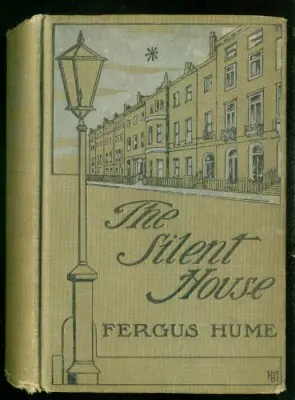
"The Silent House" by Fergus Hume is a mystery novel written in the early 20th century. The narrative revolves around Lucian Denzil, a young barrister who becomes intrigued by the peculiar tenant of a seemingly haunted and abandoned house, known as No. 13, or the Silent House, following a string of mysterious events and a murder. The story combines elements of suspense and intrigue, as Denzil seeks to unravel the enigma surrounding the reclusive Mr. Berwin and the sinister happenings linked to his life. The opening of this narrative sets the stage by introducing Lucian Denzil, who leads a modest life amidst the bustling backdrop of London. On a foggy night, he has a chance encounter with Mr. Berwin, the enigmatic occupant of the Silent House, who reveals a sense of despair and pain. Denzil's curiosity piqued, he learns more about Berwin's lonely existence and the ghostly aura surrounding his abode. As gossip and speculation circulate within the neighborhood, an unsettling incident occurs when Denzil perceives shadows in Berwin's window, suggesting that more is at play than meets the eye. With a determined sense of justice and inquiry, Denzil soon finds himself embroiled in a mystery that delves deep into the darker aspects of human nature.
Introduction adapted from the source catalogue; source summaries may be automatically generated.
Free to read · English · 72,784 words · No account needed
MAKE TIME FOR A GOOD BOOK
On by default. Untick to stop anonymous reading totals. Each page counts after 10 seconds in view. How this works.
Anonymous counting is on unless you have switched it off.
Rhoda was not neat in her attire, perhaps not having arrived at the age of coquetry, for she wore a dingy grey dress much too short for her, a pair of carpet slippers which had been left by a departed lodger, and usually went about with her sleeves tucked up, and a resolute look on her sharp face. Such was the appearance of Mrs. Bensusan's devil, who entered to forbid her mistress confiding in Lucian.
"Oh, Rhoda!" groaned Mrs. Bensusan. "You bad gal! I believe as you've 'ad your ear to the keyhole."
"I 'ave!" retorted Rhoda defiantly. "It's been there for five minutes, and good it is for you, mum, as I ain't above listening. What do you mean, sir," she cried, turning on Lucian like a fierce sparrow, "by coming 'ere to frighten two lone females, and her as innocent as a spring chicken?"
"Oh!" said Lucian, looking at her composedly, "so you are the celebrated Rhoda? I've heard of you."
"Not much good, then, sir, if Miss Greeb was talking," rejoined the red-haired girl, with a sniff. "Oh, I know her."
"Rhoda! Rhoda!" bleated her mistress, "do 'old your tongue! I tell you this gentleman's a police."
"He ain't!" said the undaunted Rhoda. "He's in the law. Oh, I knows
him!'
"Ain't the law the police, you foolish gal?"
"Of course it--" began Rhoda, when Lucian, who thought that she had
displayed quite sufficient eccentricity, cut her short with a quick
gesture.
"See here, my girl," he said sharply, "you must not behave in this fashion. I have reason to believe that the assassin of Mr. Vrain entered the house through the premises of your mistress."
"Lawks, what a 'orrible idear!" shrieked Mrs. Bensusan. "Good 'eavens, Rhoda, did you see the murdering villain?"
"Me? No! I never sawr nothing, mum," replied Rhoda doggedly.
Lucian, watching the girl's face, and the uneasy expression in her eyes, felt convinced she was not telling the truth. It was no use forcing her to speak, as he saw very plainly that Rhoda was one of those obstinate people whom severity only hardened. Much more could be done with her by kindness, and Denzil adopted this--to him--more congenial course.
"If Rhoda is bound by any promise, Mrs. Bensusan, I do not wish her to speak," he said indifferently, "but in the interests of justice I am sure you will not refuse to answer my questions."
"Lord, sir! I know nothing!" whimpered the terrified landlady.
"Will you answer a few questions?" asked Denzil persuasively.
Your reading position is saved on this browser. Take it to another device with a library code. Reading pages adapt to text, rather than matching a printed edition.
Fergus Hume

Fergus Hume

Fergus Hume
Fergus Hume
BEHIND THE BOOK
This eBook is for the use of anyone anywhere in the United States and most other parts of the world at no cost and with almost no restrictions whatsoever. You may copy it, give it away or re-use it under the terms of the Project Gutenberg License included with this eBook or online at www.gutenberg.org. If you are not located in the United States, you will have to check the laws of the country where you are located before using this eBook. Read the source licence.
The original source file, including credits and licence, is retained by this library. Request an original-format copy at no charge. Please include the book title and Project Gutenberg identifier #19069.
KEEP YOUR CURIOSITY GOING
Coulson Kernahan

Maurice Baring
Frances Wright
Cécile Tormay

Frederic Jesup Stimson

W. H. P. (William Henry Pope) Jarvis