THE CLASSIC COLLECTION✦The Disappearing EyeCLASSIC FREE BOOKS
The Disappearing Eye
Fergus Hume
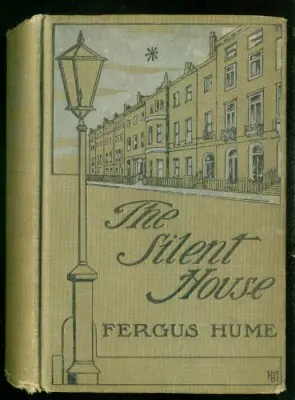
THE CLASSIC COLLECTION · 1907
"The Silent House" by Fergus Hume is a mystery novel written in the early 20th century. The narrative revolves around Lucian Denzil, a young barrister who becomes intrigued by the peculiar tenant of a seemingly haunted and abandoned house, known as No. 13, or the Silent House, following a string of mysterious events and a murder. The story combines elements of suspense and intrigue, as Denzil seeks to unravel the enigma surrounding the reclusive Mr. Berwin and the sinister happenings linked to his life. The opening of this narrative sets the stage by introducing Lucian Denzil, who leads a modest life amidst the bustling backdrop of London. On a foggy night, he has a chance encounter with Mr. Berwin, the enigmatic occupant of the Silent House, who reveals a sense of despair and pain. Denzil's curiosity piqued, he learns more about Berwin's lonely existence and the ghostly aura surrounding his abode. As gossip and speculation circulate within the neighborhood, an unsettling incident occurs when Denzil perceives shadows in Berwin's window, suggesting that more is at play than meets the eye. With a determined sense of justice and inquiry, Denzil soon finds himself embroiled in a mystery that delves deep into the darker aspects of human nature.
Introduction adapted from the source catalogue; source summaries may be automatically generated.
Free to read · English · 72,784 words · No account needed
MAKE TIME FOR A GOOD BOOK
On by default. Untick to stop anonymous reading totals. Each page counts after 10 seconds in view. How this works.
Anonymous counting is on unless you have switched it off.
Struck by his serious air, and at once on fire with curiosity to learn its reason, Miss Greeb loudly protested that she should sooner die than breathe a word of what her lodger was about to divulge. She hinted, with many a mysterious look and nod, that secrets endangering the domestic happiness of every family in the square were known to her, and appealed to the fact that such families still lived in harmony as a proof that she was to be trusted.
"Wild horses wouldn't drag out of me what I know!" cried Miss Greeb earnestly. "You can confide in me as you would in a"--she was about to say mother, but recollecting her juvenile looks, substituted the word "sister."
"Very good," said Lucian, explaining just as much as would serve his purpose. "Then I may tell you, Miss Greeb, that I suspect the assassin of Mr. Vrain entered through Mrs. Bensusan's house, and so got into the yard of No. 13."
"Lord!" cried Miss Greeb, taken by surprise. "You don't say, sir, that Mr. Wrent is a murdering villain, steeped in gore?"
"No! No!" replied Lucian, smiling at this highly-coloured description. "Do not jump to conclusions, Miss Greeb. So far as I am aware, this Mr. Wrent you speak of is innocent. Do you know Mrs. Bensusan and her house well?"
"I've visited both several times, Mr. Denzil."
"Well, then, tell me," continued the barrister, "is the house built with a full frontage like those in this square? I mean, to gain Mrs. Bensusan's back yard is it necessary to go through Mrs. Bensusan's house?"
"No," replied Miss Greeb, shutting her eyes to conjure up the image of her friend's premises. "You can go round the back through the side passage which leads in from Jersey Road."
"H'm!" said Lucian in a dissatisfied tone. "That complicates matters."
"How so, sir?" demanded the curious landlady.
"Never mind just now, Miss Greeb. Do you think you could draw me a plan of this passage of Mrs. Bensusan's house, and of No. 13, with the yards between?"
"I never could sketch," said Miss Greeb regretfully, "and I am no artist, Mr. Denzil, but I think I can do what you want."
"Here is a sheet of paper and a pencil. Will you sketch me the houses as
clearly as you can?"
With much reflection and nibbling of the pencil, and casting of her eyes up to the ceiling to aid her memory, Miss Greeb in ten minutes produced the required sketch.
"There you are, Mr. Denzil," said Miss Greeb, placing this work of art before the barrister, "that's as good as I can draw."
Your reading position is saved on this browser. Take it to another device with a library code. Reading pages adapt to text, rather than matching a printed edition.
Fergus Hume

Fergus Hume

Fergus Hume
Fergus Hume
BEHIND THE BOOK
This eBook is for the use of anyone anywhere in the United States and most other parts of the world at no cost and with almost no restrictions whatsoever. You may copy it, give it away or re-use it under the terms of the Project Gutenberg License included with this eBook or online at www.gutenberg.org. If you are not located in the United States, you will have to check the laws of the country where you are located before using this eBook. Read the source licence.
The original source file, including credits and licence, is retained by this library. Request an original-format copy at no charge. Please include the book title and Project Gutenberg identifier #19069.
KEEP YOUR CURIOSITY GOING
Coulson Kernahan

Maurice Baring
Frances Wright
Cécile Tormay

Frederic Jesup Stimson

W. H. P. (William Henry Pope) Jarvis