THE CLASSIC COLLECTION✦The Disappearing EyeCLASSIC FREE BOOKS
The Disappearing Eye
Fergus Hume
THE CLASSIC COLLECTION · 1907
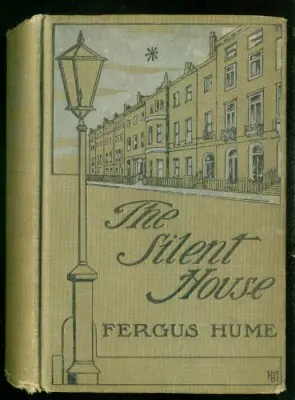
"The Silent House" by Fergus Hume is a mystery novel written in the early 20th century. The narrative revolves around Lucian Denzil, a young barrister who becomes intrigued by the peculiar tenant of a seemingly haunted and abandoned house, known as No. 13, or the Silent House, following a string of mysterious events and a murder. The story combines elements of suspense and intrigue, as Denzil seeks to unravel the enigma surrounding the reclusive Mr. Berwin and the sinister happenings linked to his life. The opening of this narrative sets the stage by introducing Lucian Denzil, who leads a modest life amidst the bustling backdrop of London. On a foggy night, he has a chance encounter with Mr. Berwin, the enigmatic occupant of the Silent House, who reveals a sense of despair and pain. Denzil's curiosity piqued, he learns more about Berwin's lonely existence and the ghostly aura surrounding his abode. As gossip and speculation circulate within the neighborhood, an unsettling incident occurs when Denzil perceives shadows in Berwin's window, suggesting that more is at play than meets the eye. With a determined sense of justice and inquiry, Denzil soon finds himself embroiled in a mystery that delves deep into the darker aspects of human nature.
Introduction adapted from the source catalogue; source summaries may be automatically generated.
Free to read · English · 72,784 words · No account needed
MAKE TIME FOR A GOOD BOOK
On by default. Untick to stop anonymous reading totals. Each page counts after 10 seconds in view. How this works.
Anonymous counting is on unless you have switched it off.
"I guess not, though it's enough, I should say. My husband had a mark on his right cheek--got it fighting a duel with a German student when he was having a high time as one of the boys at Heidelberg. Then he lost part of his little finger--left-hand finger--in an accident out West. What other proof do you want, Mr. Link?"
"The proofs you have given seem sufficient, Mrs. Vrain, but may I ask when your husband left his home?"
"About a year ago, eh, poppa?"
"You are overdoing it, Lyddy," corrected the father. "Size it up as ten
months, and you'll do."
"Ten months," said Lucian suddenly, "and Mr. Berwin----"
"Vrain!" struck in Lydia, the widow, "Mark Vrain."
"I beg your pardon! Well, Mark Vrain took the house in Geneva Square six months back. Where was he during the other four?"
"Ask me something easier, Mr. Denzil. I know no more than you do."
"Did you not know where he went on leaving Berwin Manor?"
"Sakes! how should I? Mark and I didn't pull together nohow, so he kicked over the traces and made tracks for the back of beyond."
"And you might square it, Lyddy, by saying as 'twasn't you who upset the
apple cart."
"Well, I should smile to think so," said Mrs. Vrain vigorously. "I was as good as pie to that old man."
"You did not get on well together?" said Link sharply.
"Got on as well as a cat hitched along with a dog. My stars! there was no living with him. If he hadn't left me, I'd have left him--that's an almighty truth."
"So the gist of all this is that Mr. Vrain left you ten months ago, and did not leave his address?"
"That's so," said the widow calmly. "I've not seen nor heard of him for most a year, till pop there tumbled across your paragraph in the papers. Then I surmised from the name and the missing finger and the scarred cheek, that I'd dropped right on to Mark. I wouldn't take all this trouble for any one else; no, sir, not me!"
"My Lyddy does not care about being a grass-widow, gentlemen."
"I don't mind being a grass-widow or a real one, so long as I know how to ticket myself," said the candid Lydia; "but seems to me there's no question that Mark's sent in his checks."
"I certainly think that this man who called himself Berwin was your husband," said Denzil, for Mrs. Vrain's eyes rested on him, and she seemed to expect an answer.
"Well, then, that means I'm Mr. Vrain's widow?"
"I should say so."
"And entitled to all his pile?"
Your reading position is saved on this browser. Take it to another device with a library code. Reading pages adapt to text, rather than matching a printed edition.
Fergus Hume

Fergus Hume

Fergus Hume
Fergus Hume
BEHIND THE BOOK
This eBook is for the use of anyone anywhere in the United States and most other parts of the world at no cost and with almost no restrictions whatsoever. You may copy it, give it away or re-use it under the terms of the Project Gutenberg License included with this eBook or online at www.gutenberg.org. If you are not located in the United States, you will have to check the laws of the country where you are located before using this eBook. Read the source licence.
The original source file, including credits and licence, is retained by this library. Request an original-format copy at no charge. Please include the book title and Project Gutenberg identifier #19069.
KEEP YOUR CURIOSITY GOING
Coulson Kernahan

Maurice Baring
Frances Wright
Cécile Tormay

Frederic Jesup Stimson

W. H. P. (William Henry Pope) Jarvis