THE CLASSIC COLLECTION✦The Disappearing EyeCLASSIC FREE BOOKS
The Disappearing Eye
Fergus Hume
THE CLASSIC COLLECTION · 1907
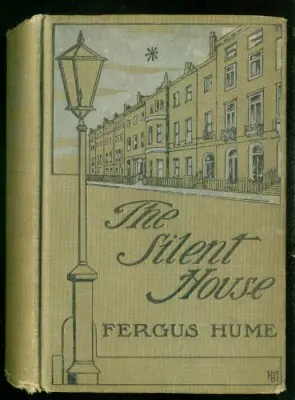
"The Silent House" by Fergus Hume is a mystery novel written in the early 20th century. The narrative revolves around Lucian Denzil, a young barrister who becomes intrigued by the peculiar tenant of a seemingly haunted and abandoned house, known as No. 13, or the Silent House, following a string of mysterious events and a murder. The story combines elements of suspense and intrigue, as Denzil seeks to unravel the enigma surrounding the reclusive Mr. Berwin and the sinister happenings linked to his life. The opening of this narrative sets the stage by introducing Lucian Denzil, who leads a modest life amidst the bustling backdrop of London. On a foggy night, he has a chance encounter with Mr. Berwin, the enigmatic occupant of the Silent House, who reveals a sense of despair and pain. Denzil's curiosity piqued, he learns more about Berwin's lonely existence and the ghostly aura surrounding his abode. As gossip and speculation circulate within the neighborhood, an unsettling incident occurs when Denzil perceives shadows in Berwin's window, suggesting that more is at play than meets the eye. With a determined sense of justice and inquiry, Denzil soon finds himself embroiled in a mystery that delves deep into the darker aspects of human nature.
Introduction adapted from the source catalogue; source summaries may be automatically generated.
Free to read · English · 72,784 words · No account needed
MAKE TIME FOR A GOOD BOOK
On by default. Untick to stop anonymous reading totals. Each page counts after 10 seconds in view. How this works.
Anonymous counting is on unless you have switched it off.
"I leave it in your hands," said Diana to Lucian, who was watching her
closely.
"Very good," replied Denzil. "Then I think it will be best for me to see Ferruci first, and hear his confession; afterwards call on Mrs. Vrain, and learn what she has to say. Then----"
"Well," said Diana, curiously, "what then?"
"I will be guided by circumstances. In the meantime, for the sake of your name, we had better keep the matter as quiet as possible."
"Mrs. Clear may speak out."
"Mrs. Clear won't speak," said Denzil grimly. "She will keep quiet for her own sake; and as Rhoda has left Jersey Street, there will be no danger of trouble from that quarter. First, I'll see Lydia and the Count, to get to the bottom of this conspiracy; then I'll set the police on Rhoda's track, that she may be arrested and made to confess her knowledge of the murder."
"Do you think she knows anything?"
"I think she knows everything," replied Lucian with emphasis. "That is why she has run away. If we capture her, and force her to speak, we may be able to arrest Wrent."
"Why Wrent?" asked Diana.
"Have you forgotten what Mrs. Clear said? I agree with her that he is the assassin, although we can't prove it as yet."
"But who is Wrent?"
"Ah!" said Lucian, significantly, "that is just what I wish to find
out."
The upshot of this interview was that early the next morning Denzil went to the chambers of Ferruci, in Marquis Street, and informed the servant that he wanted particularly to see the Count.
At first the Italian, being still in bed--for he was a late riser--did not incline to grant his visitor an interview; but on second thoughts he ordered Lucian to be shown into the sitting-room, and shortly afterwards joined him there wrapped in a dressing-gown. He welcomed the barrister with a smiling nod, and having some instinct that Lucian came on an unpleasant errand, he did not offer him his hand. From the first the two men were on their guard against one another.
"Good-morning, sir," said Ferruci in his best English. "May I ask why you take me from my bed so early?"
"To tell you a story."
"About my friend Dr. Jorce saying I was with him on that night?" sneered
the Count.
"Partly, and partly about a lady you know."
Ferruci frowned. "You speak of Mrs. Vrain?"
"No," replied Lucian coolly. "I speak of Mrs. Clear."
At the mention of this name, which was the last one he expected to hear his visitor pronounce, the Italian, in spite of his coolness and cunning, could not forbear a start.
Your reading position is saved on this browser. Take it to another device with a library code. Reading pages adapt to text, rather than matching a printed edition.
Fergus Hume

Fergus Hume

Fergus Hume
Fergus Hume
BEHIND THE BOOK
This eBook is for the use of anyone anywhere in the United States and most other parts of the world at no cost and with almost no restrictions whatsoever. You may copy it, give it away or re-use it under the terms of the Project Gutenberg License included with this eBook or online at www.gutenberg.org. If you are not located in the United States, you will have to check the laws of the country where you are located before using this eBook. Read the source licence.
The original source file, including credits and licence, is retained by this library. Request an original-format copy at no charge. Please include the book title and Project Gutenberg identifier #19069.
KEEP YOUR CURIOSITY GOING
Coulson Kernahan

Maurice Baring
Frances Wright
Cécile Tormay

Frederic Jesup Stimson

W. H. P. (William Henry Pope) Jarvis