THE CLASSIC COLLECTION✦The Disappearing EyeCLASSIC FREE BOOKS
The Disappearing Eye
Fergus Hume
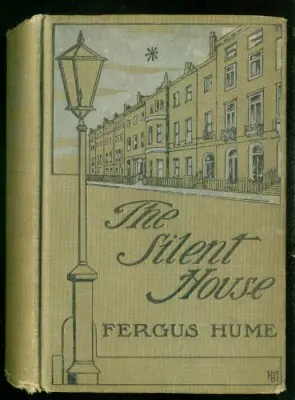
THE CLASSIC COLLECTION · 1907
"The Silent House" by Fergus Hume is a mystery novel written in the early 20th century. The narrative revolves around Lucian Denzil, a young barrister who becomes intrigued by the peculiar tenant of a seemingly haunted and abandoned house, known as No. 13, or the Silent House, following a string of mysterious events and a murder. The story combines elements of suspense and intrigue, as Denzil seeks to unravel the enigma surrounding the reclusive Mr. Berwin and the sinister happenings linked to his life. The opening of this narrative sets the stage by introducing Lucian Denzil, who leads a modest life amidst the bustling backdrop of London. On a foggy night, he has a chance encounter with Mr. Berwin, the enigmatic occupant of the Silent House, who reveals a sense of despair and pain. Denzil's curiosity piqued, he learns more about Berwin's lonely existence and the ghostly aura surrounding his abode. As gossip and speculation circulate within the neighborhood, an unsettling incident occurs when Denzil perceives shadows in Berwin's window, suggesting that more is at play than meets the eye. With a determined sense of justice and inquiry, Denzil soon finds himself embroiled in a mystery that delves deep into the darker aspects of human nature.
Introduction adapted from the source catalogue; source summaries may be automatically generated.
Free to read · English · 72,784 words · No account needed
MAKE TIME FOR A GOOD BOOK
On by default. Untick to stop anonymous reading totals. Each page counts after 10 seconds in view. How this works.
Anonymous counting is on unless you have switched it off.
"Where is the house?" asked Lucian, taking out his pocketbook.
"Number 30, St. Bertha's Road, Bayswater," replied Jorce; and when the barrister, for his private information, had made a note of the address, he continued: "It then appeared that Clear was married. The wife told Ferruci that she was afraid of her husband, who, in his fits of drink--for he drank likewise--often threatened to kill her. They had lost their money, and the poor woman was at her wit's end what to do. Ferruci explained to me that out of friendship he was most anxious to befriend Clear, and stated that Mrs. Clear wished to get her husband cured. He proposed, therefore, to put Clear into my asylum, and pay on behalf of the wife."
"A very ingenious and plausible plan," said Lucian. "Well, Doctor, and
what did you say?"
"I agreed, of course, provided the man was certified insane in the usual way. Ferruci then departed, promising to bring Mrs. Clear to see me. He brought her late on Christmas Eve, at ten--"
"Ah!" interrupted Lucian, "did she wear a black gauze veil with velvet
spots?"
"She did, Mr. Denzil. Have you met her?"
"No, but I have heard of her. She was the woman who visited Wrent in Jersey Street. No doubt Ferruci was waiting for her in the back yard."
"Who is Wrent?" asked Jorce, looking puzzled.
"Don't you know the name, Doctor?"
"No."
"Did Mrs. Clear never mention it?"
"Never."
"Nor Ferruci?"
"No. I never heard the name before," replied Jorce complacently.
"Strange!" said Denzil reflectively. "Yet Wrent seems to be at the bottom of the whole plot. Well, never mind, just now. Please continue, my dear Doctor. What did Mrs. Clear say?"
"Oh, she repeated Ferruci's story, amplified in a feminine fashion. She was afraid of Michael, who, when excited with morphia or drink, would snatch up a knife to attempt her life. Twice she had disarmed him, and now she was tired and frightened. She was willing for him to go into my asylum since Count Ferruci had so kindly consented to bear the expense, but she wished to give him one more chance. Then, as it was late, she stayed here all night. So did the Count, and on Christmas Day they went away."
"When did they come back?"
"About a fortnight later, and they brought with them the man they both
called Michael Clear."
"What is he like?"
"An old man with a white beard."
"Is he mad?" asked Lucian bluntly.
"He is not mad now, only weak in the head," replied Jorce professionally, "but he was certainly mad when he arrived. The man's brain is wrecked by morphia."
"Not by drink?"
Your reading position is saved on this browser. Take it to another device with a library code. Reading pages adapt to text, rather than matching a printed edition.
Fergus Hume

Fergus Hume

Fergus Hume
Fergus Hume
BEHIND THE BOOK
This eBook is for the use of anyone anywhere in the United States and most other parts of the world at no cost and with almost no restrictions whatsoever. You may copy it, give it away or re-use it under the terms of the Project Gutenberg License included with this eBook or online at www.gutenberg.org. If you are not located in the United States, you will have to check the laws of the country where you are located before using this eBook. Read the source licence.
The original source file, including credits and licence, is retained by this library. Request an original-format copy at no charge. Please include the book title and Project Gutenberg identifier #19069.
KEEP YOUR CURIOSITY GOING
Coulson Kernahan

Maurice Baring
Frances Wright
Cécile Tormay

Frederic Jesup Stimson

W. H. P. (William Henry Pope) Jarvis