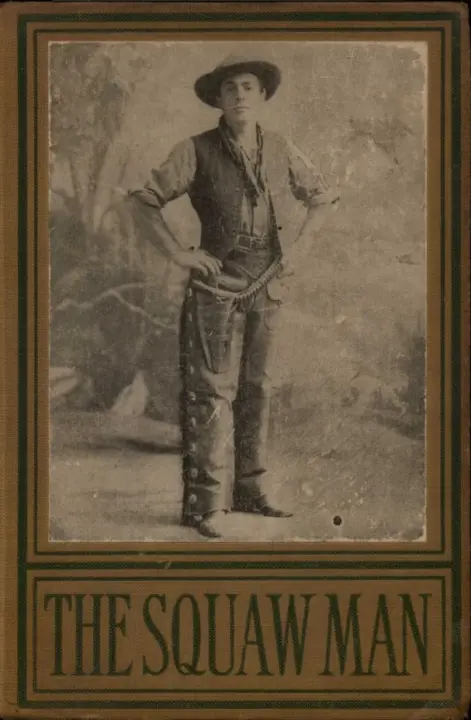
The Squaw Man: A Novel
Julie Opp & Edwin Milton Royle
THE CLASSIC COLLECTION · 1910
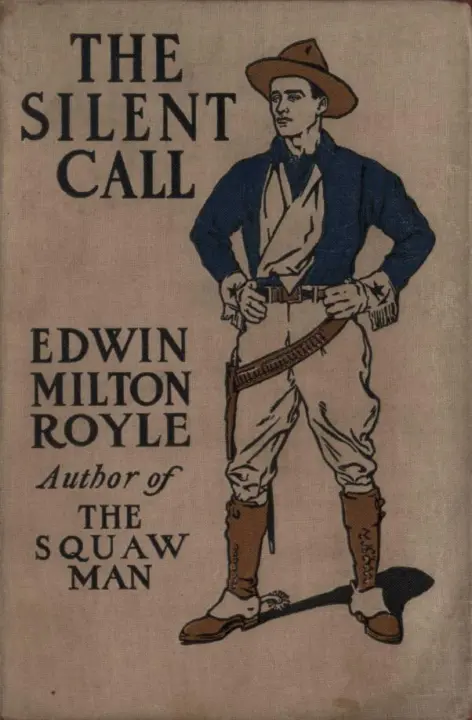
"The Silent Call" by Edwin Milton Royle is a novel written in the early 20th century. The story unfolds in a Western setting, focusing on the lives of Native Americans and their relationship with white settlers, captured through the experiences of the main character, Hal Calthorpe, who serves as the chief of Indian police. The narrative likely explores themes of identity, cultural conflict, and compassion, particularly through the lens of Calthorpe and an Indian girl named Wah-na-gi. At the start of the novel, readers are introduced to Calthorpe as he traverses through a desolate landscape with a band of Indian police under his command. The wildlife and harsh conditions evoke a sense of weariness among the men, yet Calthorpe finds humor and beauty in his surroundings. Interactions between Calthorpe, the Reverend Dr. John McCloud, and various characters hint at tensions between the Indian community and external forces, particularly the agent David Ladd, who appears to have ulterior motives concerning the lands. The opening chapters lay groundwork for complex relationships, notably highlighting Wah-na-gi, a young woman caught between her Native identity and her experiences after attending a white school, thereby setting the stage for ensuing conflicts and explorations of selfhood.
Introduction adapted from the source catalogue; source summaries may be automatically generated.
Free to read · English · 97,629 words · No account needed
MAKE TIME FOR A GOOD BOOK
On by default. Untick to stop anonymous reading totals. Each page counts after 10 seconds in view. How this works.
Anonymous counting is on unless you have switched it off.
"Yes, they are driving me back to the savage in me," she thought. She sat down helplessly. For a long time she sat so. Finally she put on the buckskin dress. It was evident that she must unless she was prepared to remain within doors. There was no mistaking the look in Chapita's face. It was abject admiration. She thought herself she must look well in it. The lines were simple and graceful. It fitted her as if made for her. The quick gratification to her vanity was momentary. She had a conviction that she looked better in it than in the conventional clothes of the white woman. This startled her, worried her. She admired the dress. It made an unmistakable appeal to her. There is something of the savage lust of color in us all. Was it because the garment was really beautiful, or because she was an Indian forever in spite of her aspirations? She knew that the wearing of these clothes would be hailed by the whites and Indians as a sign of surrender. She saw their wagging heads, heard their jests and laughter. She exaggerated their triumph, her own defeat. She wouldn't go to the Agency any more, and she stayed away that day. It was a long hard day to get through. She made Chapita's home cleaner inside and out. That was all she could do. The cabin was approachable only from the front and sides. On the north it had been stuck up against some broken, crumbling sandstone cliffs, that it might not be blown off the bench by the north-east winds when the Winter-man came. Toward the north-west these ramparts were low, scarcely more than twice the height of the house. These battlements, a protection in the winter, made the place a flaming furnace in the summer. It was bearable only at night, at sunset and sunrise. At other times it was hell. Chapita's farm was a farm in name. It spread out on the bench in unfenced acres, how many Chapita did not know or care, of dusty sage-brush and cactus lying on the broken foot-hills. Irrigation and great labor might have turned its desolation into a farm; it wasn't likely to get either. Around the house was not a blade of grass or a flower. Two half-starved mangy dogs occasionally relieved the gathering and oppressive stillness. At first there was a sense of relief that no one bothered her, that every one let her alone; then she began to feel that even the society of Appah or the agent would be a relief. The monotony of nothing to do, nowhere to go, was maddening. One day she was wandering aimlessly along a trail feeling that invisible and malevolent influences were hounding her. It came to her that she was being "run down," a process employed successfully by plainsmen and Indians in capturing wild horses. It was very sure if somewhat slow and tedious. It consisted in never letting the quarry rest. Suddenly two horsemen loomed up in front of her, and she was ordered to turn round and go back. They were Indian police and she looked about and realized that she was on the trail leading to the Red Butte Ranch. Then she knew that she was watched. Appah was now in control of the police force and the system invented by Hal for her protection was now used to persecute her. By and by the sense of hostile eyes invisible but present grew to be painful. That night when she got home, she got a very disagreeable impression. Chapita had been to the distribution of the Government rations; she had been to the slaughter-house and had fought with the other squaws for the entrails. Wah-na-gi remembered as a child having once witnessed the hideous and disgusting spectacle. She had seen the squaws practically skin cattle alive, before the death convulsion was fairly started or the glazing eyeball ceased to roll. Chapita bore evidences of the good-natured rivalry for the refuse. It made Wah-na-gi physically ill. She had a violent nausea. Worse than all, it was obvious that the poor old woman had been unfortunate or had been discriminated against, for it looked as if the rations were those no one else would have. Even the spirit of the wild horse on the free and limitless plain is broken. The following morning she went directly to the Agency and walked into the offices. There the clerks and typewriters were busy with the many details of this little government within a government. They let her stand at the railing while they discussed her in whispers until she called to one of them by name and asked would she be so kind as to let the agent know she wanted to speak to him. The individual addressed brought back the word that Mr. Ladd was too busy to see her. She stood for a moment, gripped her hands, and kept back the tears. Would they tell him it was very important? There was a shadow of a smile at this, but the message was delivered. Wah-na-gi would have to come some other time. She came the next day and the next. It was the same answer. Then she asked for a piece of paper and a pencil and scribbled on it: "Please, Mr. Ladd, oh please give me back my school."
Your reading position is saved on this browser. Take it to another device with a library code. Reading pages adapt to text, rather than matching a printed edition.
Julie Opp & Edwin Milton Royle
BEHIND THE BOOK
This eBook is for the use of anyone anywhere in the United States and most other parts of the world at no cost and with almost no restrictions whatsoever. You may copy it, give it away or re-use it under the terms of the Project Gutenberg License included with this eBook or online at www.gutenberg.org. If you are not located in the United States, you will have to check the laws of the country where you are located before using this eBook. Read the source licence.
The original source file, including credits and licence, is retained by this library. Request an original-format copy at no charge. Please include the book title and Project Gutenberg identifier #51611.
KEEP YOUR CURIOSITY GOING
Coulson Kernahan

Maurice Baring
Frances Wright
Cécile Tormay

Frederic Jesup Stimson

W. H. P. (William Henry Pope) Jarvis