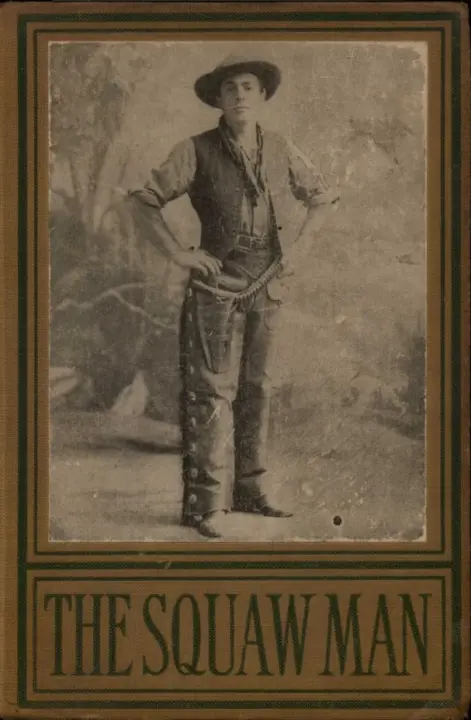
The Squaw Man: A Novel
Julie Opp & Edwin Milton Royle
THE CLASSIC COLLECTION · 1910
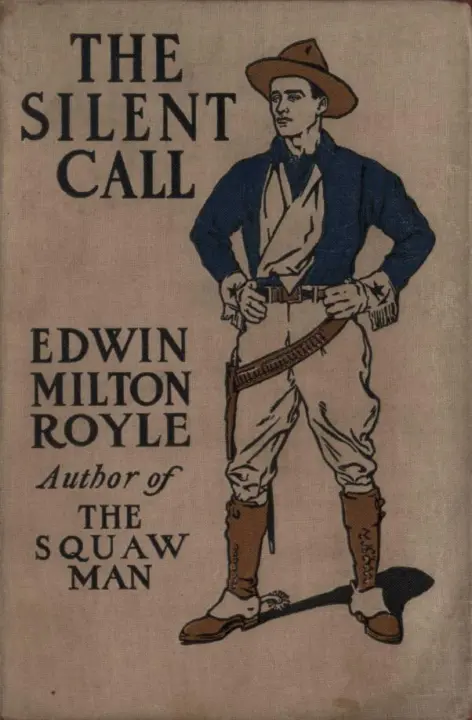
"The Silent Call" by Edwin Milton Royle is a novel written in the early 20th century. The story unfolds in a Western setting, focusing on the lives of Native Americans and their relationship with white settlers, captured through the experiences of the main character, Hal Calthorpe, who serves as the chief of Indian police. The narrative likely explores themes of identity, cultural conflict, and compassion, particularly through the lens of Calthorpe and an Indian girl named Wah-na-gi. At the start of the novel, readers are introduced to Calthorpe as he traverses through a desolate landscape with a band of Indian police under his command. The wildlife and harsh conditions evoke a sense of weariness among the men, yet Calthorpe finds humor and beauty in his surroundings. Interactions between Calthorpe, the Reverend Dr. John McCloud, and various characters hint at tensions between the Indian community and external forces, particularly the agent David Ladd, who appears to have ulterior motives concerning the lands. The opening chapters lay groundwork for complex relationships, notably highlighting Wah-na-gi, a young woman caught between her Native identity and her experiences after attending a white school, thereby setting the stage for ensuing conflicts and explorations of selfhood.
Introduction adapted from the source catalogue; source summaries may be automatically generated.
Free to read · English · 97,629 words · No account needed
MAKE TIME FOR A GOOD BOOK
On by default. Untick to stop anonymous reading totals. Each page counts after 10 seconds in view. How this works.
Anonymous counting is on unless you have switched it off.
Up went the hands of the two faithful retainers, Orson and Silent, and Mike saw that his effort to stampede the proceedings was late, perhaps too late. Before the "opposed" were called for there was a concerted shout for Kal.
"Majorities are always wrong," commented the experienced McShay; "you
git it, Kal."
Kal took his seat on the bench where he had lately been the prisoner and Hal and Bill sat in the centre of the motley group of men who were accusers, witnesses, jurymen, and executioners.
Perhaps there have been times and conditions when Judge Lynch served a useful purpose, but even when the judge happened by accident to be right, the resulting demoralization must have been worse than the initial crimes. Now that McShay had entered the arena, Ladd retired to the outskirts of the crowd and, having fired the house, was content to stand by and see it burn.
"I got to have an office," said McShay. "Not gittin' judge, I'm
attorney for the defence."
"All right," said the judge, getting quickly to business. "You have first innin's. How do you come to know mor'n and better'n us?"
"Well, I know a face card when I see it face up. I'm as good as that."
"He says he owns this ranch," interjected Humpy who was the
self-appointed prosecuting attorney. The offices Humpy got were
self-appointed.
"The worst of it is," answered McShay, "I'm afraid he does."
"You got to show us," said the judge in a tone that indicated the difficulty of such a proceeding.
"Well," replied McShay; "we bought it of Andy and Shorty, and we know they were crooks, 'cause they were crooked with us. Bill here says the signature to the deed is a forgery; and Bill knows the Earl's hand-writin'. That's all."
"Well," smiled Humpy, "that don't go very strong with me. Bill may be mistaken or he may be lyin'."
"Peradventure he ain't," retorted Mike. "Bill couldn't lie. He ain't gifted. Bill's the shortest distance between two points. I've knowed him fer an awful long time, and I wouldn't trust him to lie."
"Is that all?" asked the judge, obviously refusing to be impressed.
"That's all."
"'Tain't conclusive," said Humpy, trying to get the impressive lingo of
opposing counsel.
"By the eternal it's presumptive," bellowed McShay. "Let the young feller go. If it should turn out that he owns the land, somebody might insist on making it awkward for some of us; if he don't own it, he can't prove it; he can't hold it, and no harm done."
"If he owns the land," said the judge, taking a hand; "why didn't he go to court in a regl'r way?"
Your reading position is saved on this browser. Take it to another device with a library code. Reading pages adapt to text, rather than matching a printed edition.
Julie Opp & Edwin Milton Royle
BEHIND THE BOOK
This eBook is for the use of anyone anywhere in the United States and most other parts of the world at no cost and with almost no restrictions whatsoever. You may copy it, give it away or re-use it under the terms of the Project Gutenberg License included with this eBook or online at www.gutenberg.org. If you are not located in the United States, you will have to check the laws of the country where you are located before using this eBook. Read the source licence.
The original source file, including credits and licence, is retained by this library. Request an original-format copy at no charge. Please include the book title and Project Gutenberg identifier #51611.
KEEP YOUR CURIOSITY GOING
Coulson Kernahan

Maurice Baring
Frances Wright
Cécile Tormay

Frederic Jesup Stimson

W. H. P. (William Henry Pope) Jarvis