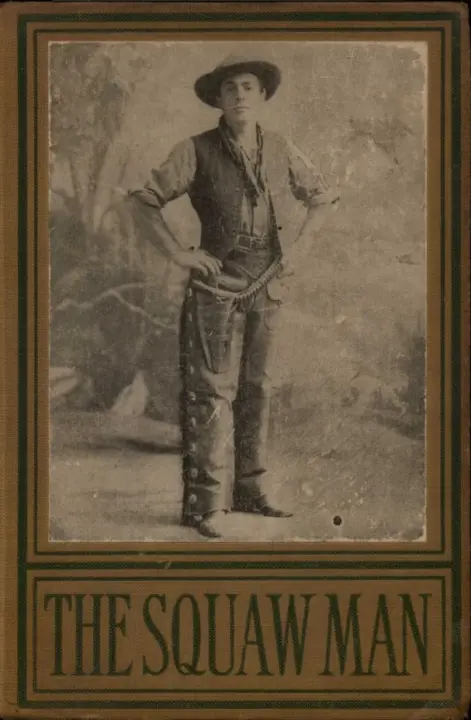
The Squaw Man: A Novel
Julie Opp & Edwin Milton Royle
THE CLASSIC COLLECTION · 1910
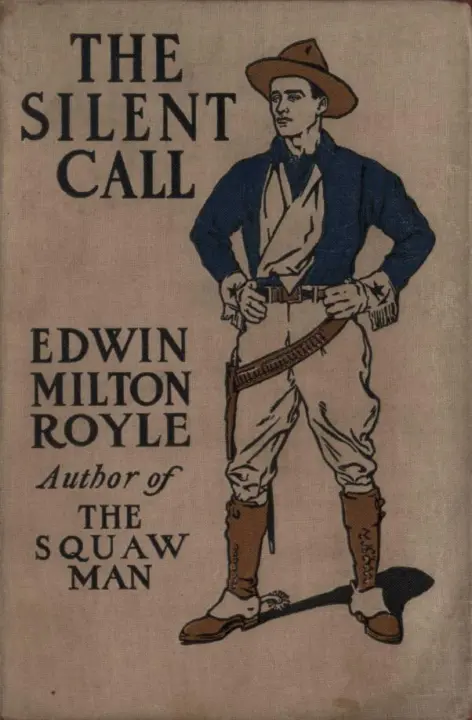
"The Silent Call" by Edwin Milton Royle is a novel written in the early 20th century. The story unfolds in a Western setting, focusing on the lives of Native Americans and their relationship with white settlers, captured through the experiences of the main character, Hal Calthorpe, who serves as the chief of Indian police. The narrative likely explores themes of identity, cultural conflict, and compassion, particularly through the lens of Calthorpe and an Indian girl named Wah-na-gi. At the start of the novel, readers are introduced to Calthorpe as he traverses through a desolate landscape with a band of Indian police under his command. The wildlife and harsh conditions evoke a sense of weariness among the men, yet Calthorpe finds humor and beauty in his surroundings. Interactions between Calthorpe, the Reverend Dr. John McCloud, and various characters hint at tensions between the Indian community and external forces, particularly the agent David Ladd, who appears to have ulterior motives concerning the lands. The opening chapters lay groundwork for complex relationships, notably highlighting Wah-na-gi, a young woman caught between her Native identity and her experiences after attending a white school, thereby setting the stage for ensuing conflicts and explorations of selfhood.
Introduction adapted from the source catalogue; source summaries may be automatically generated.
Free to read · English · 97,629 words · No account needed
MAKE TIME FOR A GOOD BOOK
On by default. Untick to stop anonymous reading totals. Each page counts after 10 seconds in view. How this works.
Anonymous counting is on unless you have switched it off.
It now appeared that the McShay crowd was a walking arsenal. Weapons made their appearance from the most innocent places. The big man drew a gun from a pocket holster underneath each arm. They were so disposed that he could fold his arms in the most natural way and have each hand rest on the butt of a gun, which he could draw simultaneously and very quickly. Orson Lee seemed to have a preference for the knife as an auxiliary weapon, for he drew one from the leg of his boot and another from the back of his neck, the two extremes.
Silent Smith, the expert, wore a coat, and had a magazine gun of moderate size in each pocket, so that he could sit or stand with his hands in his pockets and shoot through the pockets. It saved a lot of time not to have to draw and aim. It looked as if the cowboy contingent had come prepared for trouble.
While this was in progress McShay said:
"Don't suppose you have political asperations, Parson, but if you ever git locoed that-a-way, you can put a rope around any office we got runnin' around loose down our way. Now, Brother Ladd, we'd like a contribution from you. Can't let you overlook the plate that-a-way."
"As I'm not armed--" said Ladd, but the minute he said it he knew it was
a mistake.
"Guess ag'in," said McShay with a provoking smile.
"Oh, I had forgotten this," corrected Ladd, removing a magazine gun from his pockets. "This is an old hunting coat of mine and I had neglected to remove it."
The cowman looked a quizzical "How careless!" but refrained from further
comment.
"Would you like to make sure that is all?" said Ladd to the other.
Much to the disappointment of the preacher, McShay rejoined: "If you don't mind," and proceeded to tap him for further concealed weapons. Ladd submitted to this with a good grace that pleased the chairman, particularly when no further artillery was in evidence.
"I'm not armed," said Baker.
"I'll take the captain's word for that," said the chairman.
"You have no other weapons, Mr. Calthorpe?"
"None," said Hal; "but any one is at liberty to make sure."
"I'll take your word," said McShay.
The inferential insult of this was not lost on Ladd, but he had made up his mind not again to lose his temper, and to let McShay rattle on and expose his hand.
"Oh, by the way," observed the chairman, looking around; "oughtn't the Indians to have a representative here?"
"I represent the Indians," said Ladd laconically.
"Never mind the Injins," agreed McShay.
Your reading position is saved on this browser. Take it to another device with a library code. Reading pages adapt to text, rather than matching a printed edition.
Julie Opp & Edwin Milton Royle
BEHIND THE BOOK
This eBook is for the use of anyone anywhere in the United States and most other parts of the world at no cost and with almost no restrictions whatsoever. You may copy it, give it away or re-use it under the terms of the Project Gutenberg License included with this eBook or online at www.gutenberg.org. If you are not located in the United States, you will have to check the laws of the country where you are located before using this eBook. Read the source licence.
The original source file, including credits and licence, is retained by this library. Request an original-format copy at no charge. Please include the book title and Project Gutenberg identifier #51611.
KEEP YOUR CURIOSITY GOING
Coulson Kernahan

Maurice Baring
Frances Wright
Cécile Tormay

Frederic Jesup Stimson

W. H. P. (William Henry Pope) Jarvis