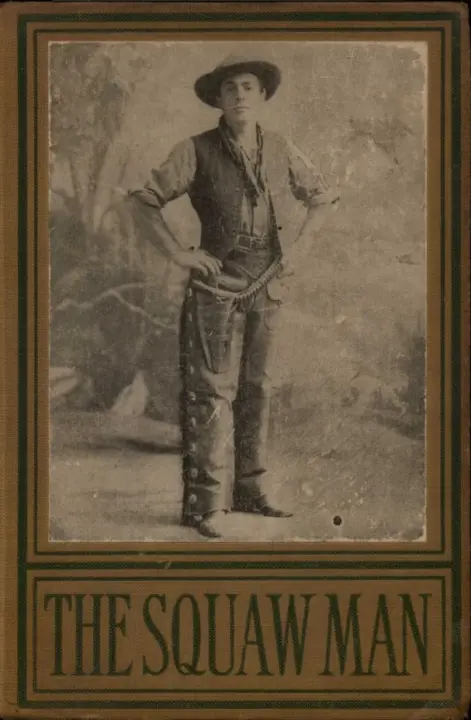
The Squaw Man: A Novel
Julie Opp & Edwin Milton Royle
THE CLASSIC COLLECTION · 1910
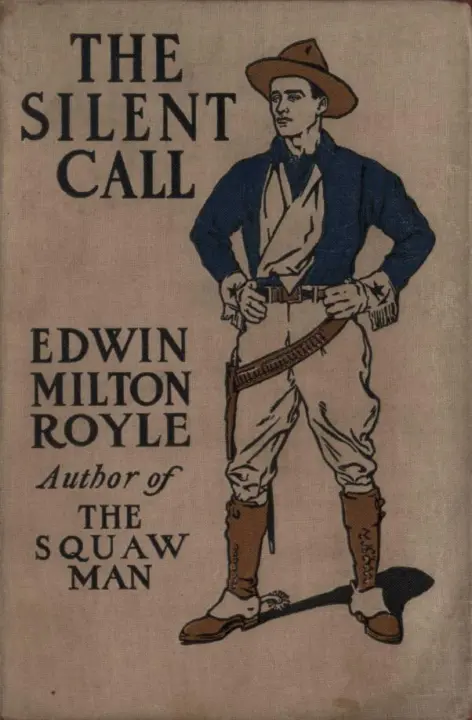
"The Silent Call" by Edwin Milton Royle is a novel written in the early 20th century. The story unfolds in a Western setting, focusing on the lives of Native Americans and their relationship with white settlers, captured through the experiences of the main character, Hal Calthorpe, who serves as the chief of Indian police. The narrative likely explores themes of identity, cultural conflict, and compassion, particularly through the lens of Calthorpe and an Indian girl named Wah-na-gi. At the start of the novel, readers are introduced to Calthorpe as he traverses through a desolate landscape with a band of Indian police under his command. The wildlife and harsh conditions evoke a sense of weariness among the men, yet Calthorpe finds humor and beauty in his surroundings. Interactions between Calthorpe, the Reverend Dr. John McCloud, and various characters hint at tensions between the Indian community and external forces, particularly the agent David Ladd, who appears to have ulterior motives concerning the lands. The opening chapters lay groundwork for complex relationships, notably highlighting Wah-na-gi, a young woman caught between her Native identity and her experiences after attending a white school, thereby setting the stage for ensuing conflicts and explorations of selfhood.
Introduction adapted from the source catalogue; source summaries may be automatically generated.
Free to read · English · 97,629 words · No account needed
MAKE TIME FOR A GOOD BOOK
On by default. Untick to stop anonymous reading totals. Each page counts after 10 seconds in view. How this works.
Anonymous counting is on unless you have switched it off.
"It's fer him," he said, nodding toward the invalid. Wah-na-gi had to move to take the cup and, though she disengaged her hand ever so gently, the drifting man felt the anchor drag, and he woke with a little start.
"Well, boys," he said with a faint smile, seeing the two men over him;
"what is it?"
"Just tellin' Wah-na-gi to make you take a little of this if you should feel faint in the night," said Bill.
"I've reformed, Bill. I'm not drinking now," said the sick man with a quizzical look playing about his eyes, tenuous and vapory. "I won't need it. Thank you just the same."
The noble voice was gone, the voice he had played upon with all the skill of a great musician, the voice that had swayed multitudes. He spoke with effort in a husky whisper.
"Bill and I are going to try to git through to Calamity or the fort,
Parson," said McShay.
"In this storm?" asked the sick man.
"Oh, Bill and I don't mind a little thing like a storm."
"And the wind has died down a whole lot," added Bill cheerfully.
"May God go with you," said the clergyman, raising himself upon the couch. "I'll say good-by to you before you go."
"Oh, shucks," laughed Mike uneasily. "'Tain't good-by, Parson. We're
a-comin' back."
"But I won't be here, Mike."
Each one knew what McCloud meant, and each one tried to look as if he didn't. Wah-na-gi, seeing that he wanted to sit up, had put a pillow under his shoulders, and now he stretched out an emaciated hand, to the two big brawny men, and his eyes looked from one to the other with admiration.
"You are two fine, brave, splendid men. I'm proud to have known you, to have called you my friends."
The lines about Bill's mouth twitched and all he could say was, "Same here, Parson," and he walked away to the fire.
Wah-na-gi had gone to the window, as if to look out at the storm, but really to hide her tears. McShay glanced at her and Bill furtively, then he sat down on the stool, and bent down over the sick man and spoke for his ear alone: "And say, Parson, just before comin' over this time, I--I--sold out my liquor business. Thought maybe it would please you, and somehow couldn't think of anything else that would."
A smile spread over the wan face.
"Oh, thank you, Mike. Thank you. Perhaps I haven't lived in vain."
Your reading position is saved on this browser. Take it to another device with a library code. Reading pages adapt to text, rather than matching a printed edition.
Julie Opp & Edwin Milton Royle
BEHIND THE BOOK
This eBook is for the use of anyone anywhere in the United States and most other parts of the world at no cost and with almost no restrictions whatsoever. You may copy it, give it away or re-use it under the terms of the Project Gutenberg License included with this eBook or online at www.gutenberg.org. If you are not located in the United States, you will have to check the laws of the country where you are located before using this eBook. Read the source licence.
The original source file, including credits and licence, is retained by this library. Request an original-format copy at no charge. Please include the book title and Project Gutenberg identifier #51611.
KEEP YOUR CURIOSITY GOING
Coulson Kernahan

Maurice Baring
Frances Wright
Cécile Tormay

Frederic Jesup Stimson

W. H. P. (William Henry Pope) Jarvis