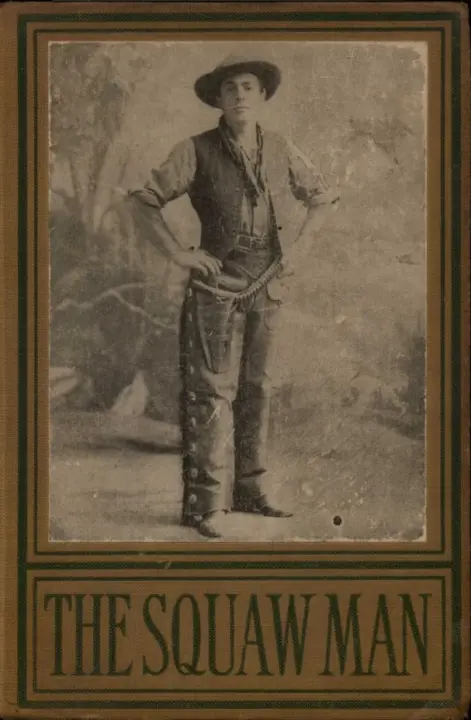
The Squaw Man: A Novel
Julie Opp & Edwin Milton Royle
THE CLASSIC COLLECTION · 1910
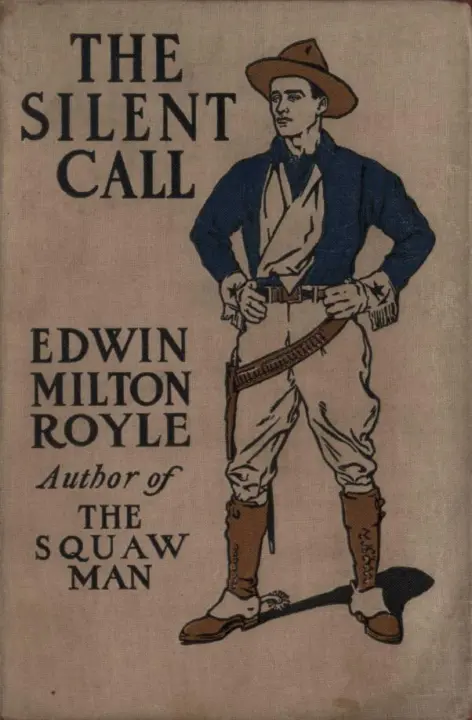
"The Silent Call" by Edwin Milton Royle is a novel written in the early 20th century. The story unfolds in a Western setting, focusing on the lives of Native Americans and their relationship with white settlers, captured through the experiences of the main character, Hal Calthorpe, who serves as the chief of Indian police. The narrative likely explores themes of identity, cultural conflict, and compassion, particularly through the lens of Calthorpe and an Indian girl named Wah-na-gi. At the start of the novel, readers are introduced to Calthorpe as he traverses through a desolate landscape with a band of Indian police under his command. The wildlife and harsh conditions evoke a sense of weariness among the men, yet Calthorpe finds humor and beauty in his surroundings. Interactions between Calthorpe, the Reverend Dr. John McCloud, and various characters hint at tensions between the Indian community and external forces, particularly the agent David Ladd, who appears to have ulterior motives concerning the lands. The opening chapters lay groundwork for complex relationships, notably highlighting Wah-na-gi, a young woman caught between her Native identity and her experiences after attending a white school, thereby setting the stage for ensuing conflicts and explorations of selfhood.
Introduction adapted from the source catalogue; source summaries may be automatically generated.
Free to read · English · 97,629 words · No account needed
MAKE TIME FOR A GOOD BOOK
On by default. Untick to stop anonymous reading totals. Each page counts after 10 seconds in view. How this works.
Anonymous counting is on unless you have switched it off.
There was an old-fashioned prehistoric assumption that the basis of social intercourse was similarity of tastes, the interchange of intellectual or spiritual ideas; but when Society becomes an adjunct to politics, business, or when it becomes a formal profession, a vocation, then some strange things happen.
Things very surprising to herself were now happening to Edith. To her own huge disgust and dismay, she found herself one week-end a guest at the beautiful country-place of Solly Wirtheimer, a South African burglar-person, who was trying to jimmy his way into the polite world. Without any more interest in the horse than in the Mithraic mythology he owned a racing stable, and he was trying hard to lose enough money to the proper persons to enable him to associate with them. It really was hard work. He almost had to push it over to them. Edith naturally felt that nothing short of winning a pot of money would compensate her for the degradation of being one of Solly's house party. At the usual game of bridge, however, she lost persistently. Her game was degenerating or Solly's guests were especially clever or lucky. Eventually she became frightened at her losses. Her genial host offered to lend her any amount she required. She chose rather to accept the offer of her own partner, a friendly young American person, whom she met here for the first time and about whom she knew nothing. This loan naturally led to further acquaintance. It is a way with loans. They either lead to intimacy or estrangement. In the course of London activities her own fortune had been pretty well dissipated, and she had been more than ordinarily reckless because the future had seemed so well assured and the estates of Uxminster seemed to guarantee one against misfortune! Instead of bridge being a pastime, it must be confessed that a great many of the most refined people play it to win. Every smart house in London is a casino, and one must play well, or be very lucky, or have lots of money to lose. In the course of bridge Edith found herself again in need of a loan, and the friendly young American person seemed the most available resource. Young American persons have so much and are usually so delightfully careless with it. This was arranged over a luncheon at The Savoy grill room. At this luncheon the "American person" induced the Viscountess to talk of her husband. She took small pains to conceal her animosity. The upshot of this interview was that she achieved a remunerative occupation that promised an assured income and enabled her to gratify her supreme hate. The combination was delightful. It was understood that she was to give the American person a perusal of all Hal's papers and letters that were available, that she would exercise a supervision of all his future correspondence, and that she would induce him to leave London; that she would keep him out of the way and inaccessible so long as it suited the purposes of the young American person and his friends. This latter stipulation was the only part of the bargain that made her hesitate. She took this under advisement. One day shortly after this interview she was having her breakfast and, happening to look at the clock, she saw that it was six P.M., and after breakfast, when her mind was fairly clear, she looked into the mirror. She was frightened, thoroughly frightened. Her beauty had been her armor, her weapon, her resource, her salvation. She had always suffered. The aches, the pains, the discomfort of ill-health she could endure so long as she kept her personal appearance. Now, in the depths of the mirror, she saw walking toward her a faded, broken woman, with something in the background, something cold, inevitable, horrible, hovering near. Sir George had advised her to travel, to get away from London. London at the moment was difficult. She was under a small temporary cloud. It was very smart to go to the ends of the world in search of sport. Hal had urged it on that terrible night. He had not mentioned it since, because he had learned to conceal his desires. That he wanted to do anything, go anywhere, was sufficient to arouse her vivid opposition, and she was ingenious in making that opposition as painful as possible. He had resort therefore to the trick of advocating the exact opposite of his intent, but she was very cunning in seeing through such subterfuge. She saw, too, in their peregrinations enlarged opportunities of thwarting him. So to his intense amazement she announced her intention of giving up her own pleasures to gratify him, her willingness to go out, "the world forgetting, by the world forgot." He concluded that she had become frightened about her health. His own position was deplorable. The atmosphere of the clubs where he would care to go was cold and clammy. The clubs where he would have been welcomed disgusted him. At home he wore the armor of silence and impassivity, to keep from being stung to death. Abroad he wandered here, he wandered there, without pleasure or purpose. At night he frequented the music-halls, bored, with a sneer on his lip for the bald common vulgarity of it all--the brazen women, the vicious youngsters, and the feeble slimy old men. He went to the sporting events, the races. He never missed the Sporting Club, and got some diversion from seeing one gladiator beat another into a bloody pulp. He was drinking again, and gambling too. He didn't have to look into a mirror to see the end of it all. At the suggestion that they go into the wilderness the rubber mask dropped from his face and he smiled. Dormant energy awoke in him. He suggested India. India suited the young American person too, and so it was agreed that they would go after the pigmy hog in Nepal and Sikkim, the cat-bear (AElurus), wild sheep and goats, and the musk-deer in the precipices of the Himalayas. It was the boy's salvation. It gave him something to think of, plan for, and at least he had the joys of imagination and anticipation all the long way to India. Of hunting he got precious little; of game almost none at all. Edith had no taste for hardship or even discomfort, and she was possessed with a satanic restlessness and capriciousness. No sooner had they determined on one course than she changed it. They were lucky to reach any destination before her whim veered. He had not the strength or the patience to fight these moods. It was easier to let her have her way. And so they drifted, drifted from day to day, from place to place, her preference always being for the cities where racing and other forms of gambling offered some diversion.
Your reading position is saved on this browser. Take it to another device with a library code. Reading pages adapt to text, rather than matching a printed edition.
Julie Opp & Edwin Milton Royle
BEHIND THE BOOK
This eBook is for the use of anyone anywhere in the United States and most other parts of the world at no cost and with almost no restrictions whatsoever. You may copy it, give it away or re-use it under the terms of the Project Gutenberg License included with this eBook or online at www.gutenberg.org. If you are not located in the United States, you will have to check the laws of the country where you are located before using this eBook. Read the source licence.
The original source file, including credits and licence, is retained by this library. Request an original-format copy at no charge. Please include the book title and Project Gutenberg identifier #51611.
KEEP YOUR CURIOSITY GOING
Coulson Kernahan

Maurice Baring
Frances Wright
Cécile Tormay

Frederic Jesup Stimson

W. H. P. (William Henry Pope) Jarvis