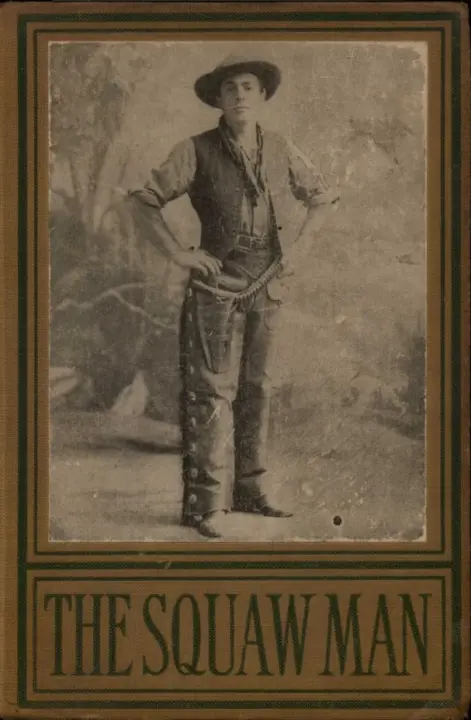
The Squaw Man: A Novel
Julie Opp & Edwin Milton Royle
THE CLASSIC COLLECTION · 1910
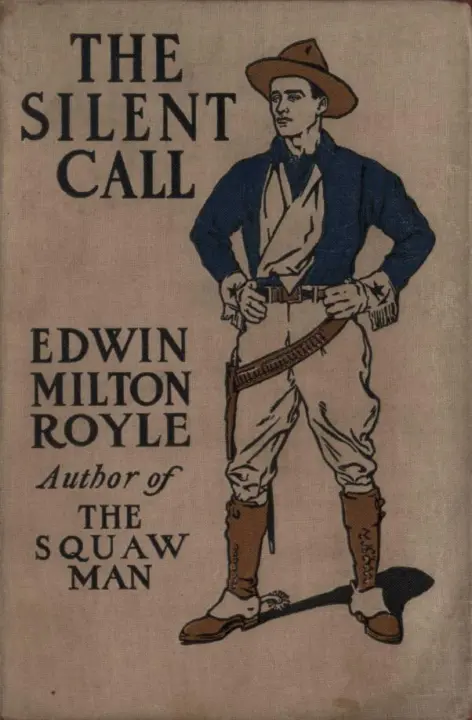
"The Silent Call" by Edwin Milton Royle is a novel written in the early 20th century. The story unfolds in a Western setting, focusing on the lives of Native Americans and their relationship with white settlers, captured through the experiences of the main character, Hal Calthorpe, who serves as the chief of Indian police. The narrative likely explores themes of identity, cultural conflict, and compassion, particularly through the lens of Calthorpe and an Indian girl named Wah-na-gi. At the start of the novel, readers are introduced to Calthorpe as he traverses through a desolate landscape with a band of Indian police under his command. The wildlife and harsh conditions evoke a sense of weariness among the men, yet Calthorpe finds humor and beauty in his surroundings. Interactions between Calthorpe, the Reverend Dr. John McCloud, and various characters hint at tensions between the Indian community and external forces, particularly the agent David Ladd, who appears to have ulterior motives concerning the lands. The opening chapters lay groundwork for complex relationships, notably highlighting Wah-na-gi, a young woman caught between her Native identity and her experiences after attending a white school, thereby setting the stage for ensuing conflicts and explorations of selfhood.
Introduction adapted from the source catalogue; source summaries may be automatically generated.
Free to read · English · 97,629 words · No account needed
MAKE TIME FOR A GOOD BOOK
On by default. Untick to stop anonymous reading totals. Each page counts after 10 seconds in view. How this works.
Anonymous counting is on unless you have switched it off.
"Will you smoke?" asked Hal with a motion to the cigars. The youngster made a nervous start toward the table, then it occurred to him that he could not meet on such a friendly basis the man who had treated with inhuman cruelty the woman who had thrown herself upon his protection; so he stopped short and very awkwardly said:
"No! thank you; no, no!"
Again an awkward pause.
"Will you sit down?"
That seemed consistent with dignity and he started to do so, but again
recoiled.
"I--eh--I feel more comfortable standing, if you don't mind."
Hal bowed. Yester's awkwardness was catching. He lounged across the room, sat down on the rail before the fire, and lit a cigarette. He could wait. Yester fiddled with his collar, stroked his cheek, and fidgeted.
"This is--this is rather a delicate situation, isn't it?" he said at last with a little deprecatory, nervous smile.
"Nothing seems unusual or impossible these days," said Hal easily.
"Well, you see," said the other, "I was intended for the diplomatic service, but I'm afraid I'm rather direct."
What a kid it was, thought Hal.
"An engaging frankness is sometimes the highest form of diplomacy," he
said encouragingly.
"Well, you see," said the other gathering courage, "she has come to rely on me so completely, on my judgment as it were----"
"She? Oh, yes, my wife."
"Yes, yes," eagerly assented the lover, so absorbed in his own romance as to be beautifully oblivious to any other point of view. Hal smoked and kept an inscrutable face, while his heart sang within him, going with the wind and tide, going out of these eddies, these twists and turns, out into the broad ocean and on to a new world.
Yester walked over to the writing-table and began to play nervously with
its furnishings.
"I wanted to say certain things to you, and I--I--I find I hardly know how." Then he pulled himself together as his mind went back over their acquaintance. "You see, as she had no other friends, as she was in trouble and in bad health, my sympathies were naturally enlisted, and almost before either of us realized it--well, you see, while I think you have behaved very badly, I--eh--now that we have met, I--will you let me say, I feel very sorry for you?"
The ingenuousness of this was completely disarming. Hal loved the child. But he continued to treat the situation with becoming gravity, bowed formally, and said:
"That's very generous of you."
Your reading position is saved on this browser. Take it to another device with a library code. Reading pages adapt to text, rather than matching a printed edition.
Julie Opp & Edwin Milton Royle
BEHIND THE BOOK
This eBook is for the use of anyone anywhere in the United States and most other parts of the world at no cost and with almost no restrictions whatsoever. You may copy it, give it away or re-use it under the terms of the Project Gutenberg License included with this eBook or online at www.gutenberg.org. If you are not located in the United States, you will have to check the laws of the country where you are located before using this eBook. Read the source licence.
The original source file, including credits and licence, is retained by this library. Request an original-format copy at no charge. Please include the book title and Project Gutenberg identifier #51611.
KEEP YOUR CURIOSITY GOING
Coulson Kernahan

Maurice Baring
Frances Wright
Cécile Tormay

Frederic Jesup Stimson

W. H. P. (William Henry Pope) Jarvis