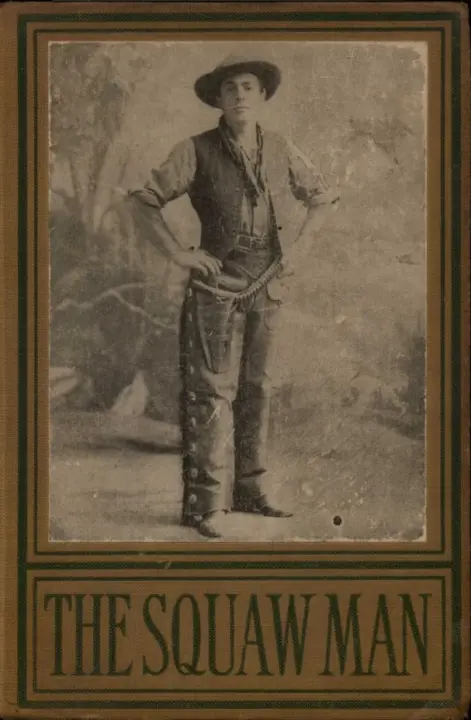
The Squaw Man: A Novel
Julie Opp & Edwin Milton Royle
THE CLASSIC COLLECTION · 1910
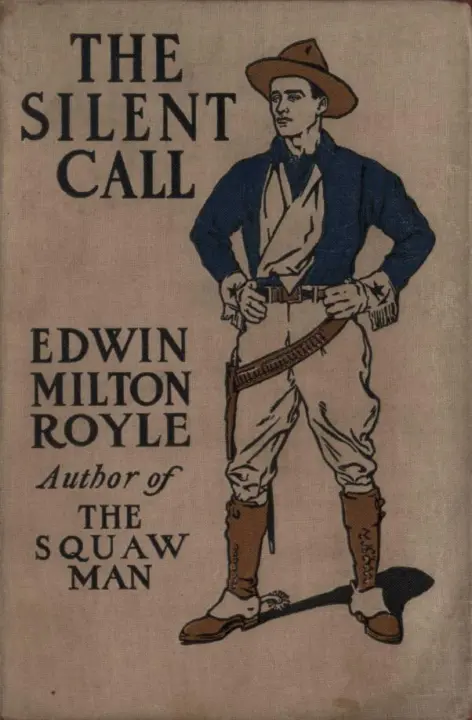
"The Silent Call" by Edwin Milton Royle is a novel written in the early 20th century. The story unfolds in a Western setting, focusing on the lives of Native Americans and their relationship with white settlers, captured through the experiences of the main character, Hal Calthorpe, who serves as the chief of Indian police. The narrative likely explores themes of identity, cultural conflict, and compassion, particularly through the lens of Calthorpe and an Indian girl named Wah-na-gi. At the start of the novel, readers are introduced to Calthorpe as he traverses through a desolate landscape with a band of Indian police under his command. The wildlife and harsh conditions evoke a sense of weariness among the men, yet Calthorpe finds humor and beauty in his surroundings. Interactions between Calthorpe, the Reverend Dr. John McCloud, and various characters hint at tensions between the Indian community and external forces, particularly the agent David Ladd, who appears to have ulterior motives concerning the lands. The opening chapters lay groundwork for complex relationships, notably highlighting Wah-na-gi, a young woman caught between her Native identity and her experiences after attending a white school, thereby setting the stage for ensuing conflicts and explorations of selfhood.
Introduction adapted from the source catalogue; source summaries may be automatically generated.
Free to read · English · 97,629 words · No account needed
MAKE TIME FOR A GOOD BOOK
On by default. Untick to stop anonymous reading totals. Each page counts after 10 seconds in view. How this works.
Anonymous counting is on unless you have switched it off.
"Well, you must do something," said Sir Gordon petulantly, annoyed with the young man's levity. "Of course whatever you decide to try, it is going to be a long hard struggle to live down the Army record; still with time and pluck it may be done. You are an earl's son and you have influential relatives. Well, then, how about politics?"
"Sit in the House and listen to the gabble on the Old Age Pensions and The Licensing Bill? I'd rather be a suffragette and go to jail."
Sir Gordon had exhausted the careers. It wasn't a career exactly, but people went in for it and it was a devilish nice thing to go in for.
"Well," he suggested, "there's the life of a country gentleman."
"The country would be all right," said Hal, "if the people would only stay away. They spoil everything. Even the gardens are as formal as the odious people, and the flowers, even the flowers, are made to look stiff and stuck-up and well-behaved, as if they felt they, too, were on exhibition and might be talked about. The country is only another setting for teas, tennis, and top hats, bridge, scandal, and flirting with each other's wives."
"Well, there's shooting," said Sir Gordon in desperation. "You used to
like shooting."
"Yes, before people shot in mobs, and made it a function. Now they go into the solitudes, the cosey solitudes, with footmen, a French cook, vintage wines, and a Hungarian band."
Sir Gordon did not realize that his wife and Hal were having fun with his prejudices. He was on the edge of losing his patience.
"Well, if you stay here--" He was annoyed to observe that he had raised his voice almost to a vulgar scream. He repeated the phrase in a more temperate key. "If you stay here----"
"But I'm not going to stay here, Gordon. It's the West for me. It's in my blood. When I've visited with father and arranged one or two important matters, I'm goin' back to God's country."
"Bravo, Hal," exclaimed Lady Winifred. "If you stay here you'll end by becoming a conventional little snob, and I should hate you. No; go back to your shirt-sleeve crowd."
"Well, my dear boy," exclaimed Gordon completely nonplussed; "I can't make you out," and he made up his mind to beat a hasty retreat to the United Service Club, where anarchy was not petted and spoiled and fed on chocolate bonbons. Then he thought of something and came back.
"Winifred, speak to Hal about that."
"About what?" inquired Hal.
Again he lost some of his habitual poise in the fervor of his
convictions.
Your reading position is saved on this browser. Take it to another device with a library code. Reading pages adapt to text, rather than matching a printed edition.
Julie Opp & Edwin Milton Royle
BEHIND THE BOOK
This eBook is for the use of anyone anywhere in the United States and most other parts of the world at no cost and with almost no restrictions whatsoever. You may copy it, give it away or re-use it under the terms of the Project Gutenberg License included with this eBook or online at www.gutenberg.org. If you are not located in the United States, you will have to check the laws of the country where you are located before using this eBook. Read the source licence.
The original source file, including credits and licence, is retained by this library. Request an original-format copy at no charge. Please include the book title and Project Gutenberg identifier #51611.
KEEP YOUR CURIOSITY GOING
Coulson Kernahan

Maurice Baring
Frances Wright
Cécile Tormay

Frederic Jesup Stimson

W. H. P. (William Henry Pope) Jarvis