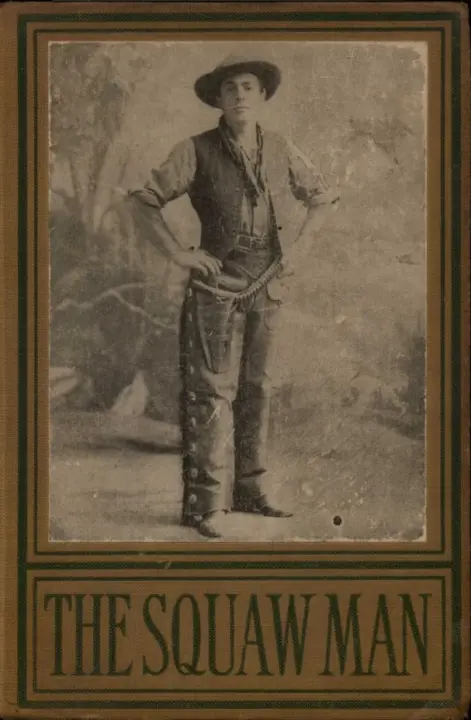
The Squaw Man: A Novel
Julie Opp & Edwin Milton Royle
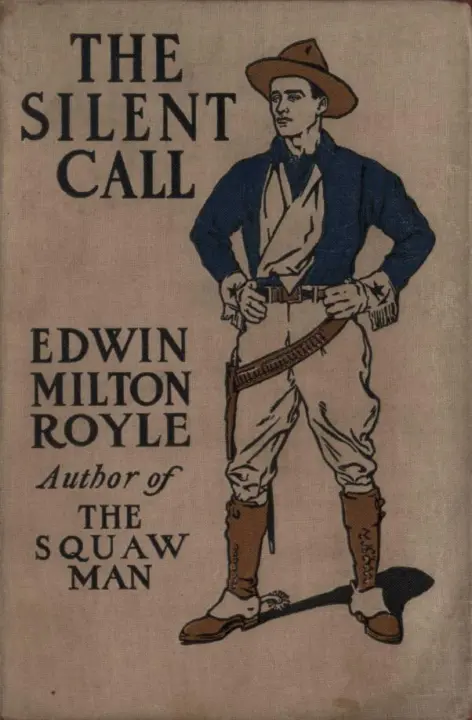
THE CLASSIC COLLECTION · 1910
"The Silent Call" by Edwin Milton Royle is a novel written in the early 20th century. The story unfolds in a Western setting, focusing on the lives of Native Americans and their relationship with white settlers, captured through the experiences of the main character, Hal Calthorpe, who serves as the chief of Indian police. The narrative likely explores themes of identity, cultural conflict, and compassion, particularly through the lens of Calthorpe and an Indian girl named Wah-na-gi. At the start of the novel, readers are introduced to Calthorpe as he traverses through a desolate landscape with a band of Indian police under his command. The wildlife and harsh conditions evoke a sense of weariness among the men, yet Calthorpe finds humor and beauty in his surroundings. Interactions between Calthorpe, the Reverend Dr. John McCloud, and various characters hint at tensions between the Indian community and external forces, particularly the agent David Ladd, who appears to have ulterior motives concerning the lands. The opening chapters lay groundwork for complex relationships, notably highlighting Wah-na-gi, a young woman caught between her Native identity and her experiences after attending a white school, thereby setting the stage for ensuing conflicts and explorations of selfhood.
Introduction adapted from the source catalogue; source summaries may be automatically generated.
Free to read · English · 97,629 words · No account needed
MAKE TIME FOR A GOOD BOOK
On by default. Untick to stop anonymous reading totals. Each page counts after 10 seconds in view. How this works.
Anonymous counting is on unless you have switched it off.
McCloud was surprised. He was an emotional man too, and he thrilled to the sweep of this violence. He would have liked to take the boy in his arms and cry: "Oh, Absalom, my son, my son!" Instead, he held him away, shifted his own ground, and sought the joints of the other's harness. Hal's allusion to his home seemed to offer an opening.
"This wife in London, this unhappy home--perhaps it is an appointed
barrier!"
"Barriers are surmounted--swept away!"
Hal was standing now and he looked audacious and puissant. He looked the master of his own destiny. The man who had passed through the fire, whose proud hopes and ambitions lay in broken heaps where the car of destiny had passed, looked at him in admiration.
"Yes, barriers are swept away; but only by those who humbly and patiently kneel down before them. Perhaps Infinite Wisdom stays your hand, to keep you from bringing sorrow to this helpless Indian woman whom you love, and to her children."
"Never!" was the answer, in the pride and strength of youth, in the consciousness of capacity, in the joy of a child of battle, the offspring of warriors, who had sung their triumph under torture. It was a wide gulf that separated this fierce courage from the white-faced saint who had learned in patience and humility.
"It's a feeble-minded man who keeps picking at the irrevocable," was McCloud's reply, more to himself than to the savage before him. "Suppose some day you grew tired of all this and wanted to go back and be a part of the world of convention, of fashion and culture?"
Hal had no argument to make to this, but it had no appeal, no meaning. He only made a gesture of negation and impatience.
"Oh, my boy," said McCloud helplessly; "you're a rebel."
"Well, America was made by rebels," said the other with a triumphant
smile.
The minister put his hands on the boy's shoulders and looked into his eyes as David might have done to his wayward son.
"Well, God bless you for a fine, glorious, dangerous rebel."
The sun was up, a new day was born, all things seemed possible as Big
Bill hove into sight.
"Say, Boss," he drawled; "McShay's out here with the toughest looking
gang of ruffians----"
"Let 'em in, Bill," cried Hal joyously, his eyes dancing with the excitement of his conflict with McCloud.
"Turn 'em loose on the ranch?" said the foreman doubtfully. "That
outfit? Gee whiz!"
"May need 'em, Bill."
"Most worse'n Injins," grumbled the old man as he went away, doubt, hesitation, protest in the stoop and shrug of his huge bulk.
Your reading position is saved on this browser. Take it to another device with a library code. Reading pages adapt to text, rather than matching a printed edition.
Julie Opp & Edwin Milton Royle
BEHIND THE BOOK
This eBook is for the use of anyone anywhere in the United States and most other parts of the world at no cost and with almost no restrictions whatsoever. You may copy it, give it away or re-use it under the terms of the Project Gutenberg License included with this eBook or online at www.gutenberg.org. If you are not located in the United States, you will have to check the laws of the country where you are located before using this eBook. Read the source licence.
The original source file, including credits and licence, is retained by this library. Request an original-format copy at no charge. Please include the book title and Project Gutenberg identifier #51611.
KEEP YOUR CURIOSITY GOING
Coulson Kernahan

Maurice Baring
Frances Wright
Cécile Tormay

Frederic Jesup Stimson

W. H. P. (William Henry Pope) Jarvis