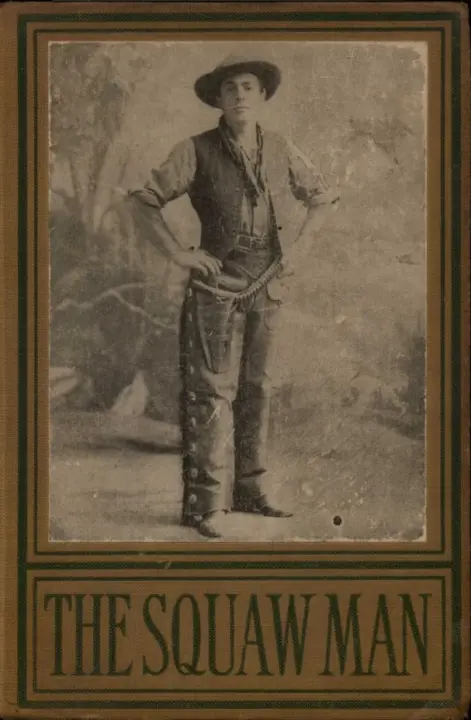
The Squaw Man: A Novel
Julie Opp & Edwin Milton Royle
THE CLASSIC COLLECTION · 1910
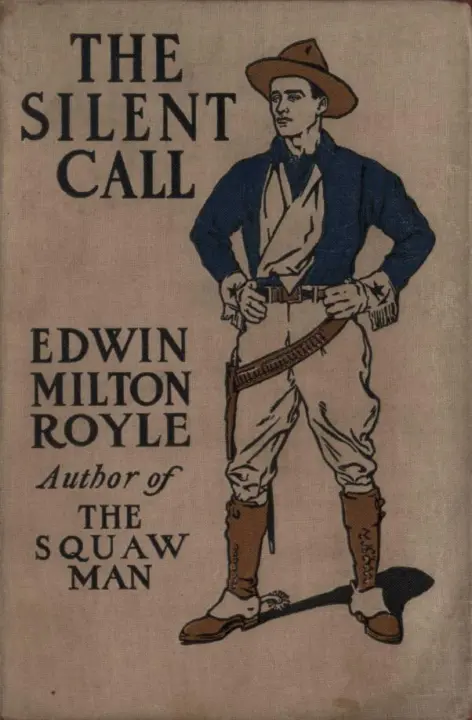
"The Silent Call" by Edwin Milton Royle is a novel written in the early 20th century. The story unfolds in a Western setting, focusing on the lives of Native Americans and their relationship with white settlers, captured through the experiences of the main character, Hal Calthorpe, who serves as the chief of Indian police. The narrative likely explores themes of identity, cultural conflict, and compassion, particularly through the lens of Calthorpe and an Indian girl named Wah-na-gi. At the start of the novel, readers are introduced to Calthorpe as he traverses through a desolate landscape with a band of Indian police under his command. The wildlife and harsh conditions evoke a sense of weariness among the men, yet Calthorpe finds humor and beauty in his surroundings. Interactions between Calthorpe, the Reverend Dr. John McCloud, and various characters hint at tensions between the Indian community and external forces, particularly the agent David Ladd, who appears to have ulterior motives concerning the lands. The opening chapters lay groundwork for complex relationships, notably highlighting Wah-na-gi, a young woman caught between her Native identity and her experiences after attending a white school, thereby setting the stage for ensuing conflicts and explorations of selfhood.
Introduction adapted from the source catalogue; source summaries may be automatically generated.
Free to read · English · 97,629 words · No account needed
MAKE TIME FOR A GOOD BOOK
On by default. Untick to stop anonymous reading totals. Each page counts after 10 seconds in view. How this works.
Anonymous counting is on unless you have switched it off.
"I'm sure of that," said the clergyman heartily, glad that the centre of interest had been shifted to the other.
"Oh, shucks," laughed McShay, with good-humored toleration. "When it comes to savin' the nation or plantin' a prominent citizen, I kin sprinkle a little language over the occasion, but I ain't a braggin' about it, Orson, before a feller as is a artist. I have the savin' grace to know where I come in, and it's at the back door, son. I daresay, Parson, you've heard that I keep a saloon over at 'Calamity'?"
"Yes, I've heard so," said the other simply, without a trace of pharisaism even in the tone of his voice.
"Well, any time you want to keep your hand in at the preachin' game, come right along, and I'll personally guarantee the character of the proceedings. They tell me that as a preacher you're a stampede."
The big eyes in the pallid face glowed for a moment, then they suffused with melancholy. There was a sensible pause before he said:
"Thank you, Mr. McShay; thank you. Perhaps I'll take advantage of your offer some Sunday, but at present I've had to give up preaching: it seems to exhaust my vitality." He paused for a second and then added with a shy little smile, as if he were confessing to a fault: "I like to preach, too, and, as you say, it's been 'tough' to be compelled to give it up, but, after all," suddenly alarmed at the thought that he was bidding for sympathy, "living is more important than preaching, isn't it?"
McShay filled in the pause, that threatened to be too obvious, by
jerking out his Waterbury.
"Hello, gitting on to the time! Guess we'll be moseying along. Well, Parson, I've expressed myself pretty free, ain't I? And in something of a complimentary vein, not with a view to inflooincin' your attitude in this approachin' conference. Mind you, I ain't above doin' it if I could. I don't do it 'cause I know it wouldn't go, that's all," and he laughed generously as he hoisted himself into the saddle. McShay was a man with few illusions. He fancied he was pretty familiar with the ordinary phases of human nature, and his code of morality was a working code; it would bear comparison, he felt sure, with that of the average citizen, and it wasn't so high as to be inconvenient. He had never felt called upon to experiment with a code obviously theoretical. He wouldn't hesitate at cards or in a trade to cheat one who was engaged in trying to cheat him. In fact he looked upon it as a joyous and holy duty to skin the skinner. He was not inexperienced in the ways of the world. He knew more of Doctor McCloud than that worthy man dreamed of, for when a very young man he had been a policeman in St. Paul and during the uncomfortable times following a reform upheaval had felt obliged to leave that saintly city. Indeed, he had brought about the upheaval by his own obstinacy, for there are degrees of graft, and the young Irish-American wouldn't violate his own wholly illogical standards of what was fair or decent any more than he would accept the standards of the too-good. He had come into his own in the cattle country, opened a saloon, became a political leader, a boss, and a cattle king. He had prospered. He was loved by his friends and feared by his enemies, and he was fond of both. And when the cowboys on one of their summer round-ups found something that looked like coal or jet, and which, unlike coal or jet would light like a candle, they took it at once to McShay, who promptly, without knowing whether it had value or not, located claims for everybody and everybody's relatives and claimed everything in sight. "To those that have shall be given," he explained irreverently, and indeed that version of the text was his point of view. And when further investigation showed that the discovery was an important one and that a considerable part of the mine or the vein or series of pockets was on the Red Butte Ranch, he promptly sent Andy Openheim and Charley Short, very quietly, to London to buy the ranch or that portion of it containing minerals from the Earl of Kerhill. It was pretty well known that the ranch had not been a profitable venture to the Earl, in the days when he had been a cowboy, and it was thought that his old herders, "Andy" and "Shorty," could buy it for a song. They had returned with a deed, but by this time these two amiable citizens had caught the prevailing spirit of enterprise and announced that they had indeed secured the prize, but that they had bought the ranch for themselves, a sample of commercial wakefulness which was denounced as several kinds of treachery, and came near to leading to the death of some eminent citizens. However, as by that time the secret was out and the lust of gain had spread from the range to the settlements and from there to the cities and the State, and indeed to the busy halls of Congress, and every one pretty much was evolving a plan to get in on the good thing, it was thought best to buy out the holders of the deed, even at the advance in price which they impudently demanded. McShay paid the price for himself and his cowboy associates, but at the conclusion of the purchase he strongly advised Shorty and Andy to leave the country, which they lost no time in doing. The fate of these two worthies will always be a stock warning to the rising generation in Calamity. Before they reached the Canadian border they had quarrelled, and when the smoke had cleared away Shorty was alive and had the money. There was profound regret at first that either should have survived, but this sorrow was mitigated later by the report that Shorty had lost every cent at a single sitting in a three-card monte game up in the North-west. Then only was the moral tone of Coyote County felt to be in the way of rehabilitation, and confidence was restored in the dispensations of Providence. It was even darkly hinted that McShay had sent out some skilful short-card men on their trail, and to that extent had assisted Providence to make plain that "transgressors shall be taken in their own naughtiness."
Your reading position is saved on this browser. Take it to another device with a library code. Reading pages adapt to text, rather than matching a printed edition.
Julie Opp & Edwin Milton Royle
BEHIND THE BOOK
This eBook is for the use of anyone anywhere in the United States and most other parts of the world at no cost and with almost no restrictions whatsoever. You may copy it, give it away or re-use it under the terms of the Project Gutenberg License included with this eBook or online at www.gutenberg.org. If you are not located in the United States, you will have to check the laws of the country where you are located before using this eBook. Read the source licence.
The original source file, including credits and licence, is retained by this library. Request an original-format copy at no charge. Please include the book title and Project Gutenberg identifier #51611.
KEEP YOUR CURIOSITY GOING
Coulson Kernahan

Maurice Baring
Frances Wright
Cécile Tormay

Frederic Jesup Stimson

W. H. P. (William Henry Pope) Jarvis