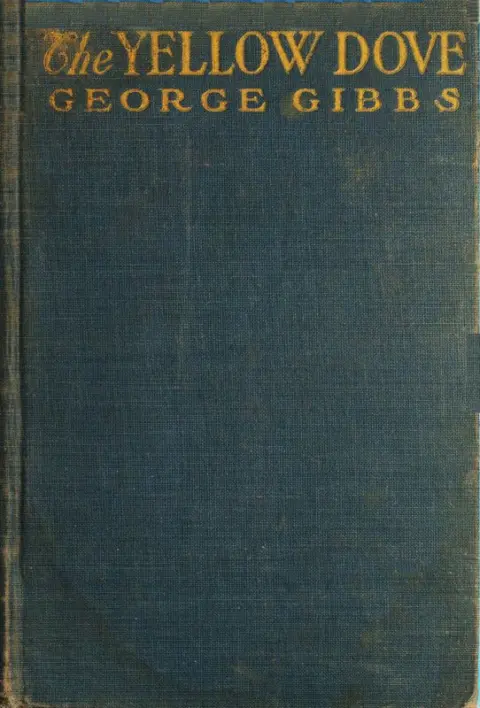
The Yellow Dove
George Gibbs
THE CLASSIC COLLECTION · 1913
"The Silent Battle" by George Gibbs is a novel written in the early 20th century. The story appears to explore themes of survival and personal growth as it follows the experiences of the main character, Gallatin, who finds himself lost in the wilderness alongside a mysterious woman after they both stray from their respective paths. This unexpected circumstance serves as the backdrop for a developing connection between the characters as they navigate both physical and emotional challenges in the wild. At the start of the book, Gallatin is confronted with the realization that he is lost in the wilderness after neglecting advice from his guide. As he begins to set up camp for the night, he unexpectedly encounters a frightened girl who has also lost her way. After reassuring her and tending to her injured ankle, Gallatin takes responsibility for her safety. The narrative focuses on their growing camaraderie as they work together to create comfort amidst the harshness of their surroundings, share meals, and support each other emotionally. The dynamic between Gallatin and the girl, illuminated by their struggles and shared experiences, sets the stage for further exploration of their character development as they face the uncertainties of their predicament.
Introduction adapted from the source catalogue; source summaries may be automatically generated.
Free to read · English · 106,424 words · No account needed
MAKE TIME FOR A GOOD BOOK
On by default. Untick to stop anonymous reading totals. Each page counts after 10 seconds in view. How this works.
Anonymous counting is on unless you have switched it off.
“Yesterday, when I was away you started to build a shack for me,” he went on. “It was your right, of course----”
“No, no,” she protested, lowering her head. “I thought you’d like it
so, I----”
“I understand,” gently. “But it seems----”
“It was a selfish motive after all,” she broke in again. “Your strength is more important than mine----”
He smiled and shook his head.
“You can’t mislead me. Last night I learned something of what you are--gentle, courageous, motherly, self-effacing. I’ll remember you so--always.”
She disengaged her hands abruptly and took up the saucepan.
“Meanwhile, the breakfast is to be cooked--” she said coolly. There was no reproof in her tone, only good fellowship, a deliberate confirmation of her promises of the night before.
With a smile he took the saucepan from her hand and went about his work. It seemed that his failure yesterday to find a way out meant more to him this morning than it did to her. His limbs were heavy, too, and his body ached from top to toe; but he went to the brook and washed, then searched the woods for the blueberries that she liked and silently cooked the meal.
As he did not eat she asked him, “Aren’t you hungry?”
“Not very.”
He took up a fish and turned it over in his fingers. “I think I’ll wait for the venison pasty.”
“Don’t you feel well?”
“Just a little loggy,” that’s all. “I think I slept too long.”
She looked up at him suddenly, and then with friendly solicitude, laid her fingers lightly along his brow. The gesture was natural, gentle, so exquisitely feminine, that he closed his eyes delightedly, conscious of the agreeable softness of her fingers and the coolness of their touch.
“Your brow is hot,” she said quickly.
“Is it?” he asked. “That’s queer, I feel chilly.”
“You’ve caught a bad cold, I’m afraid,” she said, removing her fingers. “It’s very--very imprudent of you.”
Not satisfied with the rapidity of her diagnosis, he thrust his hand toward her for confirmation.
“I haven’t any fever, have I?”
Her fingers lightly touched his wrist.
“I’m afraid so. Your pulse is thumping pretty fast.”
“Very fast?”
“Yes.”
“You must be mistaken.”
“No, you have fever. You’ll have to rest to-day.”
“I don’t want to rest. I couldn’t if I wanted to.”
“You must!” she said peremptorily. “There’s nothing but the firewood. I can get that.”
“There’s the shack to build,” he said.
“The shack must wait,” she replied.
“And the deer to be butchered?”
Your reading position is saved on this browser. Take it to another device with a library code. Reading pages adapt to text, rather than matching a printed edition.
George Gibbs
George Gibbs
George Gibbs
George Gibbs
BEHIND THE BOOK
This eBook is for the use of anyone anywhere in the United States and most other parts of the world at no cost and with almost no restrictions whatsoever. You may copy it, give it away or re-use it under the terms of the Project Gutenberg License included with this eBook or online at www.gutenberg.org. If you are not located in the United States, you will have to check the laws of the country where you are located before using this eBook. Read the source licence.
The original source file, including credits and licence, is retained by this library. Request an original-format copy at no charge. Please include the book title and Project Gutenberg identifier #54544.
KEEP YOUR CURIOSITY GOING
Coulson Kernahan

Maurice Baring
Frances Wright
Cécile Tormay

Frederic Jesup Stimson

W. H. P. (William Henry Pope) Jarvis