THE CLASSIC COLLECTION✦The WesternersCLASSIC FREE BOOKS
The Westerners
Stewart Edward White
THE CLASSIC COLLECTION · 1912
"The Sign at Six" by Stewart Edward White is a novel likely written in the early 20th century. The book revolves around the main character, Percy Darrow, a young scientist with a past filled with danger, as he navigates a mysterious and seemingly supernatural series of events in New York City. After a peculiar blackout of electricity and sound envelops the city, Darrow finds himself embroiled in a tangled web of intrigue and potential threats that seem connected to a notorious political figure named McCarthy. At the start of the narrative, Percy Darrow is introduced as he interacts with McCarthy, who is agitated over a mysterious message that threatens his position. The opening sets the stage for a significant upheaval in the city, highlighting Darrow's calm demeanor amidst chaos. As the story unfolds, citizens face an eerie silence and electrical failures, hinting at a greater, unseen power at play. This scenario not only breaths tension into the plot but piques Darrow's curiosity, who is determined to uncover the reality behind these unsettling occurrences. The interplay of science, mystery, and human conflict creates a compelling narrative that invites readers to explore the intrigue that "The Sign at Six" promises.
Introduction adapted from the source catalogue; source summaries may be automatically generated.
Free to read · English · 35,881 words · No account needed
MAKE TIME FOR A GOOD BOOK
On by default. Untick to stop anonymous reading totals. Each page counts after 10 seconds in view. How this works.
Anonymous counting is on unless you have switched it off.
"I never indulge in wagers," replied Eldridge.
"Well," said Darrow to Jack and Hallowell, "come on!"
Without waiting to see if he was followed, the young man again plunged into the black and clinging darkness.
"Get hold of my coat," his voice came to the others. "We're going to
climb."
Accordingly they climbed, in silence, up many flights of stairs, through the cloying darkness. At last Darrow halted, turned sharp to the left, fumbled for a door, and entered a room.
"Simmons?" he said.
"Here!" came a voice.
"I thought you'd be on the job," said Darrow, with satisfaction. "How's your instrument? Going, eh? We are in the wireless offices," he told the others. "Sit down, if you can find chairs. We'll wait until the sun is shining brightly, love, before we really try to get down to business. In the meantime--"
"In the meantime--" repeated both Jack and Hallowell, in a breath. "Go on, my son," conceded the latter. "I bet we have the same idea."
"Well, I was going to say that I'm not in the grammar-school physics class, and I want to know what you meant by your remark to Eldridge," said Jack.
"That's my trouble," said Hallowell.
"It's simple enough," began Darrow. "We have had, first, a failure of all electricity; second, a failure of all sound; third, a failure of all light. The logical mind would therefore examine these things to see what they have in common. The answer simply jumps at you: Vibration. Electricity and light are vibrations in ether; sound is vibration in air or some solid. Therefore, whatever could absolutely stop vibration would necessarily stop electricity, light and sound."
"But," objected Jack, "if vibration were absolutely stopped, why wouldn't they all three be blotted out at once?"
"Because," explained Darrow, "the vibrations making these three phenomena are different in character. Sound is made by horizontal waves, for example, while electricity and light are made by transverse waves. Furthermore, the waves producing electricity and light differ in length. Now, it is conceivable that a condition which would interfere with horizontal waves would not interfere with transverse waves; or that a condition which would absolutely deaden waves two hundred and seventy ten-millionths of an inch long would have absolutely no effect on those one hundred and fifty-five ten-millionths of an inch long. Am I clear?"
"Sure!" came the voices of his audience.
"That much Eldridge and any other man trained in elementary science already knows. It is no secret."
"It hasn't been published," observed Hallowell grimly.
Your reading position is saved on this browser. Take it to another device with a library code. Reading pages adapt to text, rather than matching a printed edition.
Stewart Edward White
Stewart Edward White
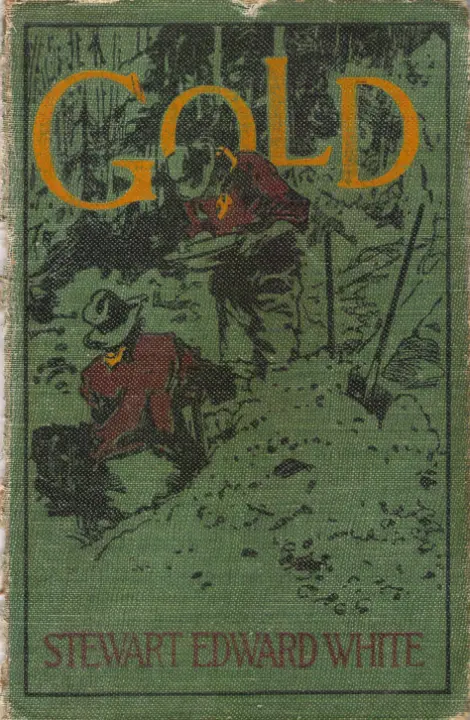
Stewart Edward White
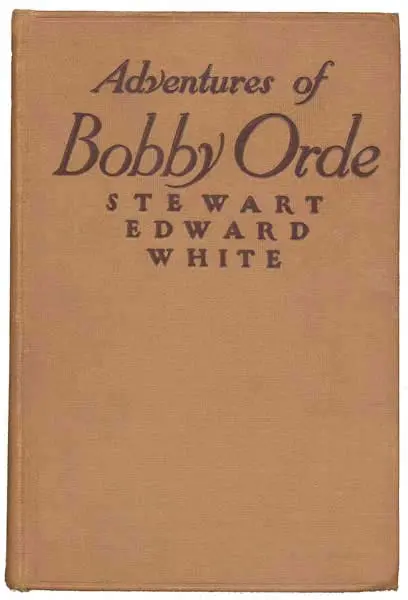
Stewart Edward White
BEHIND THE BOOK
This eBook is for the use of anyone anywhere in the United States and most other parts of the world at no cost and with almost no restrictions whatsoever. You may copy it, give it away or re-use it under the terms of the Project Gutenberg License included with this eBook or online at www.gutenberg.org. If you are not located in the United States, you will have to check the laws of the country where you are located before using this eBook. Read the source licence.
The original source file, including credits and licence, is retained by this library. Request an original-format copy at no charge. Please include the book title and Project Gutenberg identifier #8398.
KEEP YOUR CURIOSITY GOING
Coulson Kernahan

Maurice Baring
Frances Wright
Cécile Tormay

Frederic Jesup Stimson

W. H. P. (William Henry Pope) Jarvis