THE CLASSIC COLLECTION✦My diaries, being a personal narrative of events 1888-1914, Part 2 (1900-1914)CLASSIC FREE BOOKS
My diaries, being a personal narrative of events 1888-1914, Part 2 (1900-1914)
Wilfrid Scawen Blunt
THE CLASSIC COLLECTION · 1864
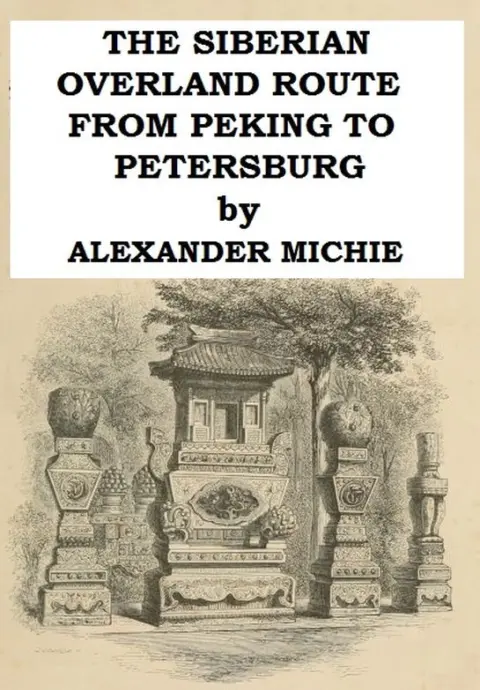
"The Siberian Overland Route from Peking to Petersburg" by Alexander Michie is a historical account written in the mid-19th century. This work presents a firsthand narrative of the author's journey from China to Russia through Mongolia and Siberia, detailing the landscapes, cultures, and experiences encountered along the way. The book aims to shed light on a route that had been largely unexplored and, as suggested in the preface, aims to provide new insights into the regions traversed. The opening of the book introduces Michie's motivation for embarking on this journey, inspired by previous travelers and the desire to experience the mysteries of less-known regions. He contrasts the difficulties and discomforts of the journey by sea with the allure of the northern route through challenging climates and unfamiliar landscapes. Michie describes the societal changes occurring in China at the time, particularly concerning foreign access and the restrictions imposed by the local government, while setting the stage for his travel experiences that follow. The narrative is filled with observations on the geography, local customs, and the dynamics of foreign and native interactions, effectively drawing the reader into the journey's historical context.
Introduction adapted from the source catalogue; source summaries may be automatically generated.
Free to read · English · 132,367 words · No account needed
MAKE TIME FOR A GOOD BOOK
On by default. Untick to stop anonymous reading totals. Each page counts after 10 seconds in view. How this works.
Anonymous counting is on unless you have switched it off.
High mountains appeared fifteen miles east of us (if one may venture to estimate distance in such a country), and we began to hope for something like scenery. It blew fresh and cold from S.-W., and in the afternoon it came round to N.-W., a regular choinar salchin, or north wind, a word of horrible signification to Mongols. And if dreaded in September what must it be in January? I often wondered how the wretches get through their dreary winter. They are taken very suddenly with these cold northers. The day may be fine, and almost oppressively warm. A cloud comes over, and drops as much water as you would get out of a watering-pan. Then the north wind pipes up, and in a few hours you have made the transition from a tropical summer to worse than an Arctic winter, for the biting wind cuts into the bone.
In the face of a sharp norther we entered on the steppe Guntu-gulu, which seemed to be about five miles broad, but it proved the best part of a day's march, so deceptive are distances without prominent marks. A scene occurred in the steppe which delayed us a night, and might have proved serious enough to arrest our progress altogether. One of our guns went off in the cart (we always kept them loaded and handy), the charge went through some bedding, then the wooden back of the cart, and ricochetted from a wooden bar outside, miraculously clearing the camel that was following within two yards of the cart, and describing a curve over the whole line; one of the pellets hit the lama who was bringing up the rear, at a distance of full sixty yards, and made a groove on the outside of the flap of his ear. It bled profusely; in fact, the first notice he had of the injury was the streams of blood that suffused his neck and shoulders. He roared in terror, thinking he was at least killed; stopped the caravan; dismounted from his camel, and committed himself to the care of Tellig and the Kitat lama. The tent was hastily put up, and all made ready for a halt. Tellig and the others were greatly alarmed, and disturbed in their minds, and we were somewhat uncertain of the view their superstitious fanaticism might lead them to take of the affair. Luckily we had just got clear of another very large caravan, and were spared the officious assistance of a crowd of people. There was a pool of water close by, and we sent for repeated supplies of it, washing the ear, and letting it bleed freely. The wound was nothing at all, but the profuse bleeding frightened the Mongols. Our policy was to look wise; and my companion being provided with a neatly got-up little case containing various articles of the materia medica, it was produced, and inspired a proper amount of blind faith in the minds of our Mongol friends. The wound was washed with arnica, and a piece of sticking-plaster put on it so successfully, that it completely stopped the bleeding, and made a very neat finish. The Mongols looked on with much wonder and reverence at our proceedings, and if any idea at retaliation for the injury had crossed their minds, it was now giving place to a feeling of gratitude for our surgical assistance. The lama was helpless from fright, and we had him lifted to his tent, where we made him recline on a bed that had been extemporised for him with boxes and things packed behind him on the windy side. A towel was tied round his head to keep the cold out, and he was made as comfortable as our means would allow. He looked sad and woe-begone, and we could with difficulty suppress a smile at the utter prostration of mind that the sight of his own blood had induced. He now imagined he had pains in his head, throat, and chest, and seeing him so entirely a victim to his fears, we were obliged to humour them a little, prescribing for his various symptoms with great care. The first thing we ordered him was a measured glass of brandy, knowing him to be partial to that liquor. This roused him a little, and his pluck began to return. We then prescribed tea, which was soon made, and, as he improved in spirits, we ordered mutton, knowing they had some scraps left from their morning's feast. All that done, we allowed him to smoke, and finally prescribed a good night's rest. In the morning we inquired for our patient and found him well, but much inclined to remain in his shell till the north wind was over. This was a little too much of a good thing; so when we had carefully examined him all over, and scrutinised all his symptoms, we were compelled to pronounce him fit to travel. He could not get out of it, but reluctantly mounted his camel, his head still tied up in a white towel, to the wonderment of the wandering Tartars we encountered on our march. It certainly never was my fortune to be so well treated by a doctor, but as the faculty in this country depend so much on popularity, a similar mode of treatment with the majority of their patients would be well worth their consideration. I may here observe that the Mongols have their ears very protuberant, like an elephant's.
Your reading position is saved on this browser. Take it to another device with a library code. Reading pages adapt to text, rather than matching a printed edition.
BEHIND THE BOOK
This eBook is for the use of anyone anywhere in the United States and most other parts of the world at no cost and with almost no restrictions whatsoever. You may copy it, give it away or re-use it under the terms of the Project Gutenberg License included with this eBook or online at www.gutenberg.org. If you are not located in the United States, you will have to check the laws of the country where you are located before using this eBook. Read the source licence.
The original source file, including credits and licence, is retained by this library. Request an original-format copy at no charge. Please include the book title and Project Gutenberg identifier #45167.
KEEP YOUR CURIOSITY GOING
Wilfrid Scawen Blunt
Wilfrid Scawen Blunt

E. W. (Edgar Watson) Howe
Cécile Tormay

Moritz Busch
John L. Ransom