THE CLASSIC COLLECTION✦My diaries, being a personal narrative of events 1888-1914, Part 2 (1900-1914)CLASSIC FREE BOOKS
My diaries, being a personal narrative of events 1888-1914, Part 2 (1900-1914)
Wilfrid Scawen Blunt
THE CLASSIC COLLECTION · 1864
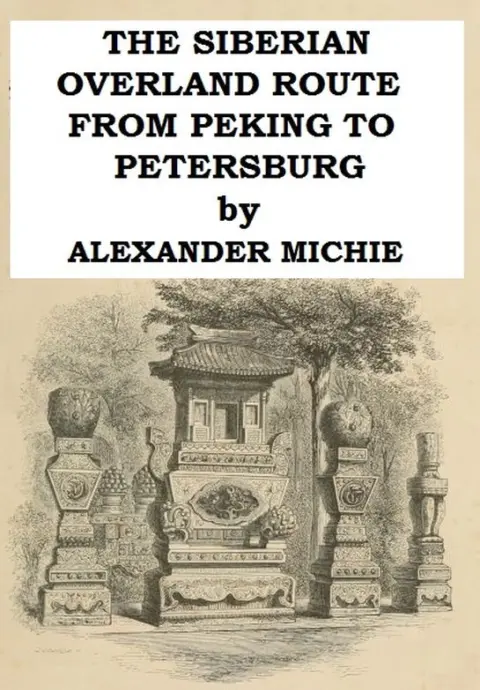
"The Siberian Overland Route from Peking to Petersburg" by Alexander Michie is a historical account written in the mid-19th century. This work presents a firsthand narrative of the author's journey from China to Russia through Mongolia and Siberia, detailing the landscapes, cultures, and experiences encountered along the way. The book aims to shed light on a route that had been largely unexplored and, as suggested in the preface, aims to provide new insights into the regions traversed. The opening of the book introduces Michie's motivation for embarking on this journey, inspired by previous travelers and the desire to experience the mysteries of less-known regions. He contrasts the difficulties and discomforts of the journey by sea with the allure of the northern route through challenging climates and unfamiliar landscapes. Michie describes the societal changes occurring in China at the time, particularly concerning foreign access and the restrictions imposed by the local government, while setting the stage for his travel experiences that follow. The narrative is filled with observations on the geography, local customs, and the dynamics of foreign and native interactions, effectively drawing the reader into the journey's historical context.
Introduction adapted from the source catalogue; source summaries may be automatically generated.
Free to read · English · 132,367 words · No account needed
MAKE TIME FOR A GOOD BOOK
On by default. Untick to stop anonymous reading totals. Each page counts after 10 seconds in view. How this works.
Anonymous counting is on unless you have switched it off.
It was a very dry morning, but we got water for ourselves and our horses passing Borolji. The well there was very deep, and we were indebted to the friendly aid of some Mongols, who happened to have driven their cattle in to water, for obtaining a supply for our beasts. The head shepherd had brought with him a small bucket made of sheepskin, attached to the end of a long pole to enable him to reach the water. His own beasts were very thirsty and impatient to drink; the horses especially crowded eagerly round the well, neighing, biting, and kicking each other in their efforts to gain the best places. Nevertheless, the polite Mongol drew water for us first, and allowed us to continue our march. We kept on till 1.30, when we pitched our tents on the steppe, called "Gunshandak." No grass at all grows here, but the sand is slightly shaded with green by a small wild leek, that grows in form much like the Mongolian grass. We had frequently observed this plant already sprinkled amongst the grass, but in Gunshandak it flourishes to the exclusion of everything else. The sheep and camels thrive on it. Our ponies also ate it freely, perhaps because they could get nothing else, and when our cattle were brought in from feeding they had a strong smell of onions about them.
The Kitat not having come up with my pony, we did not hurry away, and our Mongols availed themselves of the delay to buy and kill a goat from a neighbouring flock. We also bought a sheep for two rubles, or about six shillings. The seller, on being asked to kill it, told us we might do it ourselves. This was not to be thought of, and our own Mongols were too much occupied with their goat. We had, therefore, to resort to a little craft, for the sheep must certainly be put to death before we could eat it. Addressing the man, we said, how can we lamas kill an animal? This was sufficient. "Oh, you are lamas!" and he proceeded at once to business. The dexterity with which these Mongols kill and cut up a sheep is truly marvellous. They kill with a small knife which they insert into the belly, just below the breast-bone. Death is almost instantaneous. The object of this mode of slaughter is to save the blood inside the animal. Skinning is an easy process and soon done. The sheep is laid on his back on the sand, the skin is spread out on either side, a strip down the back being left attached while the cutting up is going on. The skin thus serves as a table, and so well does it answer the purpose that they will cut up a sheep into small pieces, and put everything, including lights and liver, on the skin, without ever touching the sand. The Mongols have a perfect practical knowledge of the anatomy of the sheep, and sever every joint with perfect ease, with only a small pocket-knife, no other instrument being used in any part of the process. The rapidity with which the whole thing is done, is astonishing. Our butcher was unluckily called away during the operation to retrieve a young camel that had been crying for its dam all the morning, and had now broken its tether, so that I could not time him accurately. I shall not state the number of minutes usually occupied from the time a sheep is purchased till the mutton is ready for the pot, for I could hardly expect to be believed. On removing the intestines, &c., the blood is found all together in a pool. It is then carefully baled out and put into the cooking pan, or taga, for nothing is thrown away here. We gave ours to the butcher, as also the skin and the whole of the inside, except liver and kidneys. The wandering Mongols scent a sheep-killing like vultures, and there are never wanting some old women to lend a hand in making black-puddings, and such like, who are rewarded for their trouble by a share of the feast; for among the Mongols the first instalment of their sheep is eaten in less than half an hour from the time it is killed. The Mongol sheep are generally in good condition, but there is no fat about them at all, except in the tail, which is a heavy lump of pure suet, said to weigh sometimes ten pounds. The condition of the animal is judged by the weight of the tail. The Mongols use but little water in cleaning their mutton. The ubiquitous old woman, who instals herself as pudding-maker, handles the intestines in a delicate and artistic manner. She first of all turns them all inside out, and then coils them up into hard, sausage-shaped knots, without stuffing, which take up very little space in the pot. These and all the other loose things are first put into the pot, with the addition of as much of the meat as it will hold. The pot is filled so full that the water does not cover the meat, but that is of no consequence to the Mongols. It is soon cooked, and quickly eaten. When sufficiently boiled, one of the company adroitly snatches the meat, piece by piece, from the boiling cauldron, with his fingers, and distributes it in fair proportions to the anxious expectants seated round. They never burn their fingers by this snap-dragon process. Their manner of eating mutton is most primitive, and I will also say disgusting. Each person gets a large lump or two, either in his lap, or on the mat on which he sits. He then takes a piece in his left hand as big as he can grasp; and, with the inevitable small knife in his right, he cuts off nuggets of mutton, using his thumb as a block, in the manner of cutting Cavendish tobacco. They literally bolt their mutton, and use no salt, bread, or sauce of any kind in eating it. When they have got all the meat off, they pare and scrape the bones very carefully, and when that is done, they break the bones up, and eat the marrow. Nothing is thrown away, except part of the eye, and the trotters. The tail is considered a delicacy, and is reserved for the head lama, or the honoured guest, who generously shares it with the others. I need only say that this mass of rich suet is eaten as I have described above.
Your reading position is saved on this browser. Take it to another device with a library code. Reading pages adapt to text, rather than matching a printed edition.
BEHIND THE BOOK
This eBook is for the use of anyone anywhere in the United States and most other parts of the world at no cost and with almost no restrictions whatsoever. You may copy it, give it away or re-use it under the terms of the Project Gutenberg License included with this eBook or online at www.gutenberg.org. If you are not located in the United States, you will have to check the laws of the country where you are located before using this eBook. Read the source licence.
The original source file, including credits and licence, is retained by this library. Request an original-format copy at no charge. Please include the book title and Project Gutenberg identifier #45167.
KEEP YOUR CURIOSITY GOING
Wilfrid Scawen Blunt
Wilfrid Scawen Blunt

E. W. (Edgar Watson) Howe
Cécile Tormay

Moritz Busch
John L. Ransom