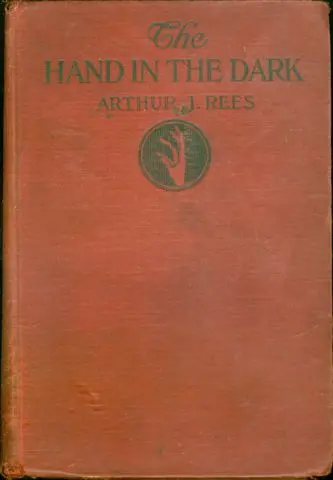
The Hand in the Dark
Arthur J. (Arthur John) Rees
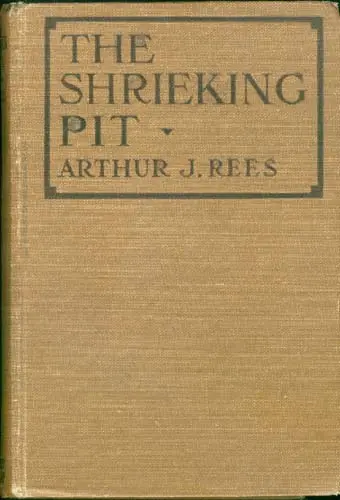
THE CLASSIC COLLECTION · 1918
"The Shrieking Pit" by Arthur J. Rees is a novel written in the early 20th century. The story unfolds against the backdrop of World War I and introduces the character of Grant Colwyn, an American detective, as he navigates a series of peculiar and disturbing events, beginning with a mysterious young man, Ronald, who exhibits alarming behavior at a seaside hotel and is soon implicated in a murder. At the start of the novel, Colwyn, while enjoying a meal at the Grand Hotel in Durrington, observes Ronald's erratic conduct during breakfast. Colwyn suspects that Ronald is suffering from shell-shock due to his war experiences, but his condition escalates to a fainting fit. With the assistance of Sir Henry Durwood, a doctor at the hotel, Colwyn helps Ronald to his room, whereupon news emerges that Ronald has been accused of murdering Mr. Glenthorpe, an elderly archaeologist. As the investigation deepens, Colwyn becomes embroiled in unraveling the mystery surrounding Ronald's actions and the implications of his mental state, setting the stage for a gripping tale of suspense and intrigue.
Introduction adapted from the source catalogue; source summaries may be automatically generated.
Free to read · English · 99,589 words · No account needed
MAKE TIME FOR A GOOD BOOK
On by default. Untick to stop anonymous reading totals. Each page counts after 10 seconds in view. How this works.
Anonymous counting is on unless you have switched it off.
"Sometimes it does; sometimes not. I remember a case in my student days where an epileptic violently assaulted a man in the street--almost murdered him in fact--then assaulted a man who tried to detain him, ran away, and remembered nothing about it afterwards."
"Is it consistent with petit mal, combined with furor epilepticus, for a man to commit murder, conceal the body of his victim, and remember nothing about it afterwards?"
"Quite consistent, though the probability is, as I said before, for him to have some hazy recollection when he came to his senses, which would lead to his leaving that place as quickly as he could."
"Would it be consistent with petit mal for a man to take a weapon away beforehand, and then, during a sudden fit of petit mal, use it upon the unfortunate victim?"
"If he took the weapon for another purpose, it is quite possible that he might use it afterwards."
"I should like to have that a little clearer," said the judge, interposing. "Do you mean to get the weapon for another, possibly quite innocent purpose, and then use it for an act of violence?"
"Yes, my lord," replied Sir Henry. "That is quite consistent with an
attack of petit mal."
"When a man has periodical attacks of petit mal, would it not be possible, by observation of him between the attacks, or when he was suffering from the attacks, to tell whether he had a tendency to them?"
"No, only in a very few and exceptional cases."
"In your opinion epilepsy is an hereditary disease?"
"Undoubtedly."
"Are you aware that certain eminent French specialists, including Marie, are of the opinion that hereditary influences play a very small part in epilepsy?"
"That may be." Sir Henry dismissed the views of the French specialists with a condescending wave of his fat white hand.
"That does not alter your own opinion?"
"Certainly not."
"And do you say that because this man's mother suffered from epilepsy the chances are that he is suffering from it?"
"Pardon me, I said nothing of the kind. I think the chances are that he would have a highly organised nervous system, and would probably suffer from some nervous disease. In the case of the prisoner, I should say that shell-shock increased his predisposition to epilepsy."
"Do you suggest that shell-shock leads to epilepsy?"
"In general, no; in this particular case, possibly. A man may have
shell-shock, and injury to the brain, which is not necessarily
epileptic."
"It is possible for shell-shock alone to lead to a subsequent attack of insanity?" asked the judge.
"It is possible--certainly."
"How often do these attacks of petit mal occur?" asked Sir Herbert.
Your reading position is saved on this browser. Take it to another device with a library code. Reading pages adapt to text, rather than matching a printed edition.
Arthur J. (Arthur John) Rees
BEHIND THE BOOK
This eBook is for the use of anyone anywhere in the United States and most other parts of the world at no cost and with almost no restrictions whatsoever. You may copy it, give it away or re-use it under the terms of the Project Gutenberg License included with this eBook or online at www.gutenberg.org. If you are not located in the United States, you will have to check the laws of the country where you are located before using this eBook. Read the source licence.
The original source file, including credits and licence, is retained by this library. Request an original-format copy at no charge. Please include the book title and Project Gutenberg identifier #20494.
KEEP YOUR CURIOSITY GOING
Coulson Kernahan

Maurice Baring
Frances Wright
Cécile Tormay

Frederic Jesup Stimson

W. H. P. (William Henry Pope) Jarvis