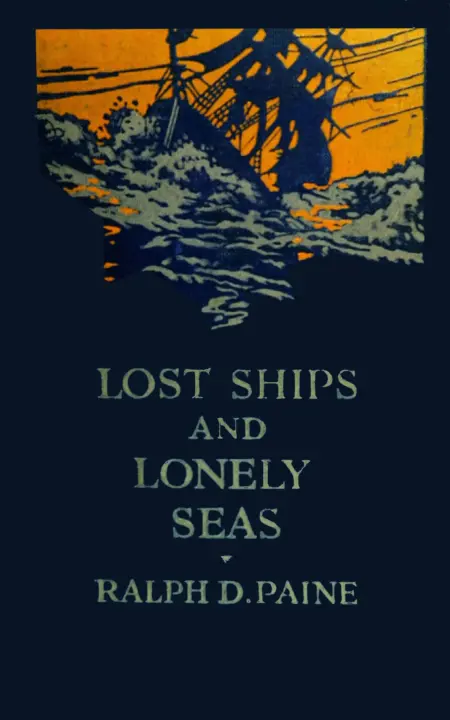
Lost ships and lonely seas
Ralph Delahaye Paine
THE CLASSIC COLLECTION · 1908
"The Ships and Sailors of Old Salem" by Ralph D. Paine is a historical account written in the early 20th century. The book chronicles the vibrant maritime history of Salem, Massachusetts, focusing on the golden era of American maritime achievement characterized by daring sailors and merchant vessels. Through various narratives derived from log books and sea journals, the text aims to celebrate the seafarers who navigated treacherous waters and opened up trade routes across the globe. The opening of the book highlights the decline of the American merchant marine by the early 20th century, contrasting it with its past prominence and adventurous spirit. It reflects on the glory days when Salem ships dominated the seas with their skilled captains, who faced numerous threats, including piracy and adverse regulations, while pioneering overseas trade. As the text sets the stage, it emphasizes the unique contributions of Salem’s seafaring community and hints at the wealth of stories and records that will be explored throughout the chapters, ultimately aiming to restore the forgotten legacy of these brave maritime figures.
Introduction adapted from the source catalogue; source summaries may be automatically generated.
Free to read · English · 168,419 words · No account needed
MAKE TIME FOR A GOOD BOOK
On by default. Untick to stop anonymous reading totals. Each page counts after 10 seconds in view. How this works.
Anonymous counting is on unless you have switched it off.
Barbary Pirates, attacks on Salem commerce and seamen held in bondage (1661), 22; appeal posted in Salem for funds to ransom captives from, 226.
Barney, Lieutenant Joshua, escape from Mill Prison, 131-33.
Barr, James, commanding privateer Rover, 65.
Battis, John, narrative of the piracy of the brig Mexican, 432-50.
Beal, Captain John, capture of his ship Essex by French privateers
(1690), 21.
Bentley, Rev. William, diary of; account of Madame Susannah Hathorne’s recollections of witchcraft persecutions, 26; loss of ship Brutus, 220; rides to Marblehead on a gun-carriage to help save the Constitution, 375.
Betsey, schooner, taken by French frigate (1759), 31.
Boardman, Francis, his quaint sea journals, 35;
his poetry, 37;
his superstitions, 38.
Bertram, John, the last great shipping merchant of Salem, 487; his ventures to South America and Zanzibar, 489-90.
John Bertram, ship, built and launched in sixty days for California
trade, 491.
Bowditch, Nathaniel, his precocious youth as a prodigy of learning,
301;
sea life and voyages including journal of stay in Manila, 304-9;
his “Practical Navigator,” 299;
honors paid him after death, 298;
his bequest to Salem Marine Society, 309.
Bowditch, William, held in bondage by Barbary pirates (1700), 22.
Breed, Holten J., captain of privateer Grand Turk, 370.
Briggs, Enos, master builder of the Essex frigate, 232.
Burlingame, Anson, U. S. Minister to China, his account of the death of Frederick Townsend Ward, 472-4.
Butman, Captain John G., commander of brig Mexican, 431.
Carey, William, his life as a castaway in the Fijis, 417.
Carnes, Captain Jonathan, fetches home first cargoes of wild pepper from Sumatra (1795), 185.
Caroline, cutter, hazardous voyage of Captain Richard Cleveland
in, 332-35.
Chever, Captain James, his brilliant career as a privateersman,
358-66.
Chronometer, invention and perfection of, 293-94.
Cleveland, George, journal of voyage to Japan (1800), 257-63.
Cleveland, Captain Richard, his recollections of methods and enterprises of typical Salem merchants, 174; journal and description of his voyages, 329; obituary notice of, 352; captured in ship Telemaco, by a British frigate, 367.
Cleopatra’s Barge, first American yacht, voyage of, 207-13.
Commerce, decline of foreign, 17;
British restrictions on American, 29.
Conant, Roger, his settlement of Salem, 18.
Crowninshield, six brothers at sea, 204;
Benjamin W., Secretary of Navy, 205;
George, builds first American yacht, 206;
his notable voyage to the Mediterranean, 207-241;
brings body of Captain James Lawrence from Halifax in brig
Henry, 376;
Benjamin, Jr., voyage to Mocha in America, 355.
Custom House, Nathaniel Hawthorne’s description of, 17, 492-3; decline of shipping business, 484.
Dana, Richard Henry, mentions exploits of Captain Richard Cleveland on coast of Lower California, 348.
Derby, Elias Hasket, foremost in equipping Salem privateers of Revolution, 96; sends Grand Turk on first American voyage to Cape of Good Hope, 173; recaptures schooner Amity and restores her to her skipper, 177; education as a merchant and successful voyages, 181-2; sends Astrea on first American voyage to Manila (1796), 186; contributes $10,000 to building Essex frigate, 231.
Your reading position is saved on this browser. Take it to another device with a library code. Reading pages adapt to text, rather than matching a printed edition.
Ralph Delahaye Paine
Ralph Delahaye Paine
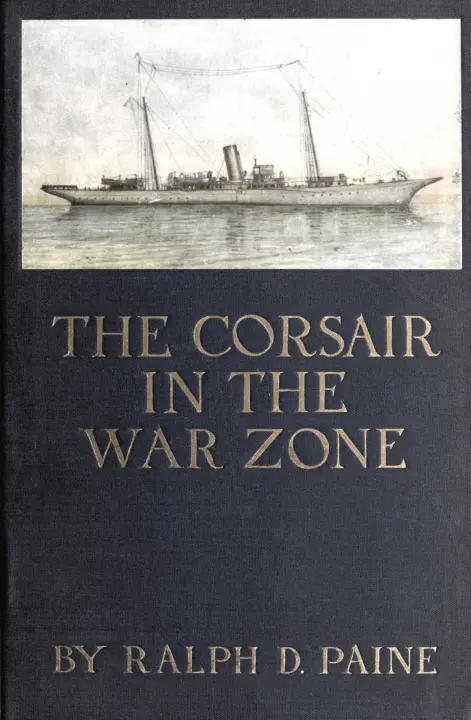
Ralph Delahaye Paine
Ralph Delahaye Paine
BEHIND THE BOOK
This eBook is for the use of anyone anywhere in the United States and most other parts of the world at no cost and with almost no restrictions whatsoever. You may copy it, give it away or re-use it under the terms of the Project Gutenberg License included with this eBook or online at www.gutenberg.org. If you are not located in the United States, you will have to check the laws of the country where you are located before using this eBook. Read the source licence.
The original source file, including credits and licence, is retained by this library. Request an original-format copy at no charge. Please include the book title and Project Gutenberg identifier #73759.
KEEP YOUR CURIOSITY GOING
Cécile Tormay

Moritz Busch
John L. Ransom
Frances Wright
Cécile Tormay

Mabel Potter Daggett