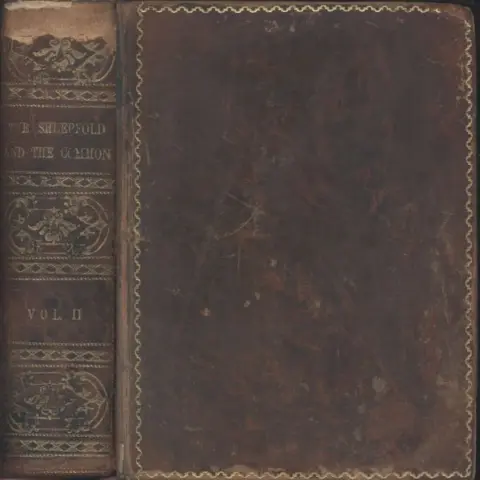
The Sheepfold and the Common; Or, Within and Without. Vol. 2 (of 2)
Timothy East
THE CLASSIC COLLECTION · 1859
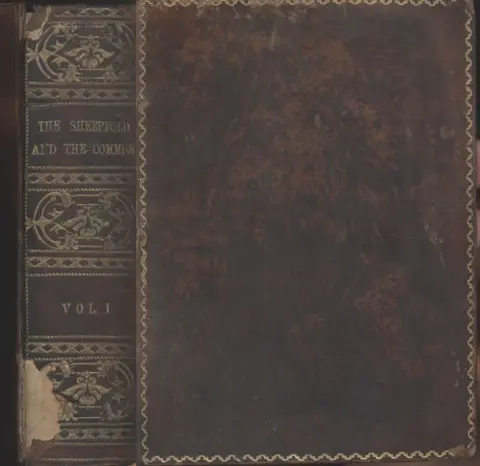
"The Sheepfold and the Common; Or, Within and Without. Vol. 1 (of 2)" by Timothy East is a religious narrative written in the mid-19th century. This work aims to convey grand truths of the Christian faith through engaging stories derived from everyday life. It particularly focuses on moral and spiritual lessons, often through the lives of its characters, such as George Lewellin, whose journey captures the essence of repentance and redemption. At the start of the work, the narrator encounters a lonely widow and her son, George, during a visit to a beautiful village in England. The widow shares her struggles and faith despite significant losses, and George is portrayed with potential, yet he faces temptations that threaten his well-being. The text delves into the themes of sin, redemption, and the transformative power of grace through George's experiences, setting the stage for his internal battles and the hope for his spiritual awakening. The opening portion establishes a foundation of human struggles entwined with divine truth, captivating readers with the emotional depth and moral dilemmas faced by the characters.
Introduction adapted from the source catalogue; source summaries may be automatically generated.
Free to read · English · 219,665 words · No account needed
MAKE TIME FOR A GOOD BOOK
On by default. Untick to stop anonymous reading totals. Each page counts after 10 seconds in view. How this works.
Anonymous counting is on unless you have switched it off.
"Yes, there are a few of that sort, the worse luck; but then we have some who are better than they need be, and so the quantum of goodness is made up to the full Winchester measure."
"Indeed! I never saw a man better than he ought to be."
"Why, Sir, perhaps I made a mistake. I should have said, we have some who pretend to be better than they need be; but you know that a man may pretend to what he a'n't got."
"True; but what sort of persons do you now refer to?"
"To these Methodists;[1] before they came we were as peaceable as a flock of sheep in a fold; but now we are always wrangling; and, in spite of us, they have put down all the little merry-makings which we used to have among us."
[1] The epithet Methodist is taken in its popular acceptation, as employed by the antievangelical part of society.
"But how have they put down your merry-makings?"
"Why, Sir, we used to have as good a pit of cocks as any in the country; but now the very men who used to breed the best sort are turned Methodists; and when I asked one the other day if he had any young ones hatched yet, he told me that he had seen his wickedness, and hoped never to be permitted to fall into the sin again; as though God Almighty would be offended at the innocent pastimes of a village."
"But do you not suppose that the cocks which fight inflict pain on each other; and can a humane person derive any amusement from the agonies of a dumb animal?"
"True, Sir; some, I know, are against such sports, but I must confess that I have a bit of a liking for them."
"I believe, from what little I know of rural life, that the innocent pastimes of the village usually terminate in scenes of drunkenness, rioting, and lewdness; and pray, farmer, have you never seen the bad effects of them on your friends, and on your servants?"
"Ay, ay, Sir, you now strike home, but what are people to do; they must have a little 'laxation from hard work sometimes."
"But you say 'these things are put down by the Methodists, in spite of you;' what do the people do now?"
"O, nearly all of them are turned Methodists, and Squire Stevens, who lives up at Fairmount yonder, is at the head of them."
"What sort of a gentleman is he?"
"He is very well in his way, only he has too much religion."
"What do you mean by too much religion?"
Your reading position is saved on this browser. Take it to another device with a library code. Reading pages adapt to text, rather than matching a printed edition.
BEHIND THE BOOK
This eBook is for the use of anyone anywhere in the United States and most other parts of the world at no cost and with almost no restrictions whatsoever. You may copy it, give it away or re-use it under the terms of the Project Gutenberg License included with this eBook or online at www.gutenberg.org. If you are not located in the United States, you will have to check the laws of the country where you are located before using this eBook. Read the source licence.
The original source file, including credits and licence, is retained by this library. Request an original-format copy at no charge. Please include the book title and Project Gutenberg identifier #44469.
KEEP YOUR CURIOSITY GOING

David Patterson (Spirit) Hatch

David Patterson (Spirit) Hatch

David Patterson (Spirit) Hatch
Coulson Kernahan

Maurice Baring
Frances Wright