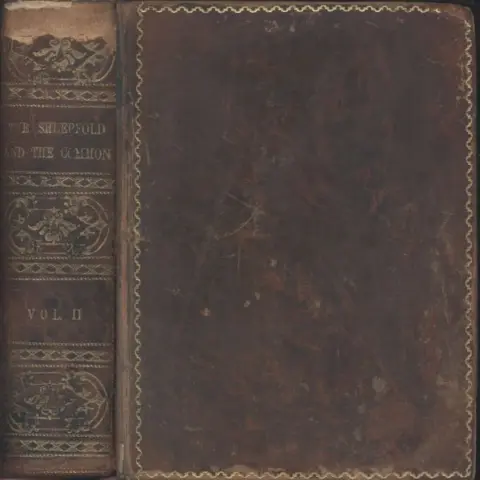
The Sheepfold and the Common; Or, Within and Without. Vol. 2 (of 2)
Timothy East
THE CLASSIC COLLECTION · 1859
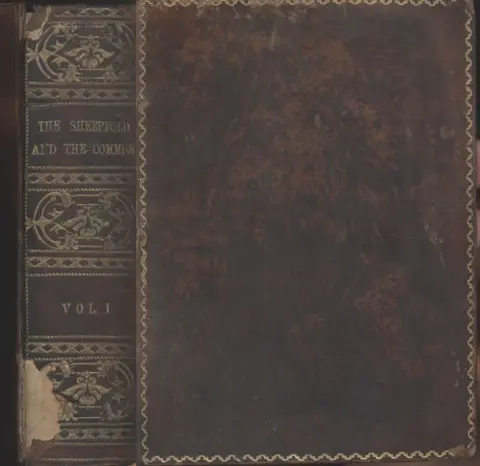
"The Sheepfold and the Common; Or, Within and Without. Vol. 1 (of 2)" by Timothy East is a religious narrative written in the mid-19th century. This work aims to convey grand truths of the Christian faith through engaging stories derived from everyday life. It particularly focuses on moral and spiritual lessons, often through the lives of its characters, such as George Lewellin, whose journey captures the essence of repentance and redemption. At the start of the work, the narrator encounters a lonely widow and her son, George, during a visit to a beautiful village in England. The widow shares her struggles and faith despite significant losses, and George is portrayed with potential, yet he faces temptations that threaten his well-being. The text delves into the themes of sin, redemption, and the transformative power of grace through George's experiences, setting the stage for his internal battles and the hope for his spiritual awakening. The opening portion establishes a foundation of human struggles entwined with divine truth, captivating readers with the emotional depth and moral dilemmas faced by the characters.
Introduction adapted from the source catalogue; source summaries may be automatically generated.
Free to read · English · 219,665 words · No account needed
MAKE TIME FOR A GOOD BOOK
On by default. Untick to stop anonymous reading totals. Each page counts after 10 seconds in view. How this works.
Anonymous counting is on unless you have switched it off.
Miss Roscoe.--"Very just, aunt, but such is the practice of this strange world; and though we protest against it, yet we can obtain no redress. When one who has been gay becomes pious, the magicians prophesy that he will go off into a state of derangement; if he retains his reason, as is usually the case, they express a devout wish that the motives of his conduct may prove to be sincere; if he act in accordance with his religious principles, and refuse to conform to their customs and habits, he is stigmatized as unsocial, precise, and hypocritical; and such is the degree of virulence which goes forth against him, that if no imperfections can be discovered in his character, some will be imputed; and if no rumours come from the north to blast or tarnish his reputation, they are easily raised at home by the magic wand of calumny."
Mrs. John Roscoe.--"I am quite weary of this censorious spirit, its bitterness and its sarcasms. I would willingly contribute towards raising five hundred pounds, as a prize for the best essay on the antichristian character of this evil spirit, and the most effectual means by which it can be exorcised from amongst us."
Miss Roscoe.--"And so would I, dear aunt; I am sure we could
raise the money, if we could get a first-rate pious writer to give
us the book."
Rev. Mr. Roscoe.--"Courtesy requires that I yield the point to the ladies, who, to their honour, generally take the part of the accused; but (addressing his brother) I still believe that the offer of an unconditional salvation to men of every description of character is very hazardous to the interests of public and private virtue."
Mr. Roscoe.--"But the evangelical clergy do not, if I judge from their written discourses, make that unconditional offer which you suppose. They require repentance towards God, before they inculcate faith in the Lord Jesus Christ. They require that we should forsake our sins, before they encourage us to hope for mercy. And then the faith which they inculcate is not a mere philosophical assent to the truth of Christianity, which may leave the evil passions and propensities of the mind unsubdued, but such a faith as shall, by its own reaction, purify the imagination, overcome the allurements and fascinations of the world, and work that conformity of soul to the purity of the Divine nature, which forms the great line of distinction between a real and a nominal Christian; between one who is born of the flesh, and one who is born of the Spirit; between the natural man, in whose estimation the things of the Spirit of God are foolishness, and the spiritual man, who discerns them in all their simplicity and relationships. You talk of a conditional salvation; but if you intend by that phrase that we are required to do something by which we are to merit the favour of God and a seat in his celestial kingdom, you hold an opinion which is opposed to the Scriptures and destructive to human happiness; for who can tell when he has acquired that exact degree of virtue which will justify his claim? Indeed, my brother, we ought always to remember that we are sinners--that in the most improved state of our character we are yet imperfect--that after all the acts of obedience which we may perform, we are unprofitable servants--and that if we are ever saved, as I hope we shall be, it will not be for our own works or deservings, as the articles of our church declare, but by grace, 'For by grace are ye saved through faith; and that not of yourselves: it is the gift of God' (Eph. ii. 8). Considering the indifference which is so generally manifested by persons of all ranks, and of every character, to the momentous truth on which the final and eternal destiny of the soul depends, and the fearful inroads which the worst of principles are making amongst the morals of social life; considering the rapidity with which the fashion of this world is passing away, and how soon we shall all be called to appear before the judgment-seat of Christ; instead of repressing any ardent passion for religion, we ought to cherish it; and should contemplate the secession of one sinner, who withdraws from the deluded and infatuated multitude to repent and to pray, with a kindred feeling to that of the spirits of the invisible world, of whom our Lord says, that 'likewise joy shall be in heaven over one sinner that repenteth, more than over ninety and nine just persons which need no repentance.'"
Your reading position is saved on this browser. Take it to another device with a library code. Reading pages adapt to text, rather than matching a printed edition.
BEHIND THE BOOK
This eBook is for the use of anyone anywhere in the United States and most other parts of the world at no cost and with almost no restrictions whatsoever. You may copy it, give it away or re-use it under the terms of the Project Gutenberg License included with this eBook or online at www.gutenberg.org. If you are not located in the United States, you will have to check the laws of the country where you are located before using this eBook. Read the source licence.
The original source file, including credits and licence, is retained by this library. Request an original-format copy at no charge. Please include the book title and Project Gutenberg identifier #44469.
KEEP YOUR CURIOSITY GOING

David Patterson (Spirit) Hatch

David Patterson (Spirit) Hatch

David Patterson (Spirit) Hatch
Coulson Kernahan

Maurice Baring
Frances Wright