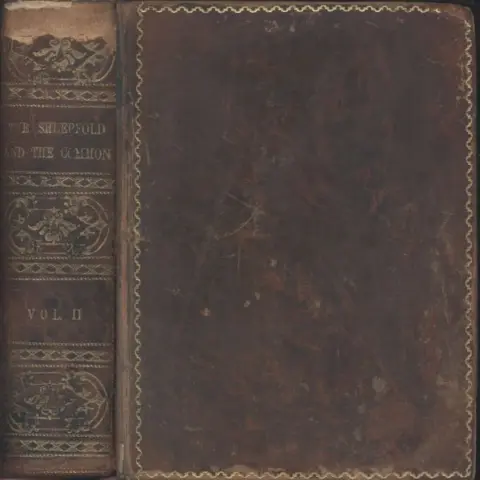
The Sheepfold and the Common; Or, Within and Without. Vol. 2 (of 2)
Timothy East
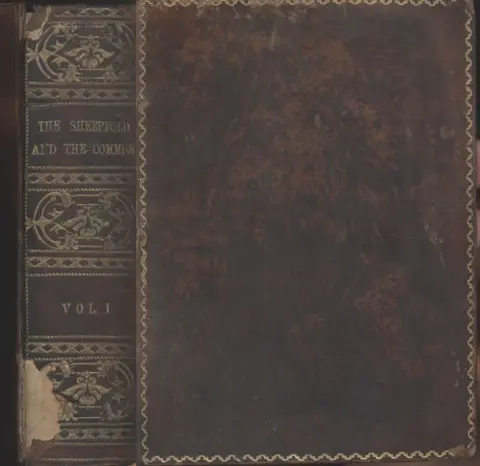
THE CLASSIC COLLECTION · 1859
"The Sheepfold and the Common; Or, Within and Without. Vol. 1 (of 2)" by Timothy East is a religious narrative written in the mid-19th century. This work aims to convey grand truths of the Christian faith through engaging stories derived from everyday life. It particularly focuses on moral and spiritual lessons, often through the lives of its characters, such as George Lewellin, whose journey captures the essence of repentance and redemption. At the start of the work, the narrator encounters a lonely widow and her son, George, during a visit to a beautiful village in England. The widow shares her struggles and faith despite significant losses, and George is portrayed with potential, yet he faces temptations that threaten his well-being. The text delves into the themes of sin, redemption, and the transformative power of grace through George's experiences, setting the stage for his internal battles and the hope for his spiritual awakening. The opening portion establishes a foundation of human struggles entwined with divine truth, captivating readers with the emotional depth and moral dilemmas faced by the characters.
Introduction adapted from the source catalogue; source summaries may be automatically generated.
Free to read · English · 219,665 words · No account needed
MAKE TIME FOR A GOOD BOOK
On by default. Untick to stop anonymous reading totals. Each page counts after 10 seconds in view. How this works.
Anonymous counting is on unless you have switched it off.
he renounced them when the terrors of death fell upon him, and sought consolation at the cross of Christ. From that hour he became a decided Christian, choosing rather to suffer the reproach which is too often cast on genuine piety, than endure the pleasures of sin, which are but for a season. Soon after his translation from darkness to light, he was introduced to the amiable and pious Miss Bathurst, with whom he formed that sacred union, which has been through life a source of mutual felicity. The first few years after their marriage they were extremely anxious for an heir, but as Providence denied them this gratification, they were disposed to acquiesce in his decision, and to reduce to a practical operation the prayer which they had long been accustomed to repeat: "Thy will be done on earth, even as it is in heaven." Being exempted from the charge and the expense of a family, they were more at liberty to promote the welfare of others; and rarely a day elapsed which did not bear testimony to their benevolent exertions.
The morning after my arrival, Mrs. Stevens asked me if I would accompany her to see a poor pious young woman who was very ill; and, lest the distance should be an objection, she told me she had given orders for the carriage to be ready exactly at half-past ten. "And as, Sir," she remarked, "you take greater pleasure in tracing the operations of Divine grace in the renovation of the human soul than in exploring the wonders of the material universe, and feel a purer delight on seeing a repenting sinner than in gazing on the enchanting scenery to which you have made such frequent allusions, I think I can gratify you."
As we were passing along the road, she gave me the following narration:--"In the cottage to which we are going reside a poor man and his wife, who have had a large family, but all have died in infancy except one beautiful daughter. She, when only sixteen, entered the family of a respectable farmer in the adjoining parish, where she continued four years, and would, in all human probability, have continued there till now, had it not been for a dashing London servant, who, when on a visit to her own father, got acquainted with her; and by telling her of the high wages, and the little work which town servants have, made her dissatisfied with her place; and, in opposition to the advice of all her friends, she gave notice to leave, and actually went to London to try her fortune. When she arrived there she called on her friend, who had promised to procure her a situation; but was informed that no good one had yet turned up. She was recommended to take a lodging, for which she would have to pay only two shillings a-week, and no doubt, if she made proper inquiry, she would hear of something that would be for her advantage. Thus thrown on the world, without a home, and without a friend, she would have fallen a victim to her folly, had not Providence interposed to protect her. As she was passing along the Strand, with her bundle under her arm, a lady, who had once seen her at my house, recognized her, and asked her where she was going. The poor girl related her mournful tale, and implored pity. This lady took her to her own home, but as she was not in want of a servant, she could not retain her; yet she procured for her the best situation in her power. But, instead of high wages, she had not so much as when in the country; and her work was much more laborious. Thus disappointed, and having too high a spirit to return home, she gave herself up to grief; and taking a severe cold, which she neglected, her strength soon wasted away, and she was obliged to throw up her situation, and go into lodgings for the recovery of her health. But disease had made too great progress to be arrested; and after parting with nearly all her clothes to defray the expenses she had incurred, she was reduced to the alternative of dying for want or returning home. She wrote to her father, telling him she was very ill, and did not expect to live, and desiring as a favour that he would permit her to come home, and die in the room where she was born. As soon as the old man received her letter he hastened to our house; never did I witness such a burst of feeling. 'O Madam! my dear Harriet is very ill; she has sent us this----, and wants to come home, she says, to die.' He wept, like the old patriarch, when he saw the bloody coat instead of his darling son. I endeavoured to console him as well as I could, and immediately made an arrangement for her return. In the course of the next week, the grief-worn parents had the melancholy gratification of embracing their child. She was obliged to take to her bed on the very day of her arrival. I saw her the day after, and received from her a faithful narrative of her life. The wreck of beauty was still visible amidst the ruins of her constitution; and the hectic flush gave, at intervals, a superhuman expression to her countenance. I felt conscious that she was hastening to the grave; and this circumstance deeply depressed the feelings of her pious parents, who were fearfully apprehensive that she was not prepared for death and the final judgment. I requested them to leave us alone together, when I began to converse with her on the value of her soul, and on the only way of salvation. She wept, and said that she was fully aware of her danger and desert; but added, 'I hope that the Friend of sinners will have mercy on me. My conscience has often smote me; the anguish of my mind I cannot describe; but I lay myself at His feet, and cry, God, be merciful to me, a sinner!' I have," added Mrs. Stevens, "regularly renewed my visits almost every day; and I hope that my feeble efforts have been made the means of leading her to the Saviour."
Your reading position is saved on this browser. Take it to another device with a library code. Reading pages adapt to text, rather than matching a printed edition.
BEHIND THE BOOK
This eBook is for the use of anyone anywhere in the United States and most other parts of the world at no cost and with almost no restrictions whatsoever. You may copy it, give it away or re-use it under the terms of the Project Gutenberg License included with this eBook or online at www.gutenberg.org. If you are not located in the United States, you will have to check the laws of the country where you are located before using this eBook. Read the source licence.
The original source file, including credits and licence, is retained by this library. Request an original-format copy at no charge. Please include the book title and Project Gutenberg identifier #44469.
KEEP YOUR CURIOSITY GOING

David Patterson (Spirit) Hatch

David Patterson (Spirit) Hatch

David Patterson (Spirit) Hatch
Coulson Kernahan

Maurice Baring
Frances Wright