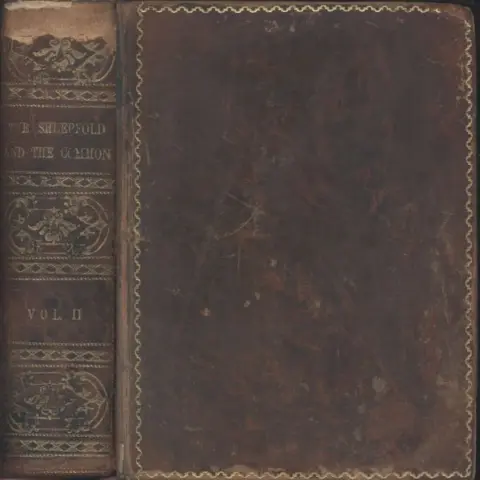
The Sheepfold and the Common; Or, Within and Without. Vol. 2 (of 2)
Timothy East
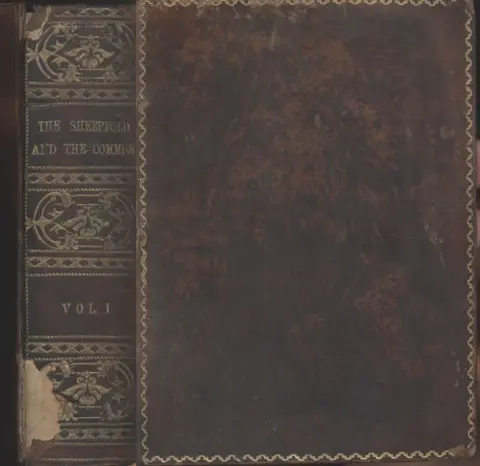
THE CLASSIC COLLECTION · 1859
"The Sheepfold and the Common; Or, Within and Without. Vol. 1 (of 2)" by Timothy East is a religious narrative written in the mid-19th century. This work aims to convey grand truths of the Christian faith through engaging stories derived from everyday life. It particularly focuses on moral and spiritual lessons, often through the lives of its characters, such as George Lewellin, whose journey captures the essence of repentance and redemption. At the start of the work, the narrator encounters a lonely widow and her son, George, during a visit to a beautiful village in England. The widow shares her struggles and faith despite significant losses, and George is portrayed with potential, yet he faces temptations that threaten his well-being. The text delves into the themes of sin, redemption, and the transformative power of grace through George's experiences, setting the stage for his internal battles and the hope for his spiritual awakening. The opening portion establishes a foundation of human struggles entwined with divine truth, captivating readers with the emotional depth and moral dilemmas faced by the characters.
Introduction adapted from the source catalogue; source summaries may be automatically generated.
Free to read · English · 219,665 words · No account needed
MAKE TIME FOR A GOOD BOOK
On by default. Untick to stop anonymous reading totals. Each page counts after 10 seconds in view. How this works.
Anonymous counting is on unless you have switched it off.
Near Fairmount Villa stood a tasteful cottage, which Mr. Stevens had erected as a means of giving additional security to his premises. It was occupied by a worthy man, named Josiah Hargrave, who gained his livelihood as a common carrier. He had commenced life as a labourer; and, by honest industry and perseverance, had risen to a state of comparative independence. His cottage was well furnished; he had two cows, a good horse and cart, a donkey, a large stock of poultry, some pigs, and hay and straw enough to last him through winter. He had been married about seven years; and had three children, two sons and a daughter. Here they lived in peace and contentment, neither envying their richer, nor despising their poorer neighbours.
I called on them one day; and, when congratulating them on their prosperity, I was struck with the very sensible remarks which Mrs. Hargrave made on the uncertain duration of all earthly blessings.
"Our heavenly Father," she observed, "has blessed us indeed; He has given us more than we deserve, and more than we expected; and He, who has given us all, can, if He please, take all away."
"Yes, He can; and suppose He should deprive you of your little possessions, do you think you could bow in submission, and say, 'Thy will be done?'"
"Yes, Sir, if He give the disposition; but if not, we should repine."
"Ah! Sir," Josiah remarked, "we are poor sinful creatures. In prosperity we are ungrateful, and in adversity rebellious, unless it please the Lord to sanctify to us His dispensations."
"Which state," I asked, "should you prefer, if it were left to your choice--prosperity or adversity?"
"Why," said Josiah, "I would rather let my heavenly Father choose for me, than venture to choose for myself, because He cannot err; but I may. Prosperity, without His blessing, would be a snare; adversity, with it, would be a comfort."
We were interrupted in our conversation by the sudden entrance of the eldest boy, a lad about five years of age, who exclaimed, "I have said my hymn! and,"----before he saw me.
"Come," said the mother, "go and speak to the gentleman."
"Yes," added the father, "and say your hymn to him."
The boy approached with a modest blush, and immediately repeated the following verses, with ease and propriety:--
"I thank the goodness and the grace,
Which on my birth have smil'd,
And made me, in these Christian days,
A happy English child.
"I was not born, as thousands are,
Where God was never known,
And taught to pray a useless pray'r
To blocks of wood and stone.
Your reading position is saved on this browser. Take it to another device with a library code. Reading pages adapt to text, rather than matching a printed edition.
BEHIND THE BOOK
This eBook is for the use of anyone anywhere in the United States and most other parts of the world at no cost and with almost no restrictions whatsoever. You may copy it, give it away or re-use it under the terms of the Project Gutenberg License included with this eBook or online at www.gutenberg.org. If you are not located in the United States, you will have to check the laws of the country where you are located before using this eBook. Read the source licence.
The original source file, including credits and licence, is retained by this library. Request an original-format copy at no charge. Please include the book title and Project Gutenberg identifier #44469.
KEEP YOUR CURIOSITY GOING

David Patterson (Spirit) Hatch

David Patterson (Spirit) Hatch

David Patterson (Spirit) Hatch
Coulson Kernahan

Maurice Baring
Frances Wright