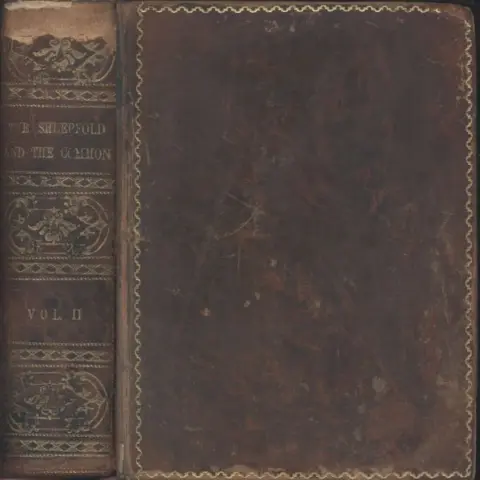
The Sheepfold and the Common; Or, Within and Without. Vol. 2 (of 2)
Timothy East
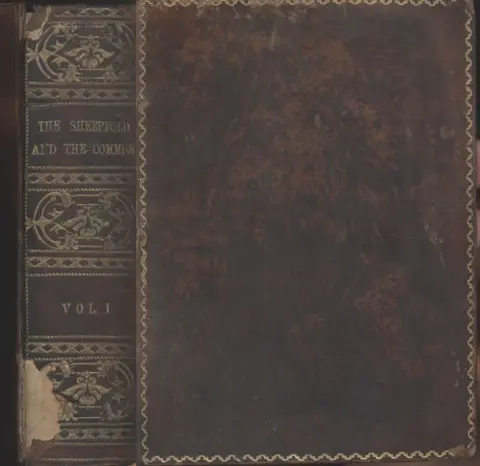
THE CLASSIC COLLECTION · 1859
"The Sheepfold and the Common; Or, Within and Without. Vol. 1 (of 2)" by Timothy East is a religious narrative written in the mid-19th century. This work aims to convey grand truths of the Christian faith through engaging stories derived from everyday life. It particularly focuses on moral and spiritual lessons, often through the lives of its characters, such as George Lewellin, whose journey captures the essence of repentance and redemption. At the start of the work, the narrator encounters a lonely widow and her son, George, during a visit to a beautiful village in England. The widow shares her struggles and faith despite significant losses, and George is portrayed with potential, yet he faces temptations that threaten his well-being. The text delves into the themes of sin, redemption, and the transformative power of grace through George's experiences, setting the stage for his internal battles and the hope for his spiritual awakening. The opening portion establishes a foundation of human struggles entwined with divine truth, captivating readers with the emotional depth and moral dilemmas faced by the characters.
Introduction adapted from the source catalogue; source summaries may be automatically generated.
Free to read · English · 219,665 words · No account needed
MAKE TIME FOR A GOOD BOOK
On by default. Untick to stop anonymous reading totals. Each page counts after 10 seconds in view. How this works.
Anonymous counting is on unless you have switched it off.
"We anticipate our last moments, Sir, with awe, mingled with delight, and though you may imagine that our present moments are dull and insipid, yet, I assure you, you are mistaken. We have our sources of happiness, but card-playing is not included in the number."
"I cannot but think that evangelical religion has an antisocial tendency, and would, if generally prevalent, deprive us of all our innocent recreations."
"Evangelical religion, like the religion of the New Testament, requires us not to be conformed to this world, but to be transformed in the renewing of our mind, and it produces a distaste for those frivolous and pernicious amusements in which the votaries of this world delight; but I am not aware that it has an antisocial tendency, unless you mean by that expression, that its tendency is to mark out the essential difference between a real Christian and one who bears only the name."
"Why, we are all Christians, and good Christians, too; but our Christianity does not teach us to wait the arrival of death before we can be happy."
"Yes, Sir, there are the pleasures of sin, which we are commanded to forsake for the recompense of reward."
"And, Madam, there are the pleasures of innocence, which are as sweet and as sacred as the joys of angels."
"But I cannot suppose that you include card-playing among the
pleasures of innocence."
"Most certainly I do!"
"Then, do you imagine that our old friend, Mr Lock, is of the same opinion, who in an evening was reduced from a state of affluence to a state of poverty?"
"Why, that was an unlucky night for him, certainly; but you know we do not play for more than we can afford to lose."
"I think, Sir, with all due deference to your judgment, that every one who plays at this game of innocence stakes more than he can afford to lose."
"You are, indeed, an ingenious casuist, and I wish to know how you can prove the correctness of your assertion."
"Can you afford to lose your temper?"
"If I do lose it I can easily recover it again."
"You may, Sir, but can others?"
"If they cannot, they are to blame."
"Then, Sir, this game of innocence is found on experiment, first, to destroy the placidity of the temper, and then to involve its abettors in censure. But there is often more staked in this game than the loss of temper."
"What is there, Madam?"
"The loss of friendship. You know that the families of the Orrs and the Humes have never met in any party since the quarrel which took place two years since at Brushwood House."
Your reading position is saved on this browser. Take it to another device with a library code. Reading pages adapt to text, rather than matching a printed edition.
BEHIND THE BOOK
This eBook is for the use of anyone anywhere in the United States and most other parts of the world at no cost and with almost no restrictions whatsoever. You may copy it, give it away or re-use it under the terms of the Project Gutenberg License included with this eBook or online at www.gutenberg.org. If you are not located in the United States, you will have to check the laws of the country where you are located before using this eBook. Read the source licence.
The original source file, including credits and licence, is retained by this library. Request an original-format copy at no charge. Please include the book title and Project Gutenberg identifier #44469.
KEEP YOUR CURIOSITY GOING

David Patterson (Spirit) Hatch

David Patterson (Spirit) Hatch

David Patterson (Spirit) Hatch
Coulson Kernahan

Maurice Baring
Frances Wright