The orchestra and its instruments
Esther Singleton
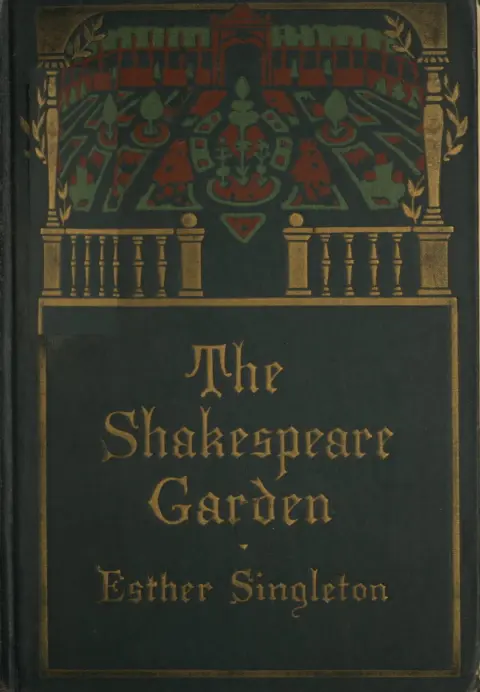
THE CLASSIC COLLECTION · 1922
"The Shakespeare Garden" by Esther Singleton is a horticultural guidebook written in the early 20th century. This work delves into the history, evolution, and significance of gardens during Shakespeare's time, exploring the various flowers featured in his works and providing insights for creating an authentic Shakespeare garden. Singleton's appreciation for Shakespeare's connection to nature and flowers serves as a foundation to examine the horticultural practices prevalent during the Elizabethan era. At the start of the book, the author introduces her motivation for discussing Shakespeare's gardens, emphasizing the playwright's frequent references to flowers and his appreciation for their beauty. Singleton notes the types of gardens Shakespeare would have known, contrasting the grand estates of nobility with simpler cottage gardens. She outlines the structure of the book, which encompasses the historical context of garden design, specifics about flowers mentioned in Shakespeare’s plays, and practical guidance on creating a Shakespearean garden of one's own. The opening sets the stage for a detailed exploration of the flora and garden aesthetics that inspired the Bard himself, aiming to inspire readers with a newfound understanding of the interplay between literature and gardening.
Introduction adapted from the source catalogue; source summaries may be automatically generated.
Free to read · English · 70,871 words · No account needed
MAKE TIME FOR A GOOD BOOK
On by default. Untick to stop anonymous reading totals. Each page counts after 10 seconds in view. How this works.
Anonymous counting is on unless you have switched it off.
Lord Bacon in "Sylva" calls Napellus "the most powerful poison of all
vegetables."
[83] "Romeo and Juliet"; Act V, Scene I.
[84] Part II, Act IV, Scene IV.
[85] Act III, Scene III.
Yet despite its poisonous qualities, an English garden lover writes, "the plant has always held, and deservedly, a place among the ornamental plants of our gardens; its stately habit and its handsome leaves and flowers make it a favorite."
The ancients, who were unacquainted with mineral poisons, regarded aconite as the most deadly of all poisons and believed that Hecate had caused the plant to spring from the venomous foam frothing from the mouth of the three-headed dog, Cerberus, when Hercules took him from Pluto's dark realm on one of his Twelve Labors. Ovid describes the aconite as
A weed by sorcerers renowned
The strongest constitution to compound
Called aconite, because it can unlock
All bars and force its passage through a rock.
In Greece it was also known as Wolf's-bane (Lycoctonum), and it was thought that arrow-heads rubbed with it would kill wolves. Turner quaintly writes in his "Herbal" (1568):
"This of all poisons is the most hastie poison, howbeit Pliny saith this herb will kill a man if he take it, except it find in a man something to kill. Let our Londoners which have of late received this blue Wolf's-bane, otherwise called Monk's Cane, take heed that the poison of the root of this herb do not more harm than the freshness of the flower hath done pleasure. Let them not say but they are warned."
Parkinson's name for it is Napellus verus flore cœruleo (Blue
Helmet-Flower, or Monk's-hood).
"The Helmet Flower," he writes, "hath divers leaves of a fresh green color on the upper side and grayish underneath, much spread abroad and cut into many slits and notches. The stalk riseth up two or three foot high, beset to the top with the like leaves, but smaller. The top is sometimes divided into two or three branches, but more usually without, whereon stand many large flowers one above another, in form very like a hood, or open helmet, being composed of five leaves, the uppermost of which and the greatest is hollow, like unto a helmet, or headpiece: two other small leaves are at the sides of the helmet, closing it like cheeks, and come somewhat under, and two other which are the smallest hang down like labels, or as if a close helmet were opened and some pieces hung by, of a perfect, or fair, blue color (but grow darker having stood long) which causeth it to be so nourished up in Gardens that their flowers, as was usual in former times (and yet is in many country places) may be laid among green herbs in windows and rooms for the Summertime; but although their beauty may be entertained for the uses aforesaid, yet beware they come not near your tongue or lips, lest they tell you to your cost, they are not so good as they seem to be. In the middest of the flower, when it is open and gapeth wide, are seen certain small threads like beards, standing about a middle head, which, when the flower is past, groweth into three or four, or more, small blackish pods, containing in them black seeds. The roots are brownish on the outside and white within, somewhat big and round about and small downwards, somewhat like unto a small, short carrot root, sometimes two being joined at the head together. It is the true Napellus of the ancient writers, which they so termed from the form of a turnip called Napus in Latin."
Your reading position is saved on this browser. Take it to another device with a library code. Reading pages adapt to text, rather than matching a printed edition.
Esther Singleton
Esther Singleton

Esther Singleton

Esther Singleton
BEHIND THE BOOK
This eBook is for the use of anyone anywhere in the United States and most other parts of the world at no cost and with almost no restrictions whatsoever. You may copy it, give it away or re-use it under the terms of the Project Gutenberg License included with this eBook or online at www.gutenberg.org. If you are not located in the United States, you will have to check the laws of the country where you are located before using this eBook. Read the source licence.
The original source file, including credits and licence, is retained by this library. Request an original-format copy at no charge. Please include the book title and Project Gutenberg identifier #61325.
KEEP YOUR CURIOSITY GOING
Cécile Tormay

Moritz Busch
John L. Ransom
Frances Wright
Cécile Tormay

Mabel Potter Daggett